From Romanesque to Art Deco, Baltimore has a rich architectural tapestry woven into its history. While the Great Baltimore Fire wiped out most of the buildings downtown, sparking a multi-style rebirth, neighborhoods like Mt. Vernon remain a staple of 19th century architecture. It is breathtaking to be constantly surrounded by these beautiful buildings—and equally heartbreaking when they fall into disrepair. We wanted to take a look at one particular group of buildings: the theaters, hotspots of life and culture.
For a more comprehensive exploration into the history and architecture of some of Baltimore’s entertainment gems, I encourage you to look into Amy Davis’ beautiful project “Flickering Treasures: Rediscovering Baltimore’s Lost Movie Theaters.”
All photos by Isaiah Williams.
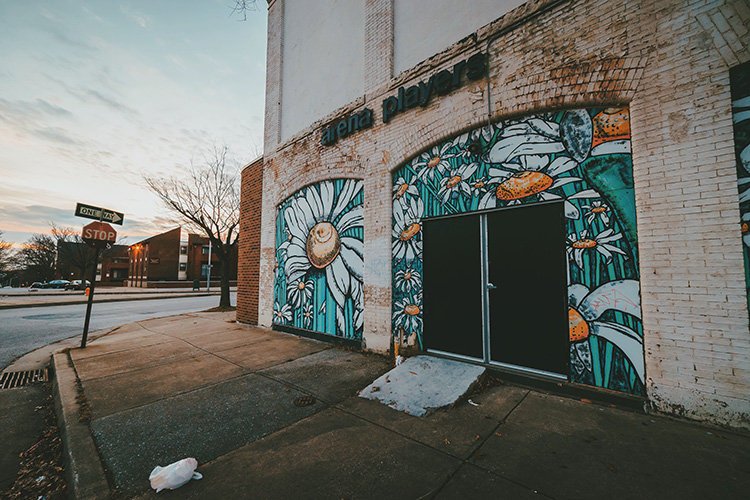
Arena Players, the longest continuously-operating African American community theater in the US. Its architecture is very common for buildings designed the 1960s.
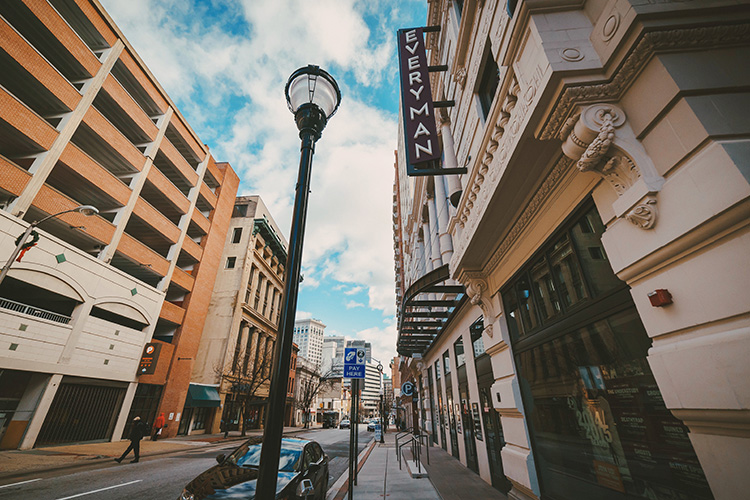
Everyman Theater’s current home is the old Empire Theatre, which was built in 1911 in the Beaux-Arts style.
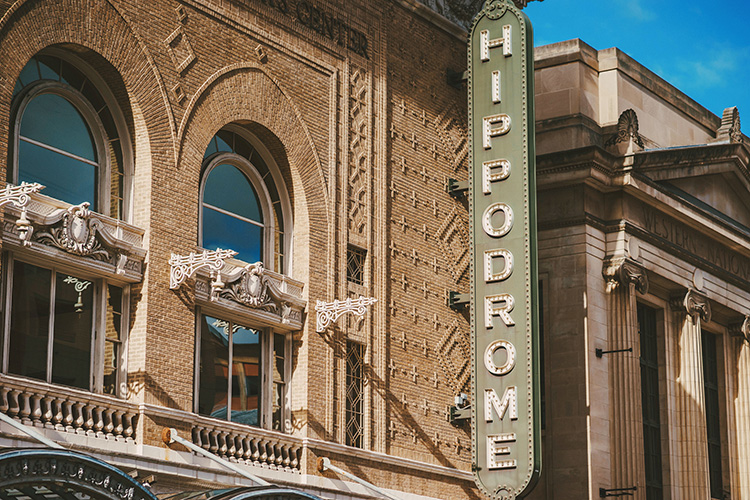
The Hippodrome, built in 1914 by and designed by Thomas White Lamb, also featuring Beaux-Arts architecture.
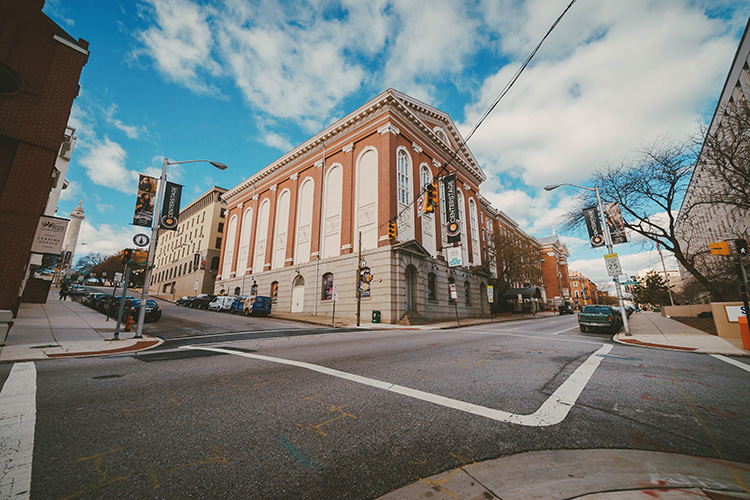
Centerstage, Baltimore’s largest professional producing theater, was created in the Colonial Revival style.

The Lyric Opera House. Originally designed to showcase Renaissance and Neoclassical design, the exterior was renovated in the 1980s.
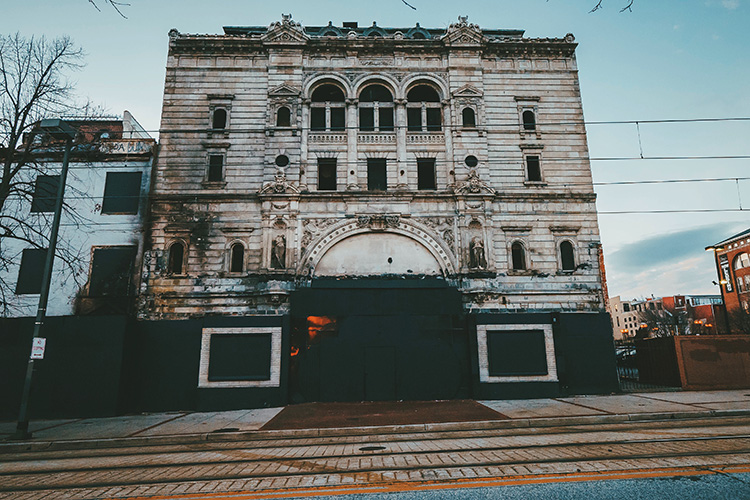
The Mayfair as we know it today. Built in 1880, it was first a bathing house and swimming school. After alterations it became the Howard Auditorium in 1891.
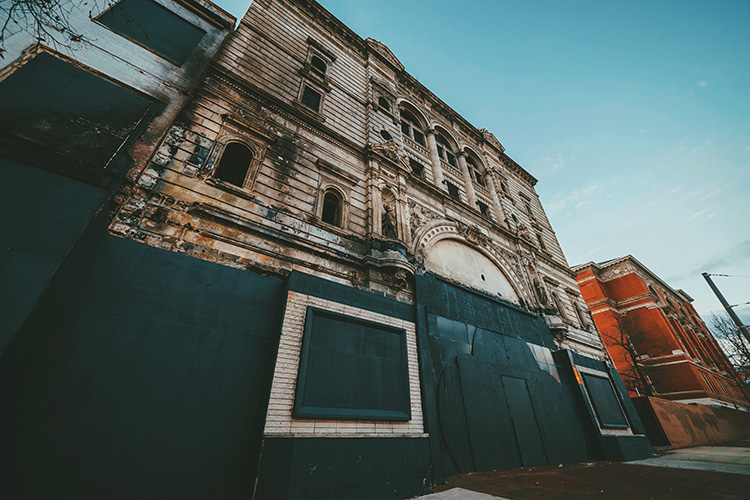
The current building dates to 1903, when it was called the Auditorium Theatre, at first showcasing live theater and then transitioning to a film house in 1940. After remodeling the Auditorium Theater reopened as the Mayfair in 1941.
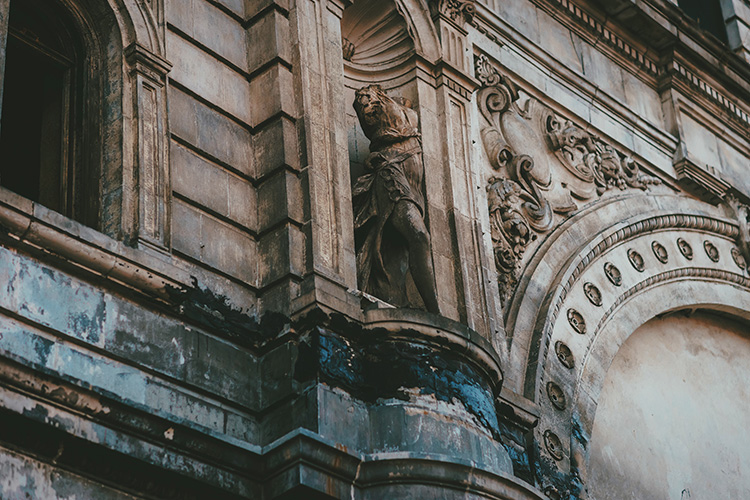
Closed for good in 1986, the original Beaux Art neo-classical style was designed by William H. McElfatrick (who also designed the Empire Theater aka the current home of the Everyman).
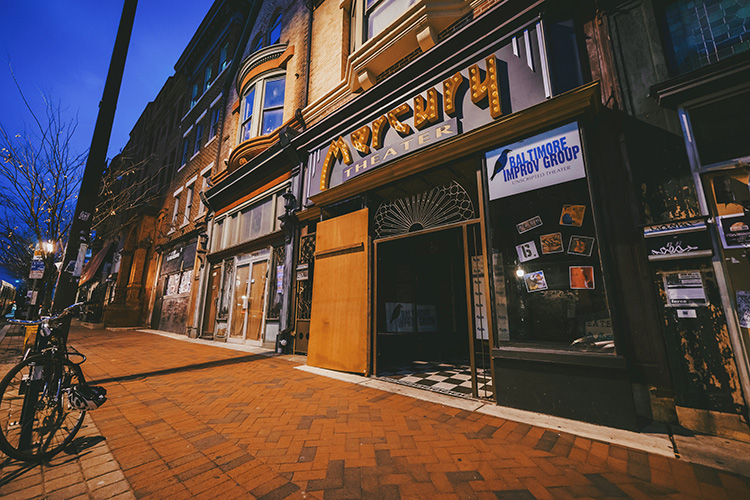
The Mercury Theater (formerly The Strand) is an example of a storefront transformed into to a working theater space. Both beautiful illuminated signs are from the collection of the building’s owner, known for her 1920s memorabilia.
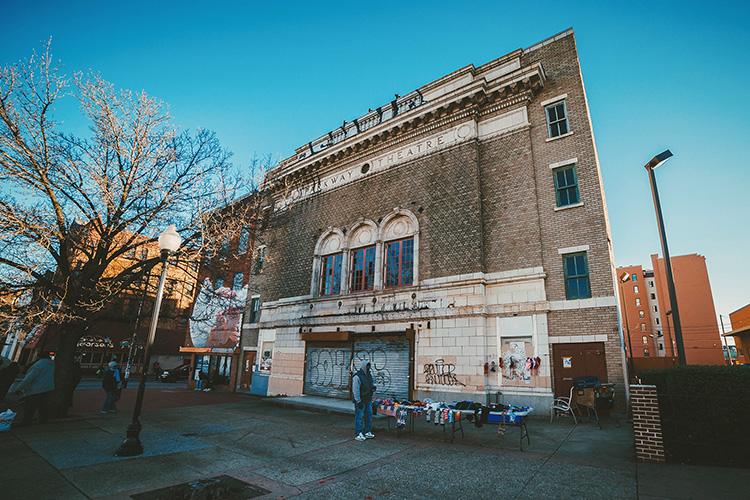
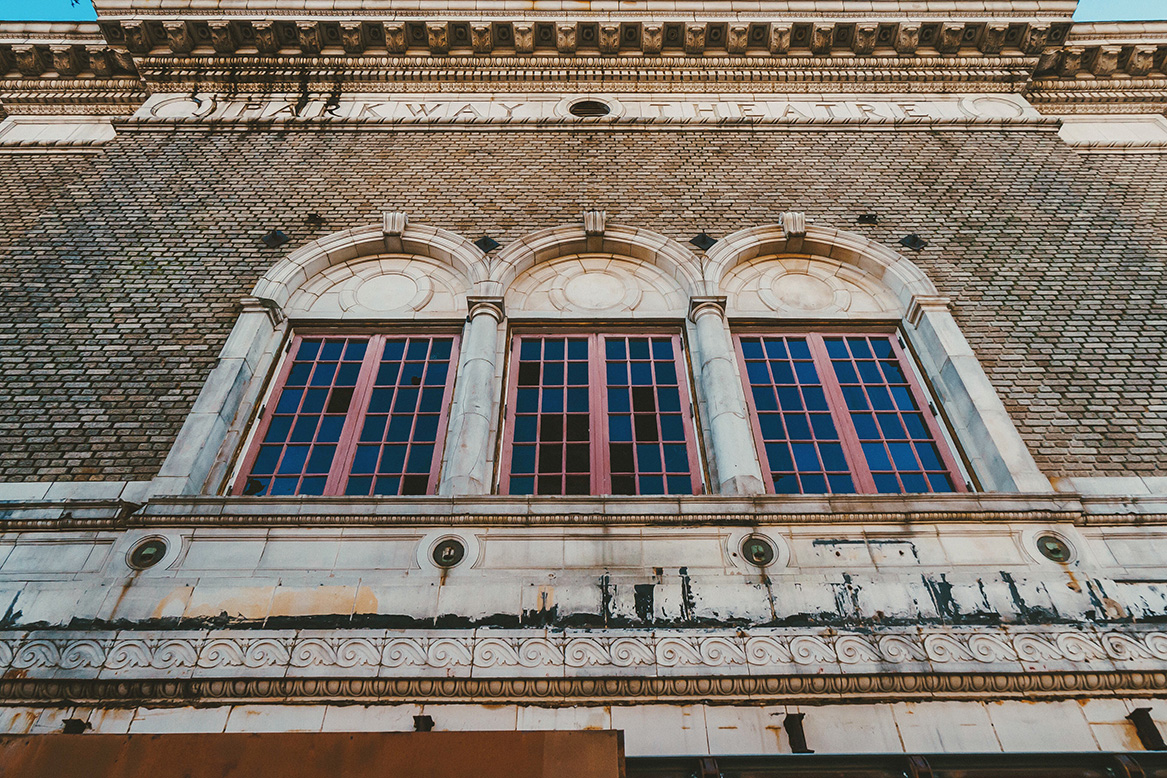
The Parkway Theater, built in 1915, was designed by Oliver Birkhead Wite with the Italian Renaissance style in mind.

Closed in 1998, the interior still features rich ornamental plasterwork in a Louis XIV style. In 2012 Baltimore City chose to accept the Maryland Film Festival’s proposal to begin renovations.
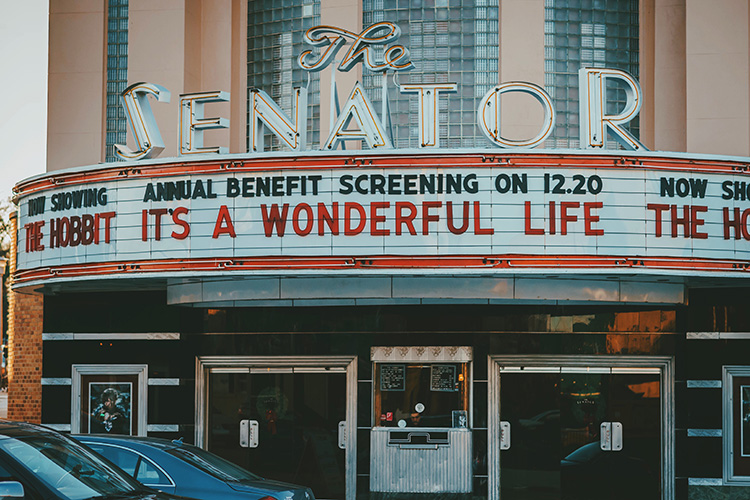
The Senator Theater, a classic example of Art Deco, built in 1939 by E. Eyring.