Why is it that we humans are so attracted to singularity; to the polls at either end; to the extremes?

Even mild mannered Midwesterners who move with the mainstream can be attracted to the extreme political stance and the silver bullet solution. Pick an issue—education for example. There are those whose impulse is conservative: lecture–grill–test–repeat, and those who are progressive: chart your own course to discover knowledge by doing. People tend to be fall on one side or the other. In my experience public speakers quickly reveal which side they’re on and talks become rationalizations to move the audience far in one direction.

The recent PopTech conference in Maine, attended by several of people associated with What Weekly, was interesting in this regard. Over the course of 3 days of rapid-fire talks on a wide range of issues by international notables, one began to get the sense that there is a cultural change afoot regarding the amount of magnetic pull the two polls at either end of issues has on contemporary thought. One after another, speakers painted passionate pictures of people fighting for justice, of social and technical innovation and of personal expression, but often, with a nuanced palette. Where fiery speeches I’ve seen in the past might have relied on speakers’ desire to move the audience as far from the status quo as possible, or conversely, to quash any threat of movement, these speakers often bracketed their messages around measured goals. Yes, we still need to do what we’re doing now, but we need to do something new as well. Or, we need to completely change the way we’re thinking about this, though when we do, but retain some of the current strategy. It’s not that speakers weren’t proposing radical change, just that the map of that change had developed new axes on which aspirations could be plotted.
The message of High Court Judge, Unity Dow of Botswana was essentially “Yes, we still need you to donate things, but we also need you to sell us thing we can afford so our people can maintain their dignity.” Colonel Mark Mykleby and his colleague, Navy Captain, Wayne Porter—both charged by the U.S. Defense Department with the task of reimagining America’s global geopolitical and military strategies, painted a multifaceted three-dimensional image of collaboration and agendas derived from meaningful engagement with people of other nations, but also noted “there are bad people out there who need to be head-butted.”
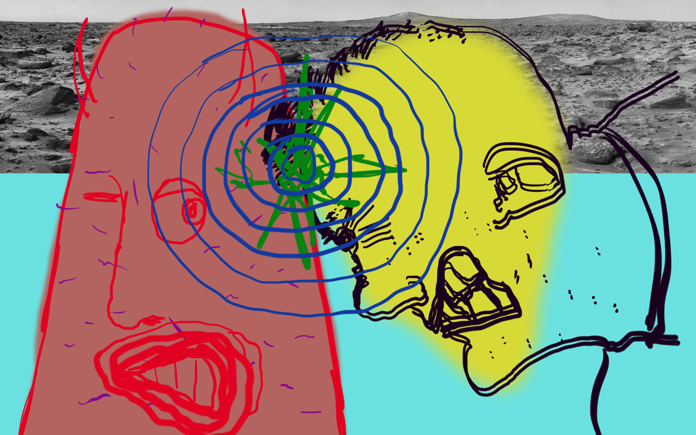
This is strange. We are not a culture of balance. We see a spectrum—a gradient that modulates from one end to the other and it feels otherworldly. We tried the Great Society and it didn’t solve all the problems so we need to move as far in the other direction as possible. We tried a stimulus package and it didn’t fix the economy good as new so government investment is a bad idea. During the PopTech talks, you could feel the audience’s excitement about…(wait for it)…the subtle intelligence of multidimensional thinking, but nobody new how to identify that this radical change was happening. It was too new.
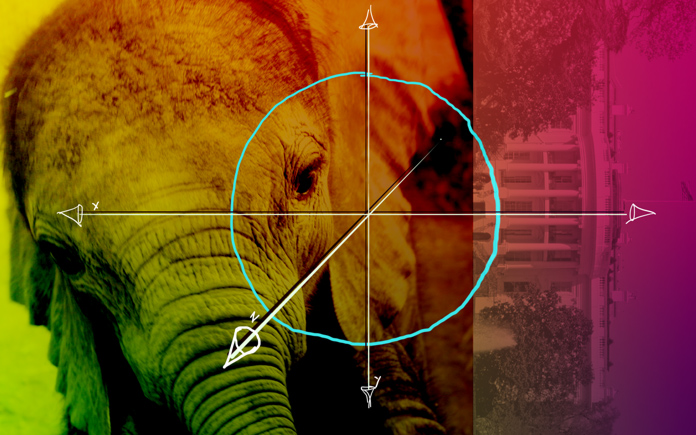
At the end of the long final day of the conference, PopTech Executive Director, Andrew Zolli sat exhausted on chair by himself amidst the waning after party activity. His reflective gaze invited us toward him. My art partner, Stacy Arnold, whose prone to lengthy consideration followed by sudden revelation walked up to him and said, “I have the theme for next year’s conference.” He remained motionless. “Both/And,” she said. His head jerked toward her, his brow seized into a tight knot. A pause, then, as if he’d been plugged in again he exclaimed, “That’s it! That’s the thing!”