Only fifteen percent of the protagonists of the top 100 grossing films of 2013 were female. Of the top 100 grossing films of 2012, “only 10.8% of speaking characters are Black, 4.2% are Hispanic, 5% are Asian, and 3.6% are from other (or mixed race) ethnicities,” according to a study by USC. And this was considering any character that speaks at least one word. Main characters? The percentages are certainly less. Not only is there serious lack of minority representation in theatrical cinema, minorities often play side-characters and stereotypes. This does not reflect the United State’s demographics. This does not reflect the stories this country has.
And so, honestly, I was surprised – surprised at the number of young, nonwhite, and occasionally not male faces I saw as I prepared to watch an animated film following the adventures of an animated twenty-year-old, white, male Viking adventurer (to be fair, a main plot point of the movie is his lack of stereotypical machismo, but no matter). I didn’t expect to see young children of color starring in three previews in a row. At this point I realized, if I ever wanted some diversity in my entertainment experience, I should watch “children’s” movies, at least, the upcoming ones. These weren’t films starring black children or girls aimed at only black children or girls. This was marketed towards mainstream America – the young population at large.
Two of the films featuring young black protagonists could fall under science fiction-based adventure. This was remarkable. Although sci-fi is one of two genres (the other being fantasy) that offers an opportunity to not only comment on the real world, but also create a world that surpasses the constraints of the current one, in accordance with the lack of diverse representation in entertainment, these films often fail to even represent the diverse reality of this world. It seems ridiculous to imagine a world not centered around young, white males. These family movies bring a different story.

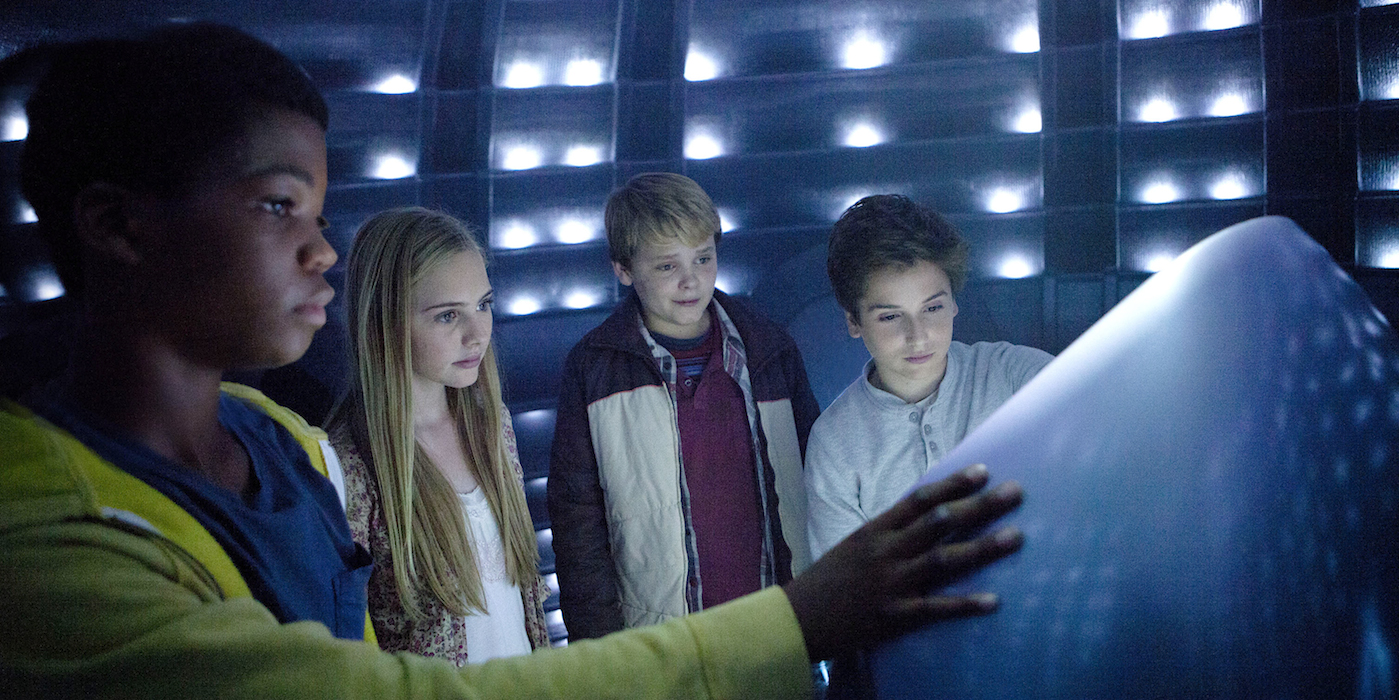
Still of Reese Hartwig, Astro and Teo Halm in Earth to Echo (2014). Photo by Patrick Wymore – © 2014 – Relativity Media
The two films Earth to Echo and Home account the adventures of young, displaced children and their interactions with extraterrestrial life. Earth to Echo stars three boys (and of course, the one girl) and their adventures in aiding an adorable alien stranded on Earth. The trailer, at least, is focused around Tuck, played by the actor Astro, a young black boy. How crazy – a black boy being central to extraterrestrial adventures! In fact, it’s Astro’s character, Tuck, who films the kids’ adventures. We see things from his point of view — certainly a rare occurrence in American cinema.
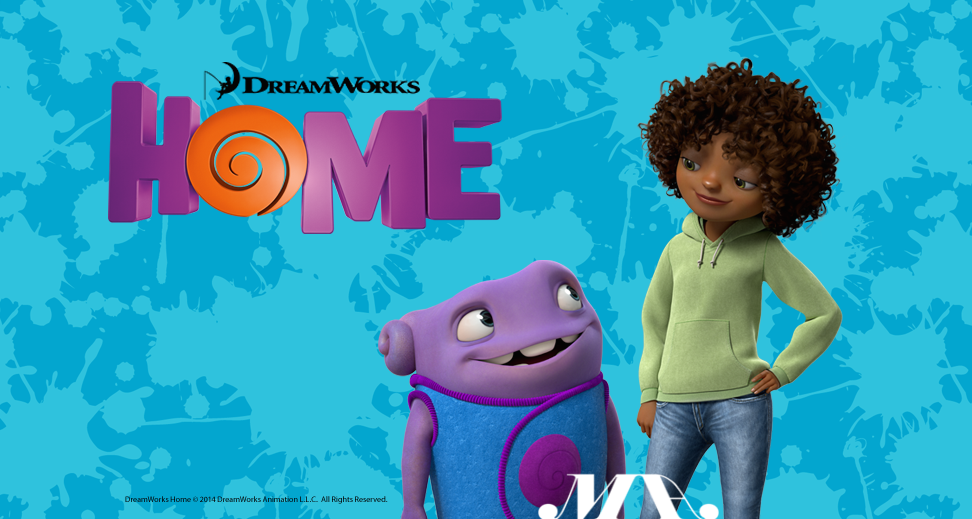
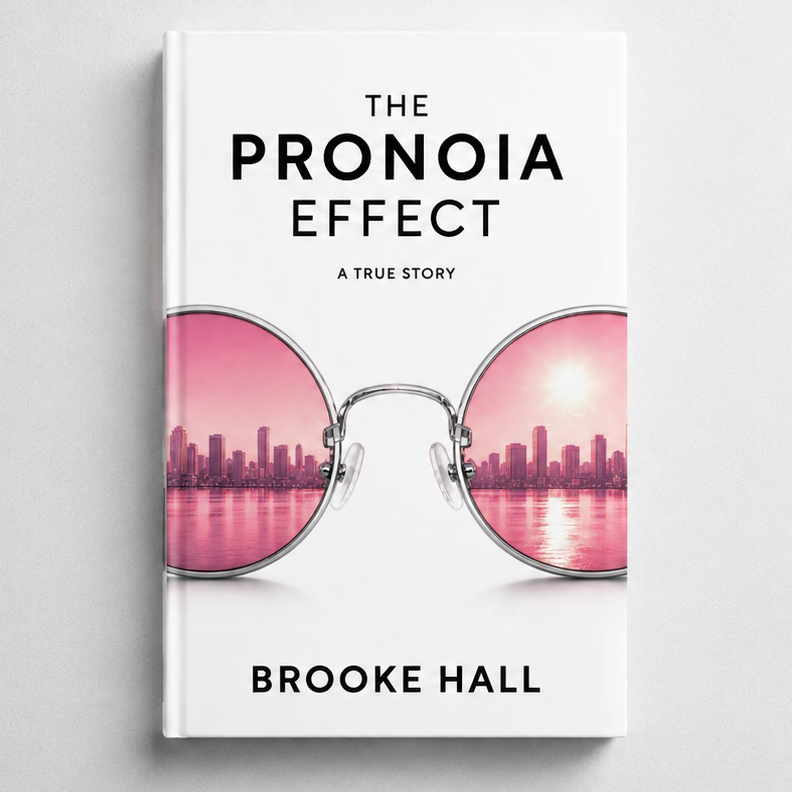
Poster for Dreamworks’ Home (2015)
Home, based off of the 2007 children’s book by Adam Rex, The True Meaning of Smekday, stars a teenage girl known as Gratuity “Tip” Tucci (the name a beautifully bold choice in itself) who escapes capture from an alien race, only to be accompanied by a banished alien in her adventures. Tip isn’t your average skinny, conventionally beautiful, Caucasian, complacent teenage girl. She’s unique, deviant, relatable – a young black teenager, DreamWorks’s first. Both films let the children (and adults) watching know that amazing things can happen to anyone of any gender or race, and that they are perfectly worthy of these exciting experiences.

Still of Quvenzhané Wallis in Annie (2014). Photo by Barry Wetcher – © 2014 CTMG, Inc.
The final film that caught my eye was Annie. Originally about a precocious little redhead orphan, who eventually finds a home with a wealthy, established man, Annie, the 2014 film, instead follows a young black orphan and the politician who adopts her. It’s easy enough to cast off this film as the “black” version of the original, but, in reality, it’s marketed for everyone. It’s diverse. It takes a modern twist, and part of this twist is that our main characters aren’t white (and the music’s been updated). Little black American orphan girls, too, can find a good home – a dream we can all agree should become a reality and reflect our values as a culture.
Of course, it just so happened that the trailers for these three films played in the ten to fifteen minute time allotted before the family film, How to Train Your Dragon 2, I decided to see. Does this reflect a trend towards greater diversity in children’s movies? Not necessarily. Although 2013 was considered a great year for African-American film, representation of minorities and women in film over the past fifteen years has reached a disappointing stalemate. But if you’re looking for some light-hearted, real, jubilant diversity for yourself and any children who accompany you to the movies in the near future, there are some options – a few upcoming children’s movies.
Yet, regardless of what we’re seeing on screen, the reality behind the scenes is crucial to consider. Who is writing these voices? Frankly, men (usually white) are. Even if we have a young black girl fighting the forces of the streets with an alien friend, her existence is crafted by faces and experiences that look a lot like the people who continue to star in most of the movies we watch. Women and minorities are incredibly underrepresented behind the scenes. Although it’s important to support and enjoy any diverse representation out there in cinema, it’s important to also actively support films that are backed by marginalized voices. After all, these films are more likely to reflect the rich racial and gender make up of this country. And they tend to do better at the box office.
What Weekly is proud to have more thought-provoking film coverage here and please follow us on Twitter, Facebook and Tumblr for the desperately important and slightly wry commentary you have come to expect from such an illustrious outlet.
Home is set for release on March 27, 2015.
Annie is set for release on December 19, 2014.
Earth to Echo is out now.