In November 2007, André Gorz, 84, committed suicide with his wife, Dorine, near Paris. One of the leading social philosophers of the New Left, Gorz pioneered the field of political ecology. However, he and his wife had decided neither would outlive the other, and when Dorine became incurably ill, the two decided to end their lives.
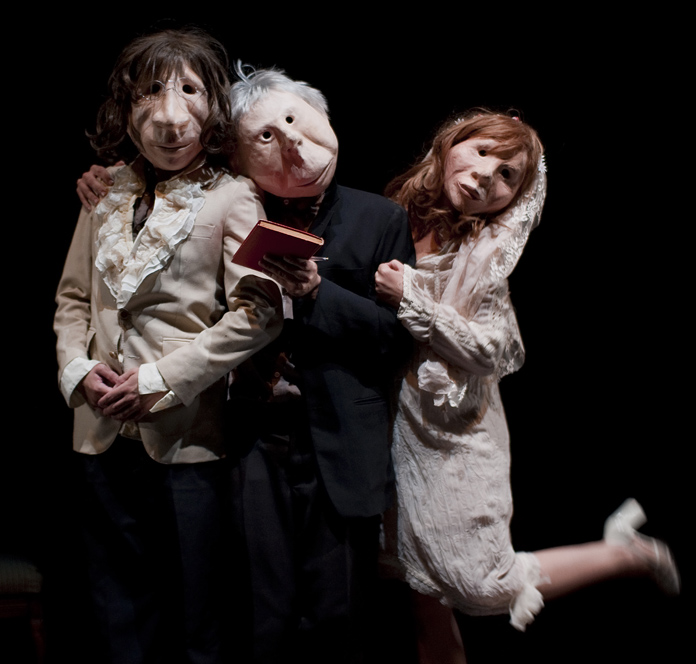
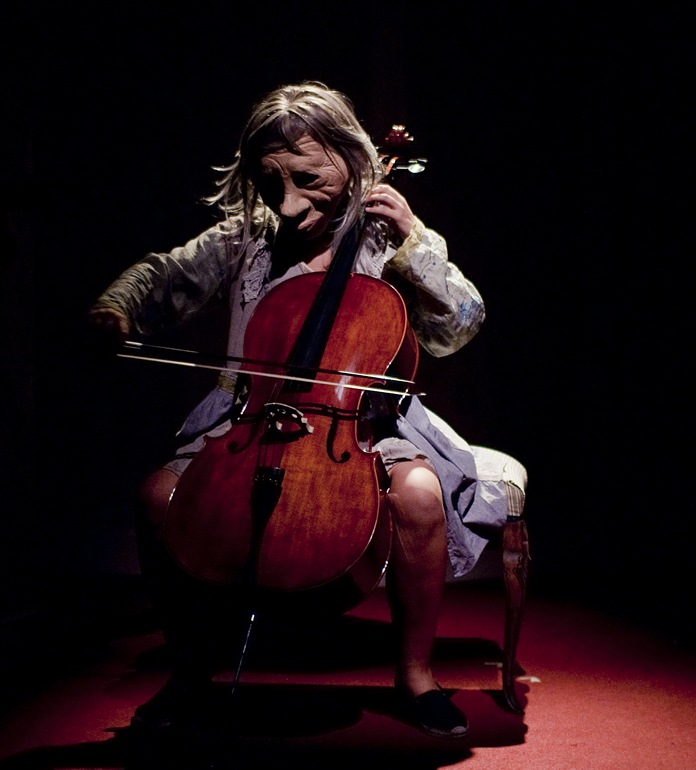
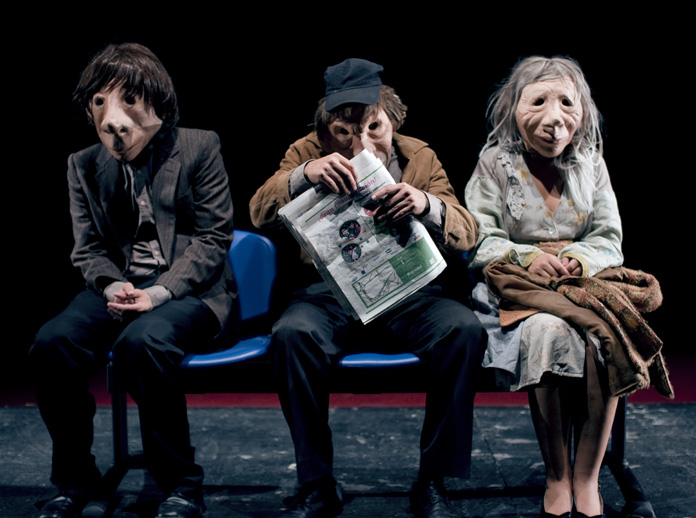
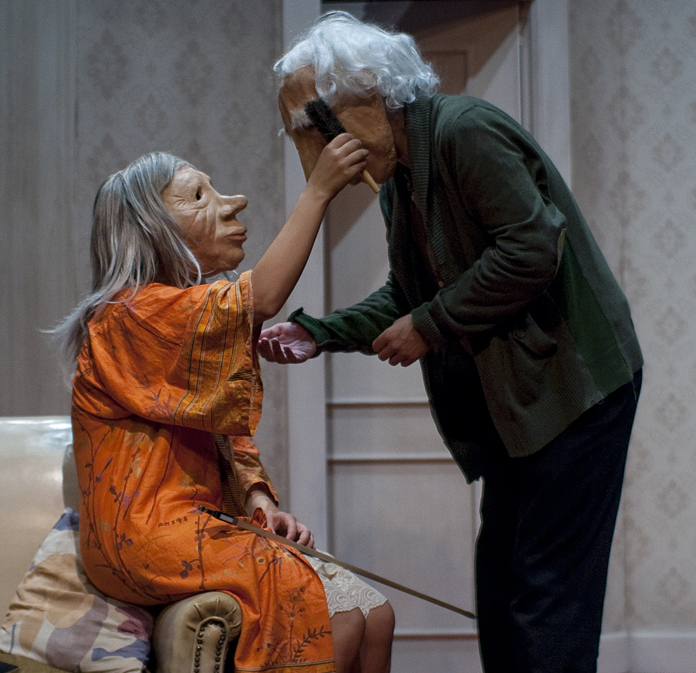
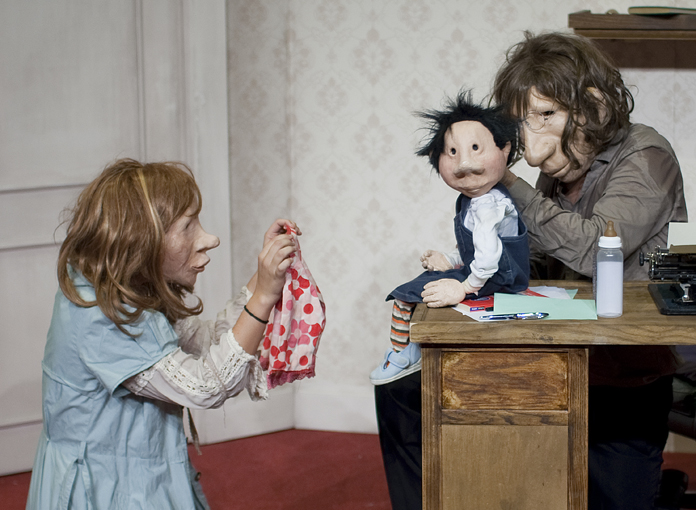
Weeks later, Spanish actors Jose Dault and Garbiñe Insausti began writing. They would create a play about the loss of memory, the loss of self, and the struggle of a husband and wife to rediscover their love as time works against them. The result was André and Dorine. The play is performed by three masked actors: Dault, Insausti, and Eduardo Cárcamo (who comprise the company Kulunka Teatro). There are no words and only minimal musical accompaniment, and yet the play is immediate and alive. For the last two years, the company has been touring the play around the world, and this Friday to Sunday it comes to the Baltimore Theatre Project.
In order to learn more about the play, we talked to Insausti about Gorz, the limits and freedoms of masked drama, and about taking theatre internationally. [The following interview has been edited for clarity and length.]
WW: So, how did the three of you come together to form a company?
Insausti: We all met at the Royal College of Dramatic Arts in Madrid about ten years ago, and then each of us worked for different companies in and outside of Spain–in France, in Italy, and in Poland. When you work with other companies, it’s very different. Many times you are just an employee–you go to work in the morning and have 5, 10, 15 different projects to work on. [Kulunka] was created because we had something to say.
Why the story of André Gorz?
Myself and Jose Dault, we got the idea in 2007 when we found out André Gorz had died. It started us writing, but quickly we decided we didn’t want to do a biography. We wanted to talk about Alzheimer’s. This disease that claimed Dorine is familiar to everybody. It’s the burier of memories, the burier of self. So we used it as a start from which the characters remember who they were when they were young, remember why they loved each other when they were so young.
It’s not biographical. The main character is called André, but he could have been Pedro; he could have been anyone.
Each of the actors in André and Dorine wears a mask (crafted by yourself), and none speak. Whence came the inspiration for the masks?
Well, I used to do Comedia Dell’arte in Italy, which uses another kind of mask, but maybe the most direct influence was this theatre company from Germany, Familie Flöz. They’ve been working with masks for the last 15 years. When I saw their performances a few years ago, I fell in love with this kind of work. I went to Germany to make a workshop with them, and in 2010 before we started rehearsals for André and Dorine, we invited one of them to come to Spain and give us a workshop.
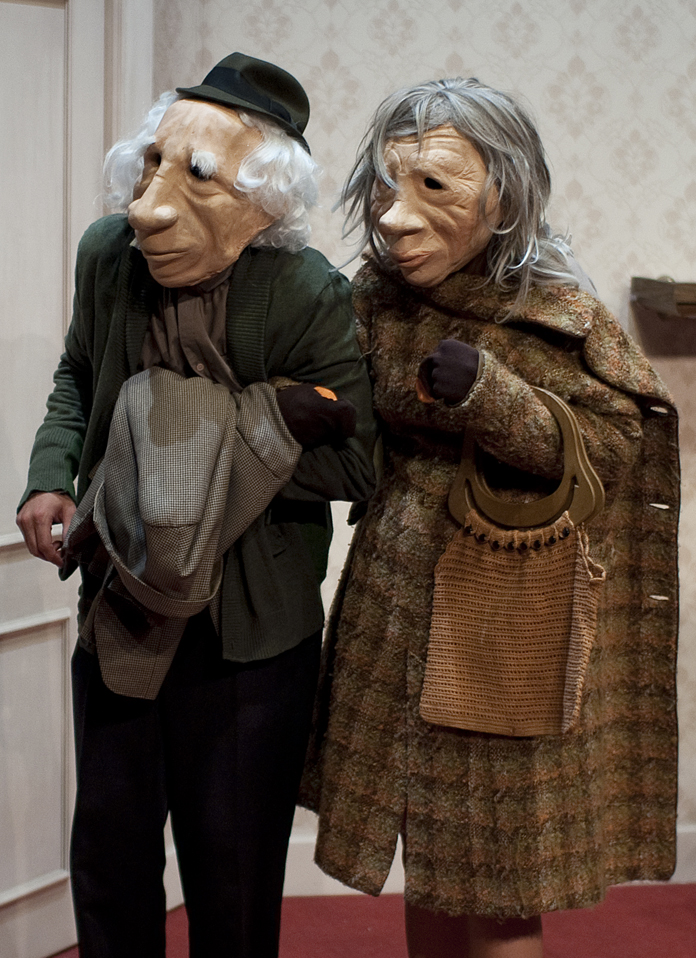
One might think that covering your faces would create a barrier between the actors and the audience.
Actually, it’s very surprising how much little that’s happened. At the end of the show, people tell us that the masks were laughing, the masks were crying. I think there’s a magic to the masks. They are not just a piece of plastic on my face. They are people and the audience can see it; the audience can see them moving and living.
At the beginning it was harder to work with the masks, because it’s another language. You have to learn to speak another way, how to express things without saying anything. We have to choose very carefully every action; we have to be very clean and exact, to make sure we only say what we want.
You guys have toured this play around extensively, right?
Yes. We started in Columbia, but we’ve been in Nepal, Turkey, the Dominican Republic, Argentina, Russia, Norway, Finland, Cuba. Through all this, though, we’ve realized that we all have more in common than we used to think. Although there are, or course, differences between one culture and the other, we’ve found people react [to the play] in almost the same way whether in Ecuador, in Turkey, or in London.
Have the silence and the masks helped with that?
Yeah. When we started to think about the story, we realized it’s a universal subject, so we felt also that it would be nice to have a universal language. From our work with Familie Floz, we realized that the language of the mask is really powerful. You experience a lot of things directly to the heart.
So, where does Kulunka Teatro go from here?
This is our first play as a company. We’ve been playing it for about two years, and we hope to continue touring for who knows how long. Many people ask us about the second show, but we haven’t really thought about it yet. This one was created because we needed to tell something, so we are waiting to have something to say before we start working on the second show.