Editor’s Note: Healthy Harbor & Waterfront Partnership are clients of What Weekly’s sister company, What Works Studio.
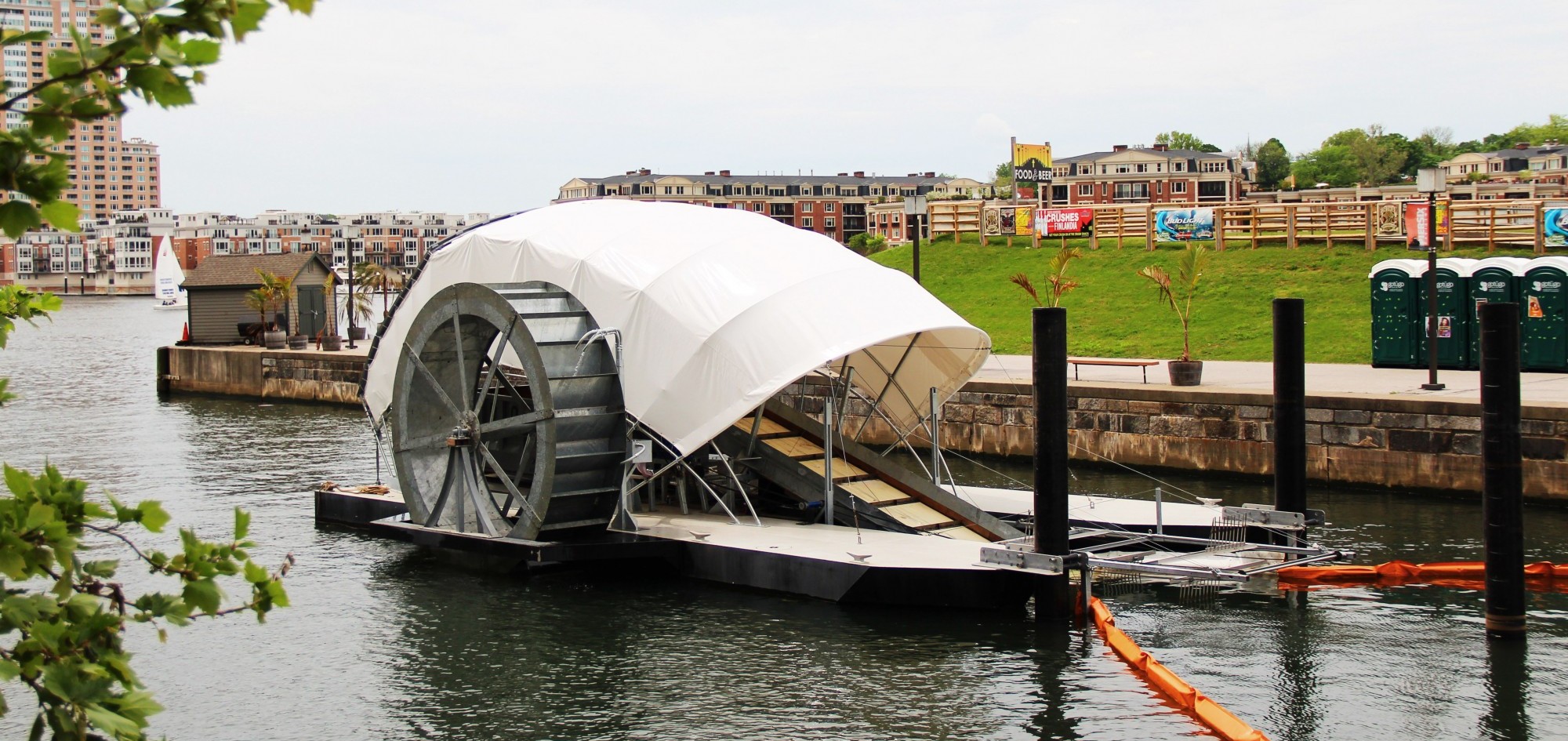
This past spring Waterfront Partnership and its Healthy Harbor initiative installed an innovative water wheel to intercept trash where the Jones Falls meets Baltimore’s Inner Harbor. Powered by both hydraulic and solar energy, the wheel is a gargantuan trash-eater that devours tons of garbage and protects the harbor, one Styrofoam cup at a time.
But this water wheel was not the first, nor will it be the last of its kind, and that’s something for Baltimore residents and environmentalists everywhere to be excited about. Having already consumed over 100 tons of trash since May, the difference the water wheel is making is phenomenal, but he’s just a small piece of a far greater goal known as the Healthy Harbor Plan.
Designed in 2010, the plan outlines how the city, county, and its residents can all take steps to help make the Inner Harbor swimmable and fishable by 2020. But for those of us who are a little less involved with environmental science and the size of our carbon footprint, this goal seems absolutely insane, and even more so unattainable.
“There was a lot of skepticism,” Adam Lindquist, Manager of Healthy Harbor, explains about when the plan was first revealed. “Part of that was by design. We wanted a bold aggressive goal, but we also wanted to show that it was a feasible goal.”
Mr. Trash Wheel – the Twitter persona for the giant nautilus-shaped garbage muncher, is a beacon of hope for the state of the harbor, and the inspiration the plan needed to get the community involved. Even reaching national audiences, the sheer brilliance of the water wheel, invented by John Kellet, is catching on everywhere.
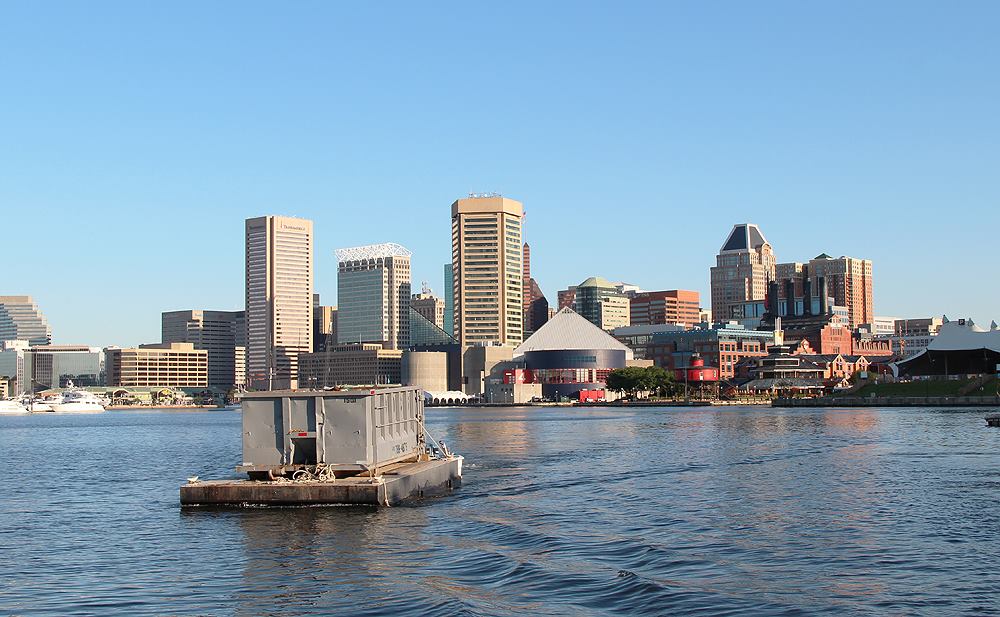
This barge full of trash would’ve been floating around the harbor without trash wheel.
But the goal is to do more than collect trash and protect the environment. Waterfront Partnership and Healthy Harbor are also trying to engage and educate people on their own pollution and storm-water footprints.
“It’s only a matter of time before one of these major events, like the Star Spangled Spectacular, coincide with a major water pollution event in the harbor. We don’t want to be on national media with everyone talking about how many dead fish are in the waterways,” says Lindquist. Stressing that Mr. Trash Wheel can’t tame the Inner Harbor’s pollution all on his own.
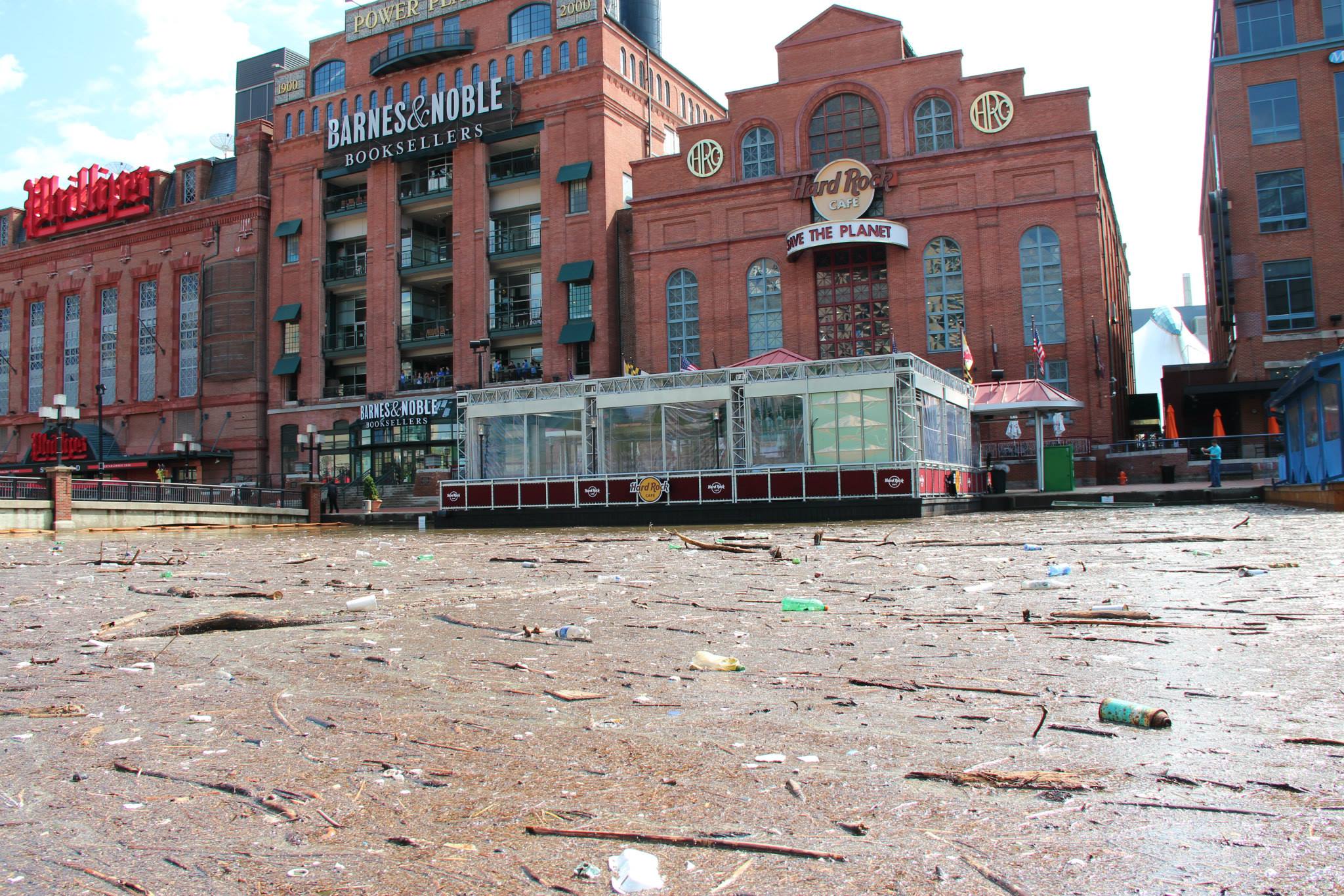
This is what the trash wheel is trying to prevent.
With several environmental endeavors under their wing outside of the Water Wheel, like the floating wetlands, oyster gardens, and a rain garden park (Pierce’s Park), HH and WFP are striving to fight against the reputation the Inner Harbor has garnered over the years. These projects, known as, “Living Laboratories,” recreate habitats in the environment that help create better oxygen levels, lessen the over-abundance of nutrients, and prevent harmful pollution during the first few inches of rainfall from seeping into the city’s waterways.
“A lot of people see the harbor as a dead environment,” Adam explains, “We try and educate people that it really is full of life and that life thrives as soon as you make small improvements in the habitat or ecosystem—you can really see life bouncing back.”
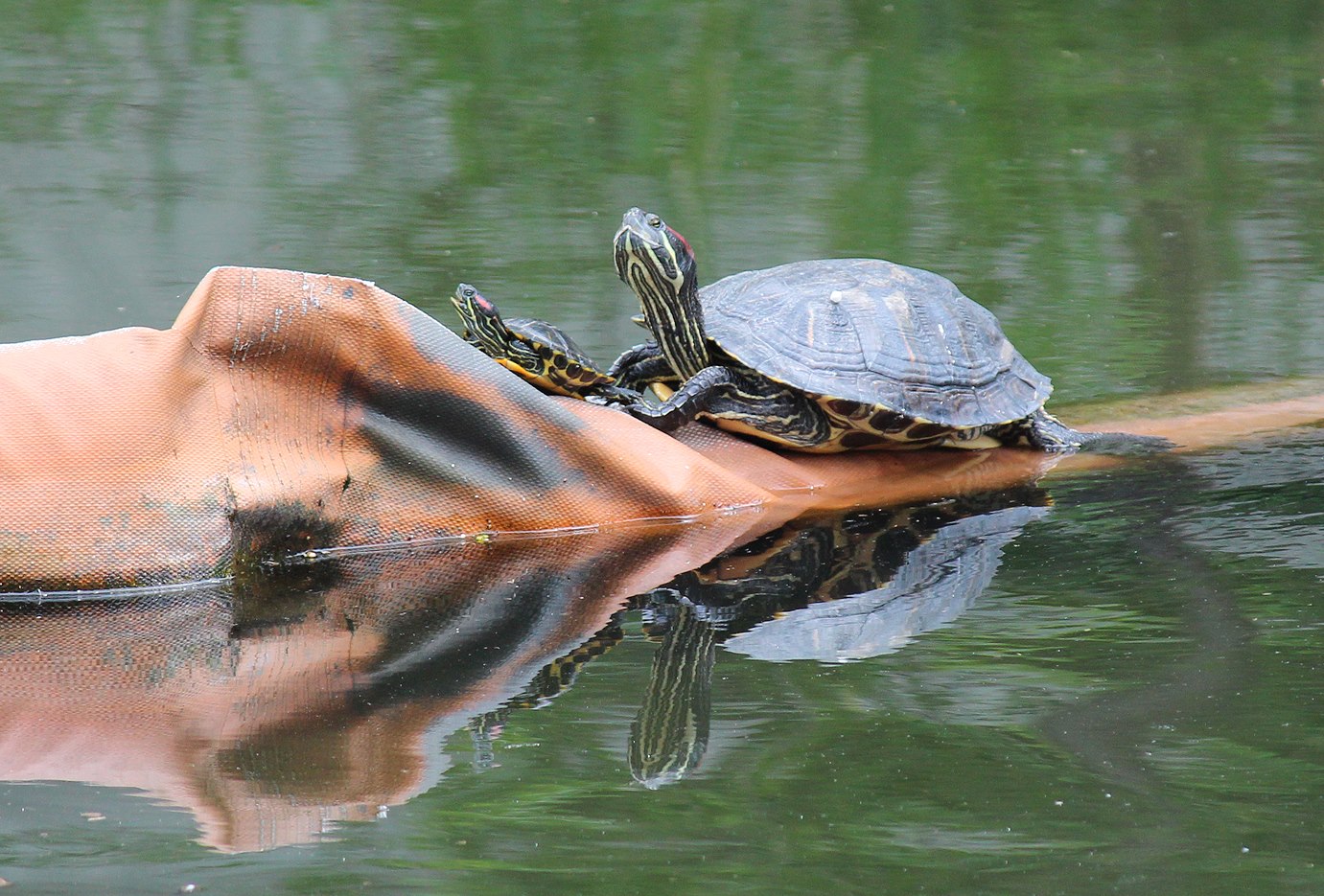
This is a turtle, sunbathing in the Inner Harbor. Convinced life is there yet?
The issue with this reputation is that it’s hard to inspire people to care about something that is seemingly already dead. Why put effort into saving the harbor if it’s already so far gone? That’s what these projects are trying to refute, that the harbor is full of life, including schools of fish in the thousands, river otters, ducks and herrings, it’s all there if you just take a moment to see it.
“Imagine what it would be if it wasn’t so polluted,” Lindquist wonders. “Imagine what it would be if you just gave life a chance.”
Despite the overwhelming positive feedback Mr. Trash Wheel has received, Healthy Harbor & Waterfront Parntership are not in the trash wheel business. Although there may be a Mrs. Trash Wheel in their future, the organizations’ ultimate goal is a trash-free harbor. With about a dozen other major trash falls in the Inner Harbor, that contribute 90% of the trash, there are plans for other trash wheels, but what really needs to happen is more education.
“We’re hoping to inspire the other entities, the city or the port, to do more trash interception around the Inner Harbor,” Lindquist said. “That being said, we are looking to build another one or two water wheels particularly in Harris Creek, where the first water wheel was located.”
While the city is now required to opt into different projects that have measurable water quality improvements, it’s important to understand that healthier water doesn’t rely solely on legislature. Individuals can have an impact as well. From something as simple as making sure your trash and recycling go on the streets in cans, to not putting fats, grease and oils down your drains, there are ways to decrease your impact on pollution as outlined in the Healthy Harbor Plan.
“Our long term goal for the water wheel and all water wheels that we may install in the future, is to put them out of business,” Lindquist explains. As interest in this awesome technology keeps catching on and calls continue to come in about the wheel itself, it looks like Mr. Trash Wheel might be headed to a nice retirement in Hawaii when 2020 rolls around.
In the fall, the Baltimore City Council will vote on legislature designed to curb plastic bag disposal in our stream and harbor. Click here to find out how you can help.