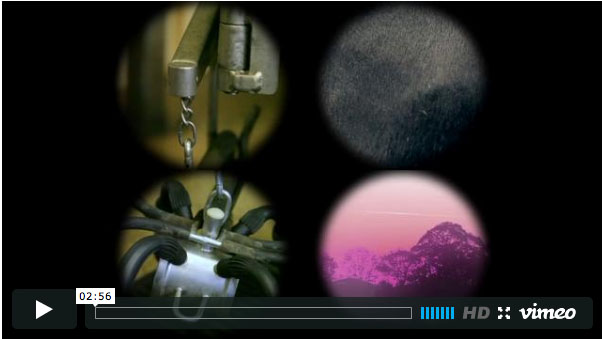
Digging around in the archives I found an experimental film I did at UCLA. I was there getting a master’s degree, and wife hunting. Now, I am strictly a story person, and I never really got much out of “experimental films.” There was always a sense of something dull and arty about the term. (Sorry, I can’t do Stan Brakhage.) But to get my master’s degree I had to take classes, including one on experimental films.
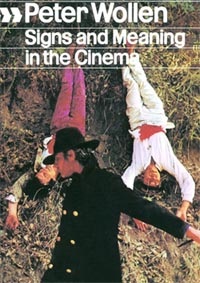
In academe, this falls under the category of “Critical Studies.” Critical Studies involves digging really deep into some subject until you find things that are not there. I didn’t get it at first, but after I caught on I really liked Critical Studies. I took three separate Critical Studies classes from a guy named Peter Wollen. Hardcore film geeks know what I’m talking about. Along with dudes like David Bordwell, Peter Wollen has made a career out of digging really deep. His book, Signs and Meaning in the Cinema, is a seminal work dealing with aesthetics, auteur theory, and all that jazz. Wollen pushed the academic area known as “film studies” to a new level with all this structuralism and semiotics drilling down.
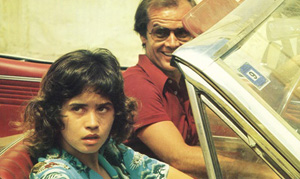
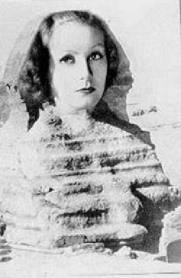
Wollen was a co-screenwriter on Antonioni’s The Passenger (with Jack Nicholson and Maria Schneider, the girl that was in Last Tango in Paris), but he really didn’t delve into Storytelling films after that. He would do more weird stuff like rewriting the Oedipal myth from a female perspective and rendering into an experimental film called Riddles of the Sphinx.
Wollen is a Brit, and somewhat eccentric, and of course brilliant. He would teach his classes (I took three of them!) by sitting at a table and looking into grid paper notebooks crammed with tiny, neat, handwriting in different colors of ink. He would read the notes aloud. Occasionally he would look up as if surprised that there were other people in the small room. Sometimes we would watch stuff on a TV. He did turn me on to avant-garde filmmaker Maya Deren, and a lot of other cool stuff that I did like.
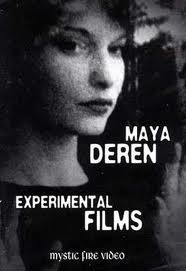
So, anyway, we had the choice of writing a paper or making an experimental film to satisfy the requirements of the class. That’s no choice at all to me: I made the film. I made it as an experiment, because it was an experimental film class. It’s called “It’s About Persephone,” and was inspired by a teenager’s poem. So I am thinking, do not try to convey a narrative, this is not a story you’re telling, this is experimental cinema! I went out over several days and shot scenes in my neighborhood in Venice and Ocean Park, and also dug up some random “found” footage to incorporate into the experiment. On finals day, we all screened our experiments (they were great fun to watch). So after mine is over, Wollen looks at me and says, “I don’t get the story, it’s not about Persephone.”
— David Warfield