A Conversation on Theater with Liesl Tommy
Photography by Phil Laubner
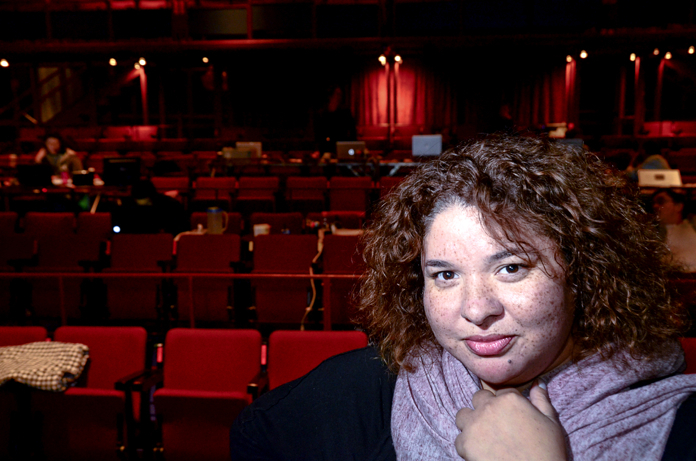
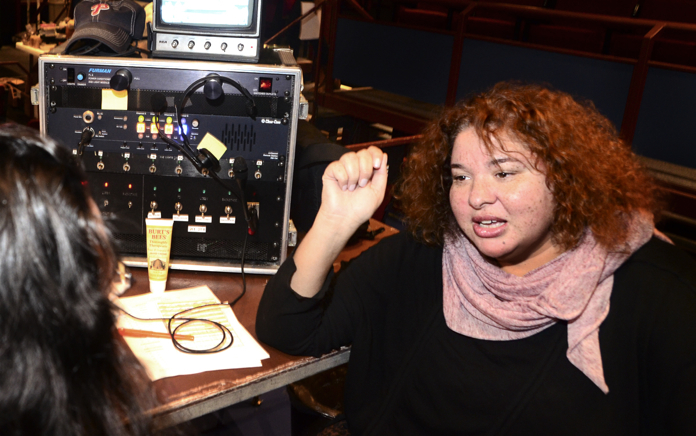
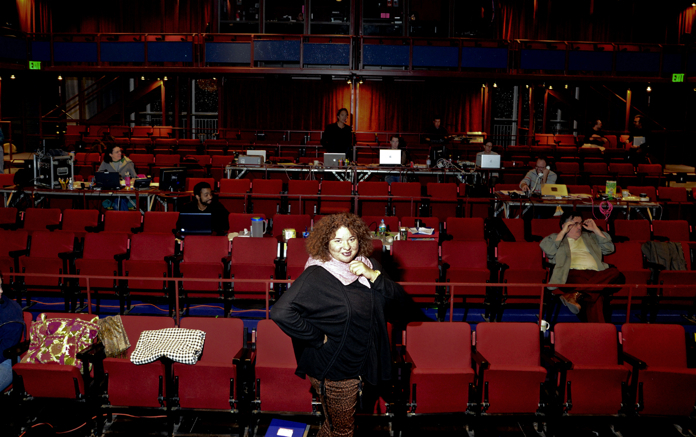
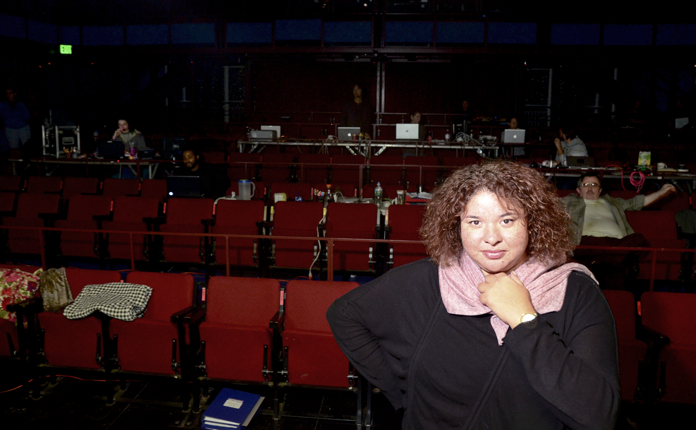
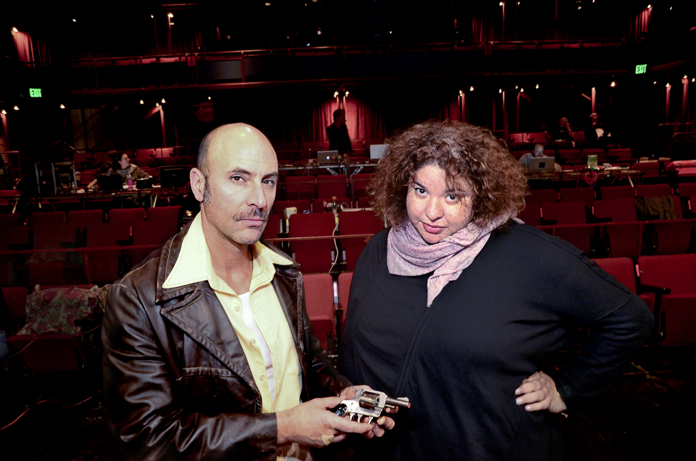
Centerstage’s Artistic Director, Kwame Kwei-Armah’s first high stakes artistic decision was to ask Liesl Tommy to direct David Mamet’s masterpiece, American Buffalo. After chatting with her I think she is ideal for the job. She’s super smart, fun, funny, a polished leader, and an artist with a keen awareness of how actors create. She seeks the nitty gritty in life and amps it up in her theater. I believe that, even as we’re sitting in the dark with strangers, her actors (and designers) will pull us into the primal experience of being fully alive with their performances of this powerful play. It’s dark and funny, ferocious and poignant. I think she will put a feather in Kwame’s cap with this production. Read the article, see the play and get back to me with your experience and opinions.
Peter
How did you come to be the director of American Buffalo? Did Center Stage come to you or did you pitch them?
Liesl
Kwame came to me. Two writers that inspired him for his own writing were David Mamet and August Wilson. This is a play he responds to. When the offer came in I jumped on it. For two reasons: I’m certainly fascinated by Mamet and his play. And I wanted to be in Baltimore for Kwame’s first season. For me it’s definitely worthwhile. I wanted to be a part of it.
Peter
Why do you think he reached out to you for this play? Why are you a good fit for it?
Liesl
A lot of my work is, there’s a kind of vigor to it…a kind of violence to it.
Peter
I’m interested. Tell me more.
Liesl
My aesthetic is very physical and I’m interested in the violence of being a human being. And sometimes that is with actual physical violence onstage, and sometimes it’s just the thing that pulsates underneath every exchange. I feel very connected to that. It’s something that I find myself exploring over and over again with every play that I direct.
Peter
That comes from your belief system or personal experience? Or some combination of the two?
Liesl
A combination of the two. I’m just obsessed with what lies beneath. How close we are as human beings to our most primitive form. I was talking to these guys (the actors) about this, how, you know, we are one extended black-out from living in a cave. We are not as civilized as we like to think we are, you know? And, I think it’s fun to explore that and play around with how in touch we are with that element. And how when it, when characters find it bubbling up.
Peter
Might the fact you are a woman and your feminine perspective, contrasted with Mamet’s masculine value-system, possibly contribute to why Kwame thought you would make this interesting?
Liesl
Very possibly, because I don’t pretend to come at this any other way than I’m a woman. And, while I have a taste for aggressive behavior onstage, I definitely feel like what I’m looking for, what I’m dragging out of them (the actors), sometimes against their will, and sometimes with complete excitement, is the vulnerability underneath these men. I think what makes it interesting is that they have this incredibly confrontational language—the male ego is so present—in each interaction. But, I think what makes it fascinating is they’re actually fragile people.
Peter
Yes.
Liesl
And that contrast is what I find endlessly compelling…the fragility of their need for each other…their emotional need for each other.
I really do think that Mamet knows something profound about men and how they interact and what they say and feel when they’re in a group.
Peter
And what strange and rigid codes we live by and feel obligated to glorify whether we want to or not.
Liesl
Absolutely
Peter
For better or for worse.
Liesl
Yeah. And it takes a kind of bravery for these actors to say these lines and then also go deep to the soft underbelly.
Peter
Pick that psychic scab.
Liesl
Yeah.
PAUSE
Peter
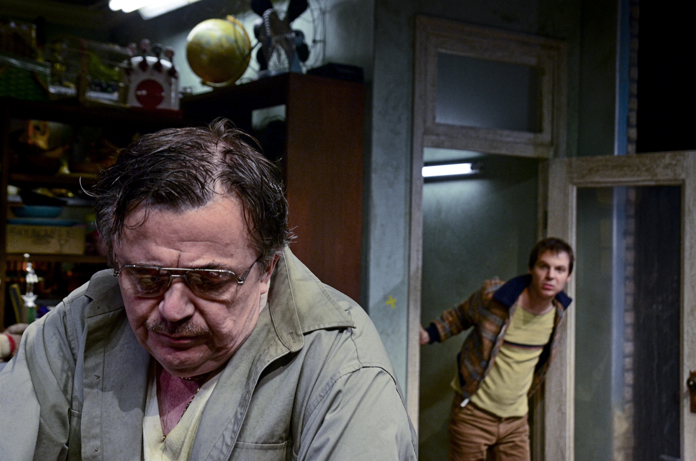
What attracts you to a play that was first produced in 1975 and that is deeply rooted in place—Chicago?
Liesl
Well, I am obsessed and always have been with the films of the 70’s. The really gritty American films like Taxi Driver.
Peter
The French Connection.
Liesl
Oh, yeah.
I grew up in Africa and I have an attraction to really messy urban centers. The last few years I’ve worked in Ghana, Rwanda, and Nairobi, Kenya. These are crazy cities. They kind of make me think of New York (where she lives) from the time of those movies…the sense of danger and life.
People making life happen! That edge is something that I love. One of the things when I was talking to the designers on this show, I referenced a lot. How do we create that sense of chaos? Side by side with the beginning of, even at the time of the play, gentrification.
Peter
Did you, for whatever reason, want to reach out to the playwright before getting started?
Liesl
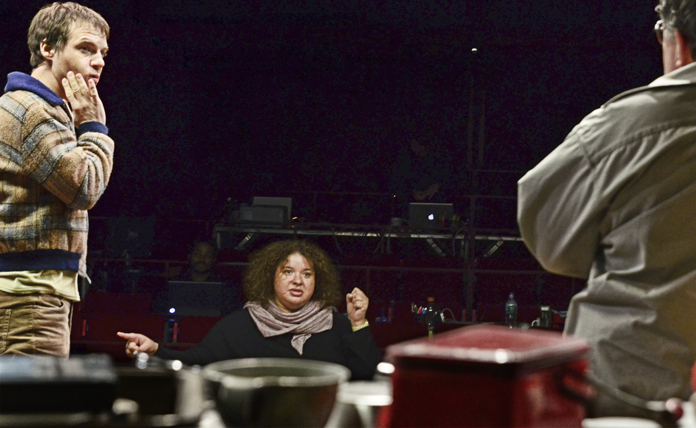
No. Part of the fun of doing a play like this is that the definitive production has already been done. I get to be an artist with it. There’s freedom and that’s wonderful
Peter
What does that mean to you, “…be an artist with it.”?
Liesl
It means that I can let my imagination take flight. I read the play, do my research…a lot of being a director is just sitting and letting images bombard your brain.
Peter
Is there any activity that helps open you up?
Liesl
Listening to music, or walking…letting images come and making the connections. One’s that really resonate. A lot of times I put it onstage, if it’s a staging moment, or a relationship moment. You really have to know what you like, and then you put that onstage. When you give yourself freedom to let your imagination—our greatest gift as artists—free reign, you’re going to receive the things that you like, or that come up that will be fun.
Peter
Are there any risks in producing this play?
Liesl
Absolutely. I think the language is a risk.
Peter
In what way?
Liesl
Not everyone who comes to see theater likes to be assaulted with curse words.
Peter
Do you think that 35 years later they’re expecting it?
Liesl
I think so. I don’t know.
Peter
Thanks to this play, Mamet-speak is widely imitated.
Liesl
Yes, it is.
Peter
Even television has co-opted the patterns and grit, and I wonder if-
Liesl
-I think that live, experiencing people screaming the word “cunt” in your face—live!
Peter
The “fuckin’ Ruthie” bit?
Liesl
Yeah.
Peter
Love it. It’s so vicious the way he says it.
Liesl
It’s fabulous, but live it’s kind of like, it’s not safe like hearing it in a movie.
Peter
Is there a theme or anything about the play that makes it particularly relevant today?
Liesl
I’ve been thinking about it so much. It’s this sense of economic desperation these guys are working with. Every single day they get further and further away from the American Dream. From a feeling of…you know, Teaches speech, “I go out there every day, and-
Liesl and Peter (together)
-there’s nothing out there.”
Peter
Killer.
Liesl
Killer. I’m getting chills.
PAUSE
You know, cause it’s just, you know, that today there are so many Americans who are experiencing this.
Peter
Connected to that (for me) is (the line), “…there’s business and there’s friendship…”
One trumps the other. That somehow it’s OK to be duplicitous even with your friends on account of business.
Liesl
Yes. Again, in the climate we’re in now…because these guys have nothing. Their whole, this whole business thing is a façade. But, we see that people who have their own business subscribe to that same belief system.
Peter
Mm hmm
Liesl
You know, as raw as this is, with people stabbing each other in the back and making each other bleed it (the play) is the base version of everything we’ve been seeing in the last 5 years.
Peter
Do you operate with, in this play or any you’re directing, a guiding concept or metaphor or idea, something you use to remind you of the world-of-the-play or what you’re trying to do with it?
Liesl
Hmmmm… I don’t think so.
Peter
Here’s a question open to challenge. Is this production, is your take on this play, is it…are we going to walk away thinking it was a take on capitalist mythology or will it come across as a character study, or something altogether different?
Liesl
I don’t think I’m crafting it to be one thing or another. I definitely feel like I, cause I work on new plays, I’m obsessed with what the metaphor is. And, I definitely keep that in mind as I’m directing it because, to answer your previous question, that’s where it starts for me—the metaphor and I always go back to that.
I rarely just want things to be just realism. I’m not all that excited by it. You always want that feeling that there’s a larger life in the back somehow. And, so, I don’t feel like I’m trying to sculpt it to make a point. That’s not something I ever do. The first thing is, tell the story with as much clarity and ferocity as possible. That’s my religion. And then, my director work; keeping the metaphor alive, and the subtext alive, so that people can have the experience of the story. All those other things operate on all the other levels.
Peter
How do you get what you want?
Liesl
I rarely go in and say to the actors, this is the vision, the thing we’re trying to do. I like to discover it with the actors.
Peter
Give them first shot at it.
Liesl
Yeah, yeah, and then there’s a point where you go, OK this is what I’m starting to see and this is what interests me, and this is what I’d like to shape. I rarely want to have some big concept that has nothing to do with what the actors are doing onstage.
I used to be an actor and love a vigorous actor-driven theater.
Peter
Another challengeable question.
In this script what matters more: the rhythm of the speech, the meaning of the story, or presenting the hardcore realism of the Chicago ‘70’s setting?
Liesl
For this play none of us can escape the rhythm of the play. The rhythm and language opens up the other things you’re talking about.
It’s like Shakespeare you have to internalize the scansion of the poetry. With Mamet it’s the same thing. You have to honor and immerse yourself in that.
Peter
That’s the well from which you draw the other things.
Liesl
Exactly.
Peter
Are the actors playing the pauses as written?
Liesl
That’s something I feel really, I mean, another playwright I love is Pinter, and I really love pauses, and to explore them.
Peter
As written?
Liesl
I think that’s important. There’s times you take that pause and make it half or move through it, make it a breath. From the get-go you obey every single pause.
I really believe in observing punctuation. The way punctuation is written in a line, you will always find the way it breaks the sentence gives you the sense of it. I believe in the writer’s punctuation and I believe in pauses…as written.
When you get to where we are now (close to opening), when I’m tightening everything, then sometimes you can cut the pause, and keep the sense of it.
Peter
The speaker’s mind makes the shift indicated by it.
Liesl
Exactly.
Peter
As Director, leader, how do you establish a shared world-of-the-play belief system with your people in a relatively short time, in a highly structured institutional setting?
Liesl
I do a lot of research and I invite a lot of research into the room. That way we come at it from the same point of information and knowledge.
Peter
In this play what are you researching?
Liesl
The writer, the place, junk shops, you name it. You do that work and forget it.
Peter
Like pauses and punctuation, you internalize it and forget it.
Liesl
It’s integrated, informing the decisions we’re making.
That’s such an essential part of theater. An actor trains the voice and body and then you let it go and move into the imaginative space.
Peter
How do you talk to your actors? You make a lot of requests? Ask a lot of questions?
Liesl
In the first week during table work I ask a lot of questions. See how they’re thinking about things. How their minds work. Every actor is different. How they put things together. What connections they’re making. It’s so boring if I come in and say everything…it’s this or it’s that. I’d rather hear what they’re thinking and if they’re not sure I sort of go, “I propose this.”
I’m really interested in the organic response of the actors.
Peter
Explain.
Liesl
We get up and we’re staging it. Rather than, “you go here and you go here,” for the first staging, I just want to see what they’re bodies are doing. Now that we know what the beats and events are, what the transitions are. Some actors are brilliant at staging themselves. They internalize the events and move as needed. Some actors are less brilliant. I’ve got a group of people who are good at being and moving onstage. Before I get in there I want to see what their natural impulses are to the moment, to each other, or to whatever.
In theater I want to watch people be free. Onstage. I don’t want to see something hyper-sculpted. I don’t like to feel like I’m seeing the hand of the director.
Peter
Don and Teach each think they’re the smart one. So, who’s the alpha male? Is it clear, is it negotiated? Are you having fun with that?
Liesl
Yeah, it’s definitely something we’re playing with. A fun thing. The thing they finally understood was I’m the alpha male!
WE LAUGH
Peter
What makes theater different from film?
Liesl
Theatricality.
Peter
What does that mean?
Liesl
This play is firmly in the world of realism. I think the reason people come to the theater, and not watch TV, is that it can be larger than life. For me at least, realism isn’t that interesting. Hyper-realism is interesting. What is the set in real life, and how do I take it up a few notches? How do these people interact and how do you make it more? That is interesting to me. I want to see people using language vigorously, smacking out those consonants, getting in each other’s face, and I want to feel like I’m smelling sweat.
Peter
Wallow in the human experience.
Liesl
Yes! I do. I do.
Peter
It’s all over me!
Liesl
Yes. I really love the mess.
Peter
Why does that difference matter?
Liesl
When you see that in theater it is just so much more immediate and dangerous and visceral. Those human beings are right there. I don’t mind seeing a movie alone, I kind of like it. When I go to a play I want to be surrounded. The place filled up. That communal experience is so important. That live thing not just people there, I want them all around me. You want the group experience.
Peter
Anything I could have asked but didn’t? Anything you want to add?
Liesl
One thing that’s been fun working, discovering, experiencing is how humor and violence clicks in. How aggression and humor coexist. There’s some really funny stuff in there. The score is perfect. You’re laughing and then it’s silence. Just horror. You’re laughing at these guys and then it’s painfully familiar. He (Mamet) never just descends into jokes. You can never dismiss them as idiots. Somehow they keep pulling you back in. You go, this is more than fools, this is life, this is me, or someone I know. And that’s amazing.