Despite photography as a medium being a newcomer to the fine art world, it has already started to establish itself and continues to receive great recognition. With some photography works selling for as much as $6.5 million – a new record that was set by Peter Lik’s “Phantom” – it seemed like an interesting time to visit the fine art photography show held annually by the Association of International Photography Art Dealers (AIPAD) in New York City last week.
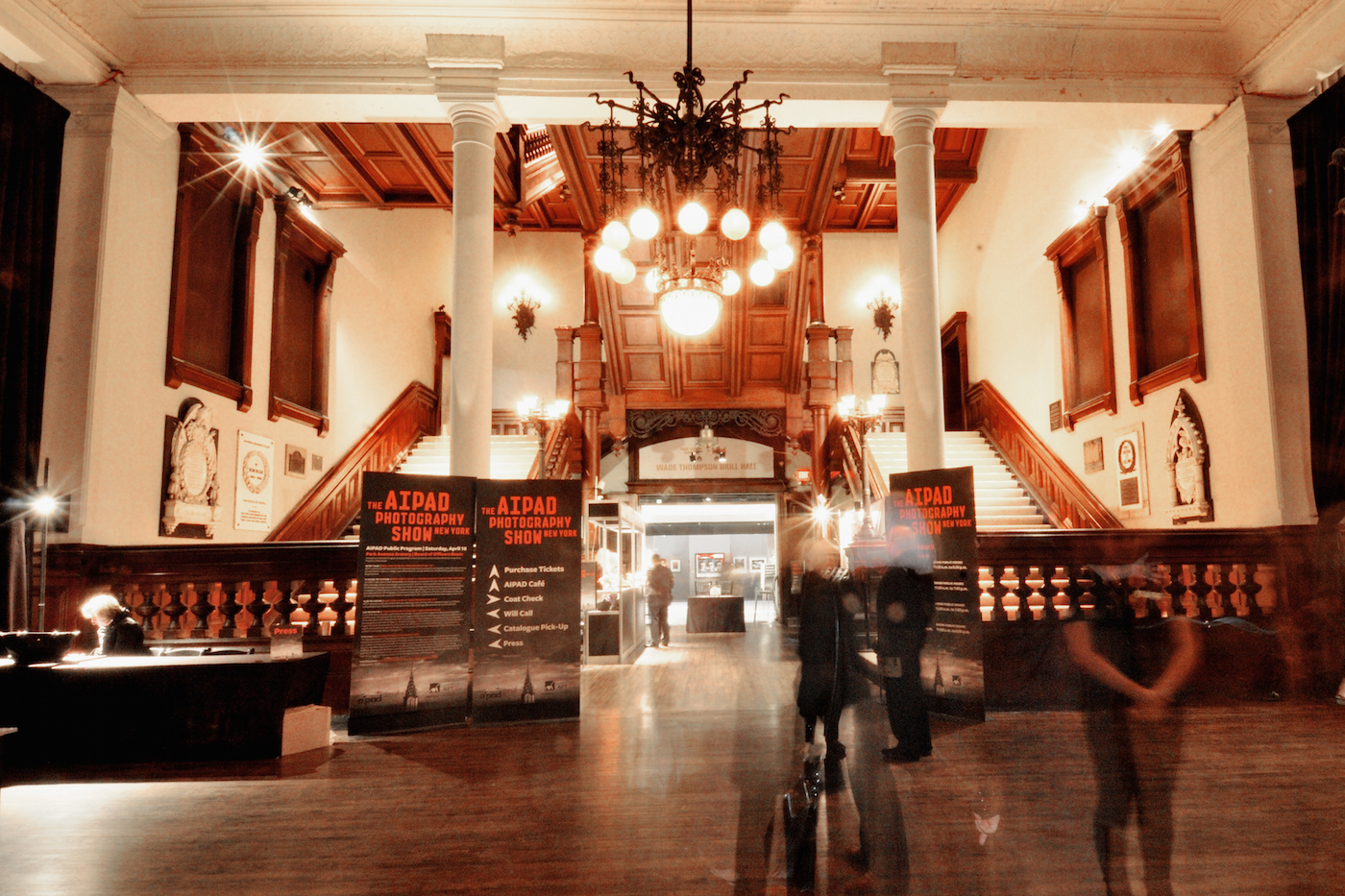
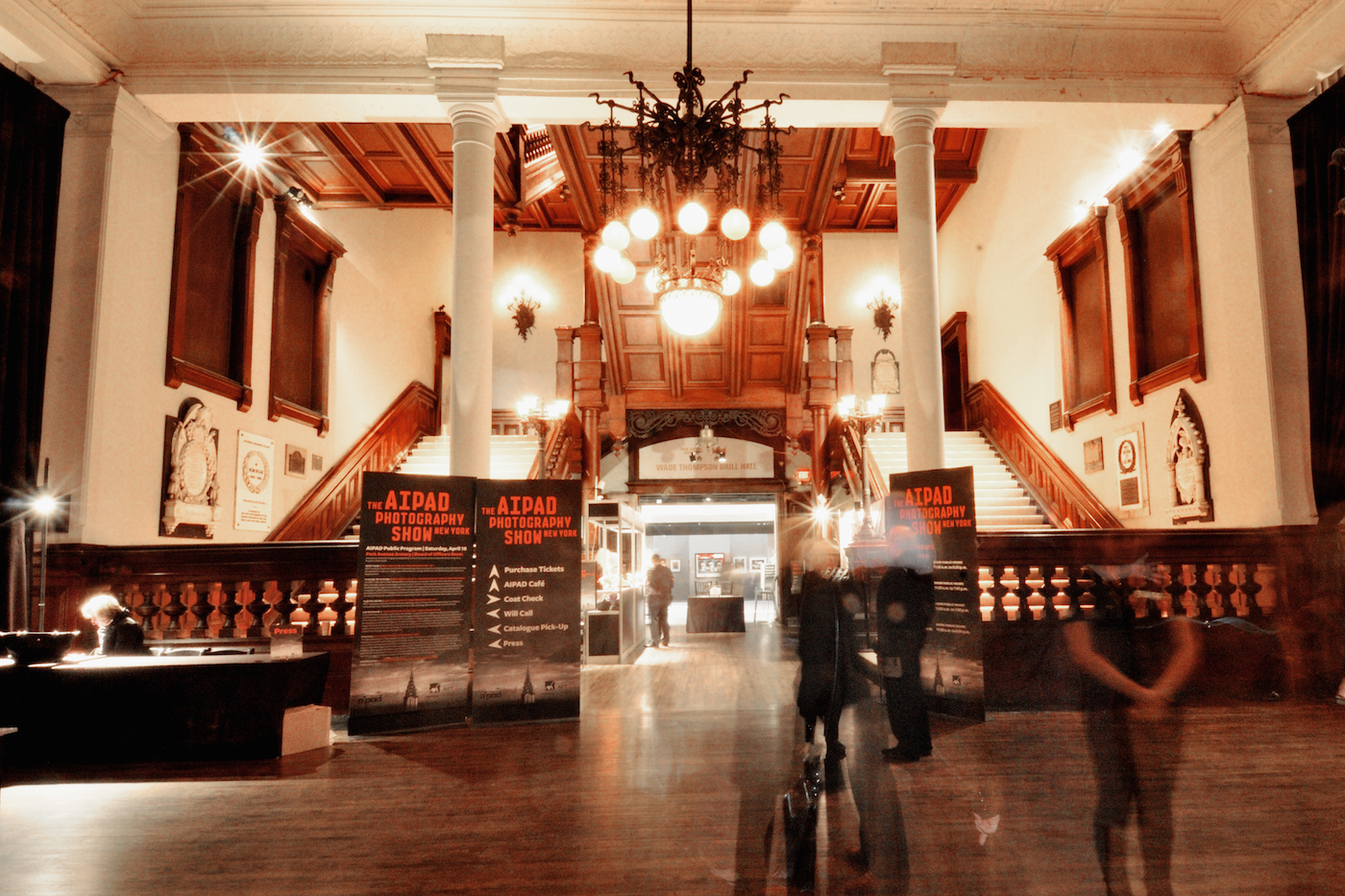
The Association of International Photography Art Dealers held the 35th edition of its AIPAD Photography Show on April 16-19 at the impressive setting of New York’s Park Avenue Armory. Formed in 1979, the Association is dedicated to creating and maintaining high standards in the business of exhibiting, buying and selling photographs as art.
To offer our readers an inside story on this year’s show we caught up with AIPAD’s Vice President and President-elect Kraige Block, who is also representing New York based Throckmorton Fine Art gallery during the show.
Ivan Petrov: How has the annual AIPAD Photography Show evolved over the years and what is new on exhibit in 2015?
Kraige Block: The annual photography show originally started out as a table-top art fair. At that time, photography was only starting to be recognized as an art form in itself. These days, in contrast, major museums have photography departments and are busy building up their photography art collections. For 2015 we have assembled the largest number of participants with 89 galleries and dealers offering the widest variety of works available.
IP: Several Cuban photographers are being highlighted at this year’s AIPAD show against the backdrop of thawing diplomatic relations between Cuba and the United States. Over the years, have you noticed any trends or relationships between current events and the photography that gets featured and acquired at the AIPAD show?
KB: The world is feeling nostalgic about looking at Cuba. The country presents a time capsule few artists have been able to capture. We expect to see new and interesting work from Cuban artists using technological advances that were previously not readily available to them. The relaxation of sanctions is likely to make their work more interesting and relevant.
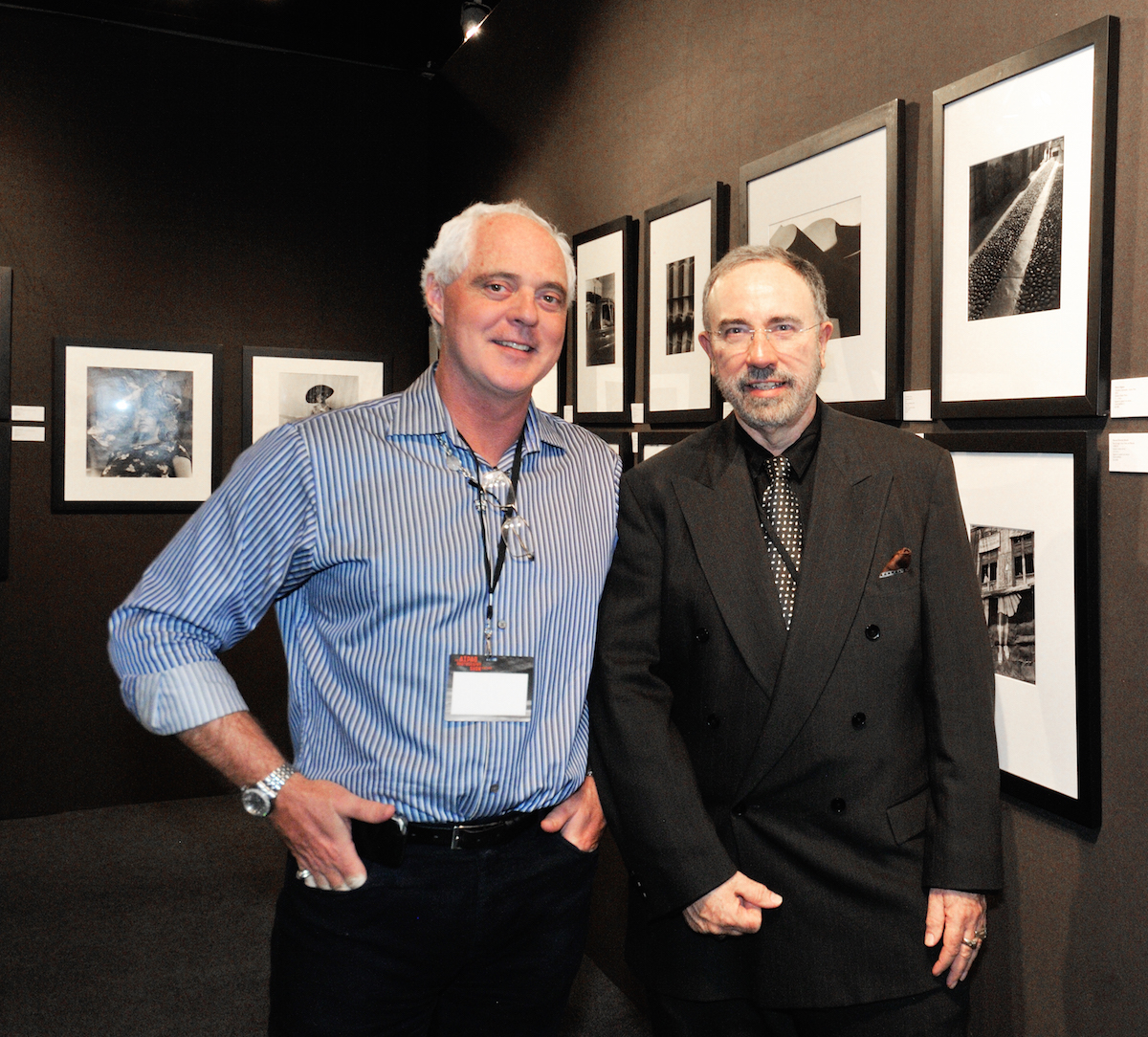
AIPAD Vice President and President-elect Kraige Block (left) and Spencer Throckmorton (right), President of Throckmorton Fine Art at their 2015 AIPAD exhibit. One of the photographers featured at by their gallery is Cuban-born Mario Algaze whose 2002 print (top-right) captures a street scene in Cuzco, Peru.
IP: Can you tell us about your relationship with New York City’s 92nd Street Y who will benefit from the funds your raise through our photography show?
KB: AIPAD has worked with different beneficiaries in the past. We see the 92nd Street Y as a tremendous match because of their incredible art program on the Upper East Side of Manhattan. We plan to earmark funds that will advance their after-school art education program. We are also working on teaming up with a major financial institution who would be interested in becoming our annual opening night sponsor.
IP: AIPAD tries to inspire the next generation of photographers. How much effort and resources do you devote to introducing young and innovative artists?
KB: To a large extent this depends on the participating galleries. About half of them are currently working with contemporary and emerging artists and relationships between galleries and photographers are often very personal. Although the AIPAD show may not necessarily be the best venue for photographers to network with each other, I would encourage young artists to look at everything. It also helps to have a business mindset and to have a good idea of how likely your work is to sell at the show. After all, it’s a big annual expense for galleries to travel here.
————————————————–
We hope this gives you a good glimpse into what the AIPAD Photography Show is all about. As for the size of a wallet to bring to the show for those considering taking home one of the masterpieces next year: the photographs at the 2015 show ranged anywhere from $200 to $500,000. What may be an invaluable element of the annual show is that it offers an excellent opportunity for both new art collectors and aspiring art photographers alike to develop their own eye.
Baltimore artists looking to establish themselves as fine art photographers can find a broad range of exposure and industry-networking opportunities, both at home and outside the city limits. Whether it’s events like the AIPAD Photography Show, or smaller exhibitions closer to home, such as the annual “For the Record: Artfully Historic DC” contest and exhibit launched this year by the Historical Society of Washington, D.C., there is no shortage of opportunities nor is there a limit to keeping your eyes open and to push your creativity.
Here is what caught my attention at the 2015 AIPAD Photography Show:
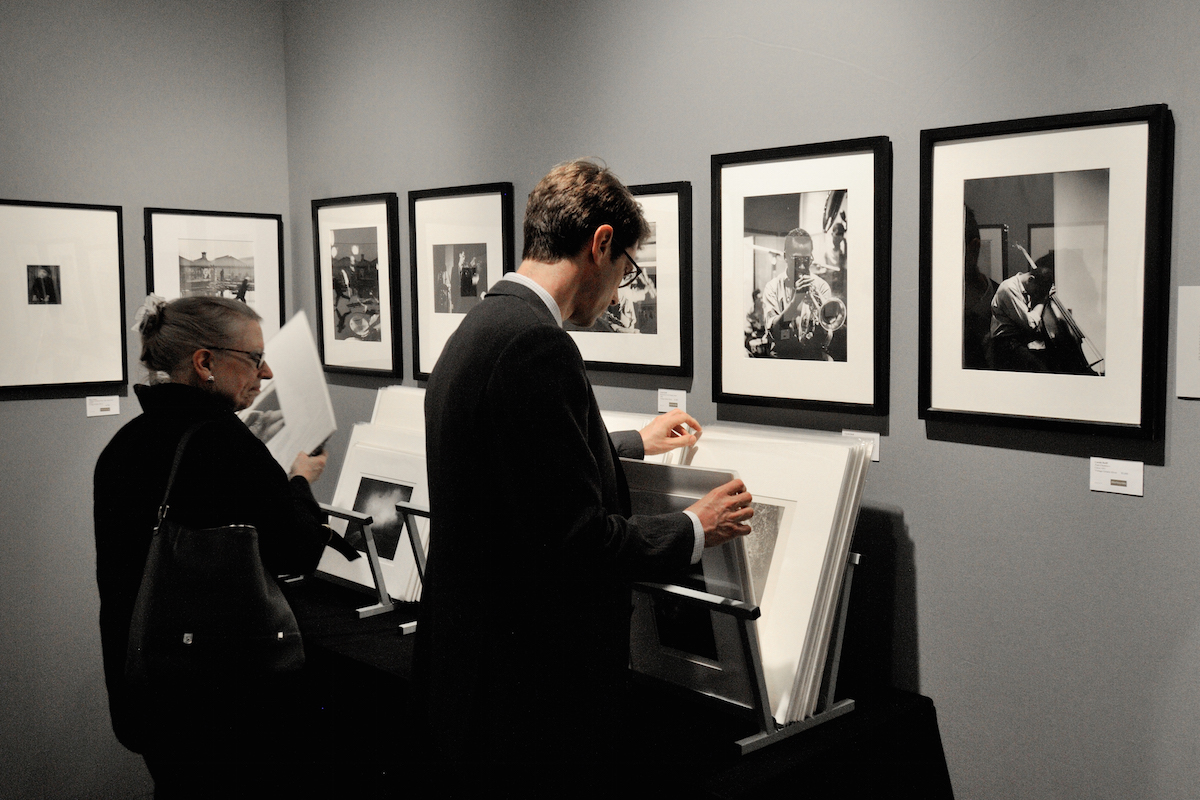
AIPAD visitors browse through the offering of Michael Dawson Gallery from Los Angeles. Seen here are rare photographs from a series “Nights in Birdland” by Carol Reiff, one of the few female jazz photographers working in New York in the 1950s. As a freelance photojournalist, she covered recording sessions, interviews, jam sessions, events and concerts. Right to left are photographs of Paul Chambers and Miles Davis.
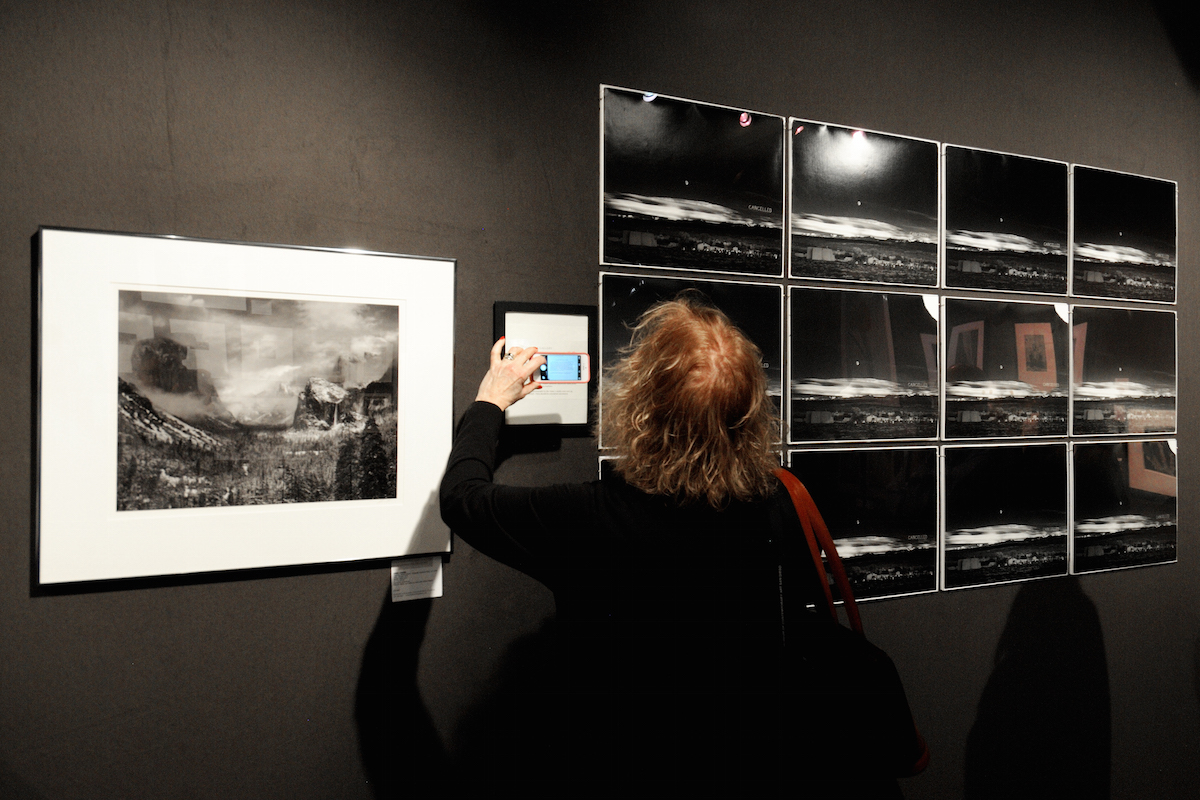
A woman using her smartphone’s camera to capture an AIPAD exhibit reminds us how far photography technology has come over the two centuries of its documented history. Seen here is Scott Nichols Gallery’s installation of works by prominent landscape photographer Ansel Adams. On the left is his 1944 photograph of Yosemite National Park titled “Clearing Winter Storm”. On the right is a series of 12 darkroom artifacts of his famous image “Moonrise, Hernandez” that the artist intentionally destroyed with a Wells Fargo check-cancelling machine after realizing they were printed on a defective batch of Ilfordbrom paper. The “Cancelled Moonrise Artifacts” series has questionable value but offers us a rare glimpse into Ansel Adams’ creative process by illustrating the inconsistencies and difficulties of the photographic process.
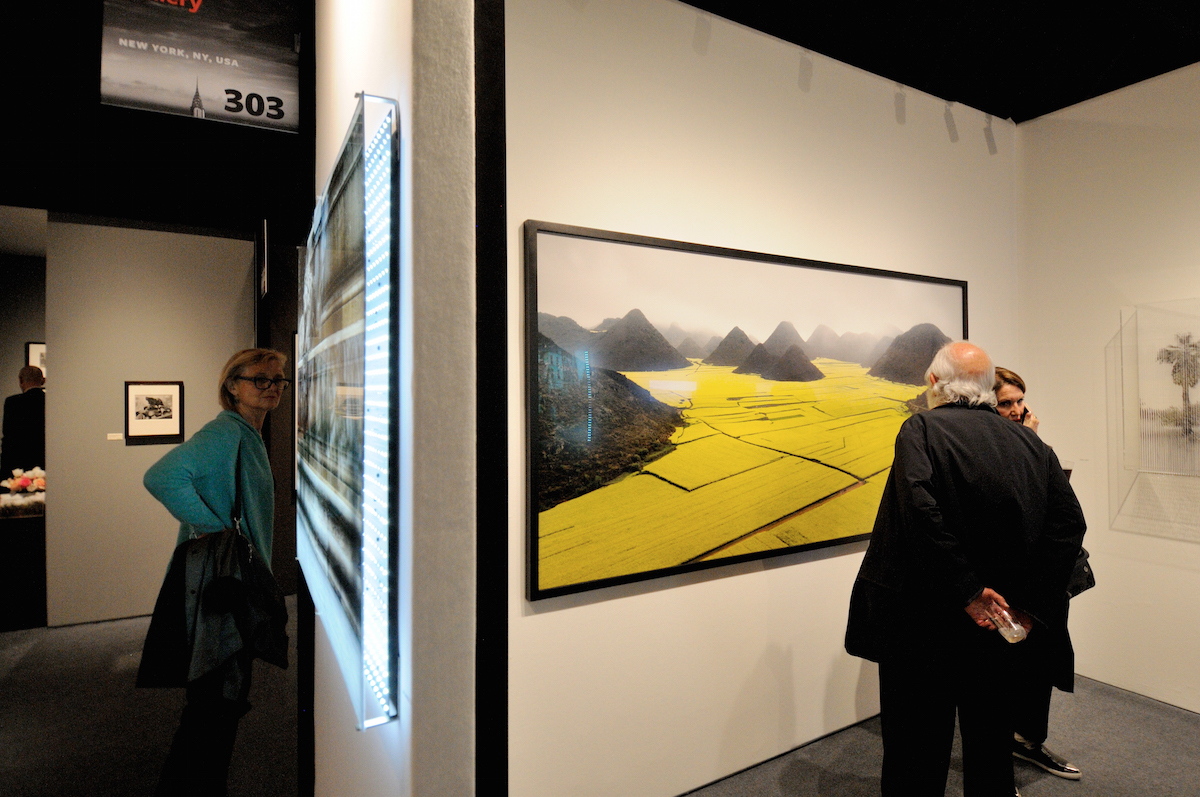
An unexpected link is formed between two art works featured by Bryce Wolkowitz Gallery:a reflection of a multimedia installation by San Francisco based artist Jim Campbell in a large format photograph by Edward Burtynsky of Canada. Burtynsky’s striking photograph of the yellow canola fields in China’s Yunnan province (right) was shot while working on his Water series but was released only recently. The latest Parisian-themed innovative piece by Jim Campbell (center) creatively integrates 1,200 LED lights, a photographic still and a video of the same image that is interpreted by an integrated computer to create the effect of flowing water. Jim Campbell is a graduate of Massachusetts Institute of Technology and holds nearly twenty patents in the field of video image processing.
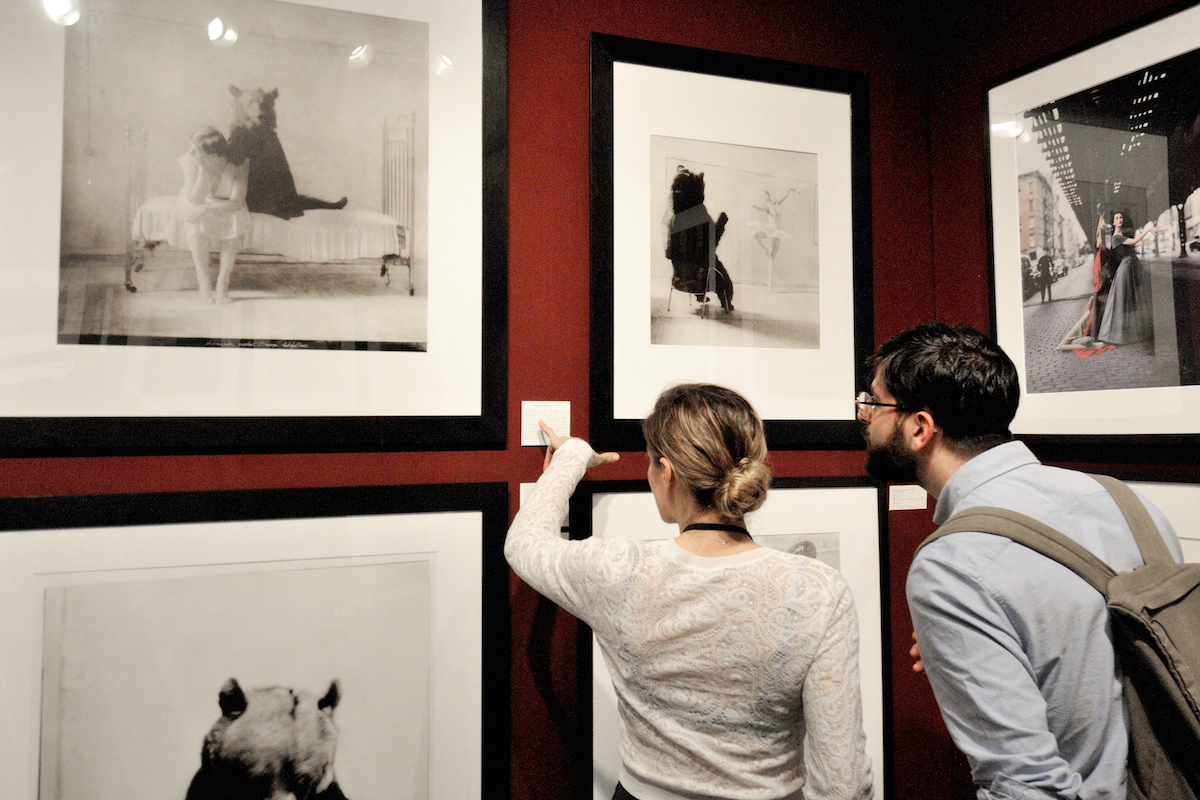
APAID visitors studying a 2008 photograph by Russian-born Gregori Maiofis from his “Taste for Russian Ballet” series at the Peter Fetterman Gallery exhibit. In his own words, two family generations of artists furnished his childhood with images while his early inspiration came from everyday objects, literary impressions and a variety of graphic techniques in his father’s studio. Many of Gregori’s current concerns as an artist were determined by concepts and positions he developed after moving to the United States in 1991. Today, he shares his time between Los Angeles and St. Petersburg.
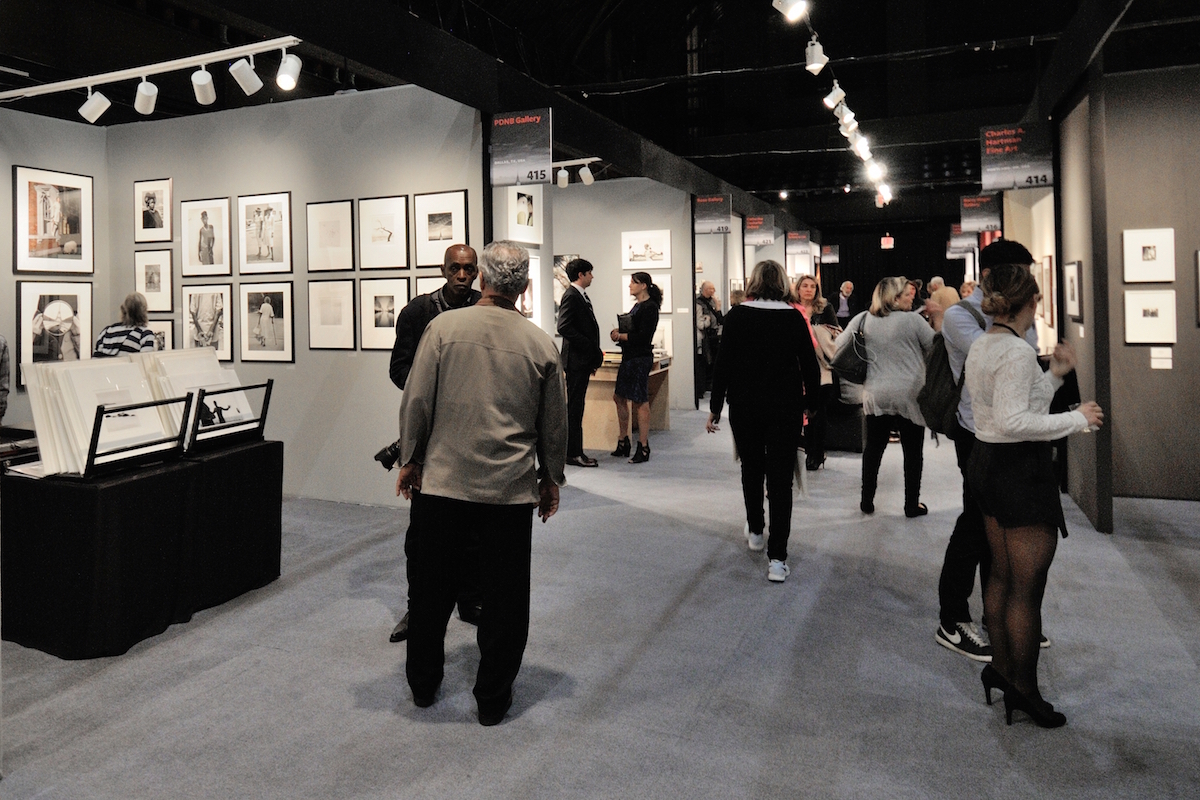
Photographer Earlie Hudnall, Jr. (center, facing the camera) is seen here talking to one of the visitors of the show. Hundall, who is one of the most notable African American photographers living today and has extensively documented the African American neighborhoods of Houston, Texas. Drawing on personal life experiences, his compelling and moving portraits capture life as it is and are part of his ongoing exhibition at the PDNB (Photographers Do Not Bend) Gallery in Dallas.
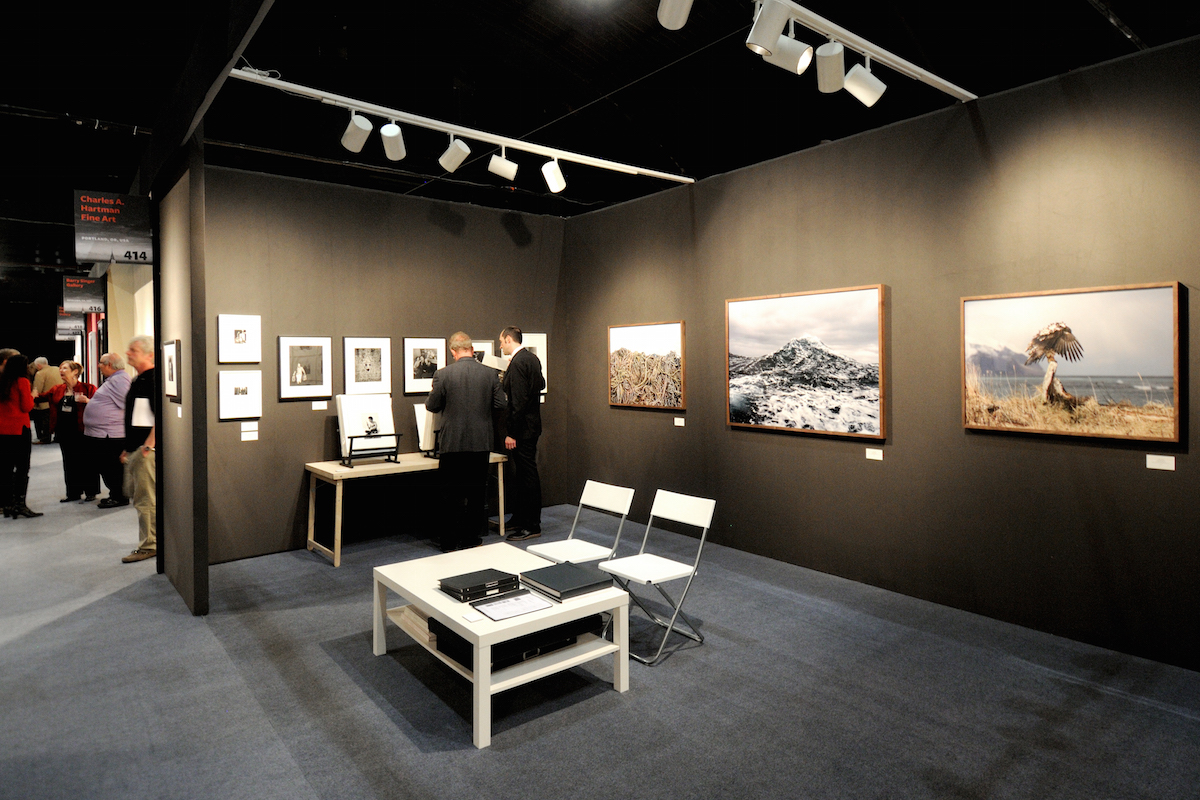
U.K. based James Hyman Gallery featured three large format photographs by Corey Arnold, part-time photographer and part-time commercial fisherman from Portland, Oregon and Alaska. His life’s work is an ongoing series documenting the commercial fishing lifestyle worldwide. From left to right are his images “Unalaskan Juvenile,” “Wake and Sea,” and “Crab Line”.
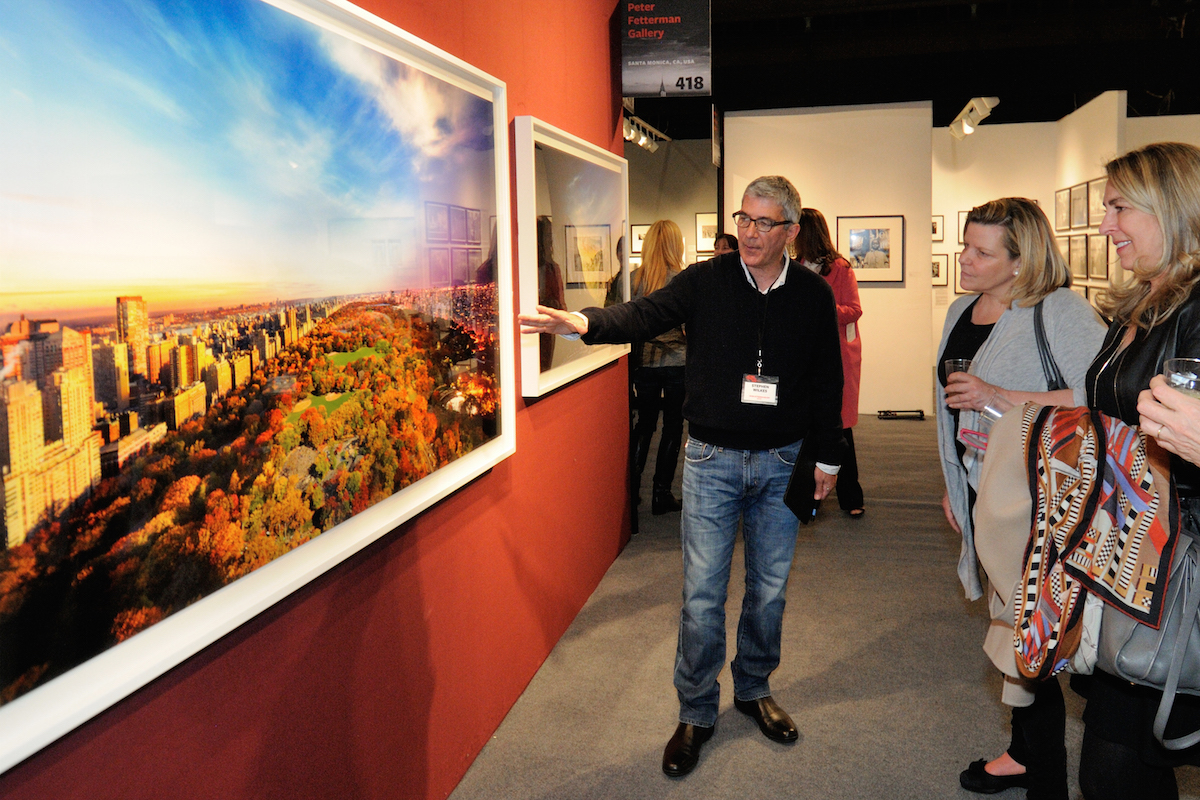
Visitors had an opportunity to interact with many photographers who were lending a hand in showcasing their own work and representing their galleries. Landscape photographer Stephen Wilkes is seen here discussing the creative process he used to make the latest image in his series “Day to Night” composed of photographs taken during different times of the day. As Kraige Block mentioned in our interview, relationships between galleries and photographers are often very personal.