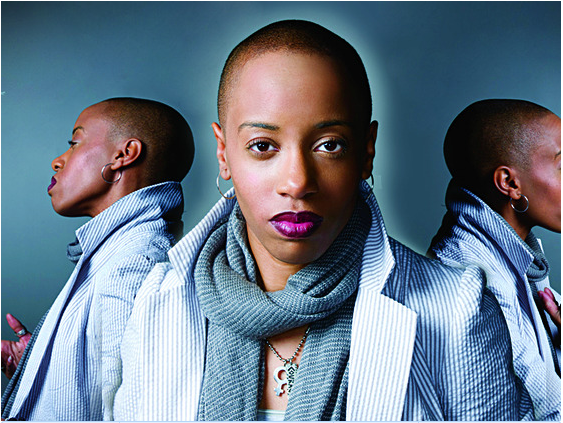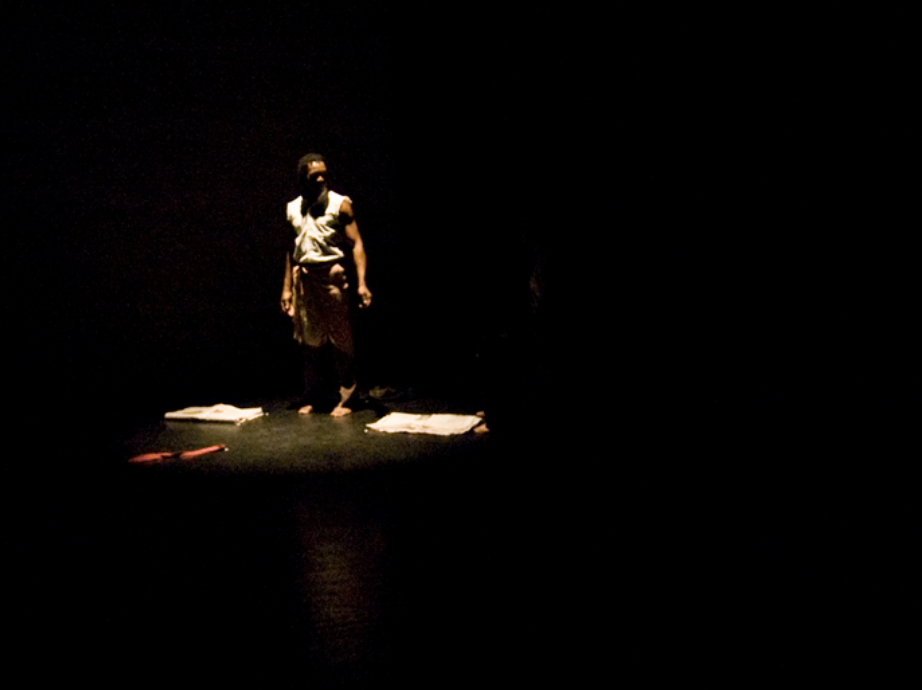
This past Saturday, before the rain started coming down in sheets, I took refuge inside of Nubohemia Café and talked with choreographer Vincent Thomas about dance, Baltimore and the future. Thomas, for those who are reading his name for the first time, has a far reaching career in the dance world and is currently an assistant professor of dance at Towson University. His website – vtdance.org – goes into detail about his projects and history, but the conversation below offers some insight into his mind and his art.
What Weekly: When did dance become your life?
Vincent Thomas: After taking my first dance class in college, in undergrad, I knew it would be a huge part of my life, but I didn’t know how… There was the hunger to know more and that’s when I started on the path to where I am now. In 95’ I went to the American Dance Festival for an entire summer, completely inundated with modern dance, and at that moment, I knew that there was something special about being part of a community focused on the world of dance. That intensity was so exciting. It made me see the possibilities of art, what art could be and what I could do with it.
WW: What is the current state of the dance scene in Baltimore?
VT: There are a lot of companies that lack a central location. I worked with Sonia Synkowski on a fall mixer; the first one was four years ago. It was centered on bringing the dance community together to deepen our visibility. There are people that support dance and it’s important to have them come out and see other members of the community; it helps bring and mix an audience. The end goal is to build a stronger network and dance community.
WW: What is unique about the dance scene in Baltimore?
VT: There is no home for dance. In Scotland, the home for dance is in Edinburgh, but Baltimore lacks something similar. The Theater Project is the unofficial home for dance, but there isn’t much beyond that. Look, the Ravens have M&T, the BSO has the Meyerhoff and opera fans have the Lyric…
WW: Do you think that this lack of a home has helped Baltimore’s dancers nurture a creative alternative?
VT: What they do is much needed. I appreciate and value what the companies do; all of their missions are different. I mean, if everyone was doing the same thing, how boring would that be? This really speaks to the small dance world. It’s great to see dance in many spaces, but there is merit to both traditional and non-traditional. This speaks to who we are as human beings; we’re not all the same, so when I experience dance in Baltimore, I witness a wide variety, and I’m appreciative of that variety.
WW: What do you envision Baltimore’s “home for dance” looking like?
VT: It could or should be the stage. Baltimore is unique in the sense that it can stand and present a unique vision of what that home for dance looks like, so there is endless possibility there. Take Romeo and Juliet at the Performance Kitchen, people there felt involved, as though they were part of the scenery in a different way. By envisioning a home for dance in an alternative sense, we can accommodate different effects in a single space. Having a traditional space that excludes other types of art can be limiting.
WW: As you’ve gotten more into the teaching side of dance, have you found that your role has changed?
VT: Performance and teaching inform one another deeply, but I haven’t shifted out of performing. My role is to help bring those pieces together, so that I can assist other artists by providing bits of knowledge that inform both ends. I bring a perspective from my work in other parts of the world. Traveling allows me to see how dance comes together in other countries, and I bring that here and try to provide a resource for the community. It lets us look at aspects of our community from a different lens, which we use to discover something that will allow us to enhance our methods and extend our scope.
WW: What projects do you have planned for 2015 and beyond?
VT: A bunch of new projects and they all start Monday (laughs). My company, VT Dance, we do all sized projects. Our last projects have been large: Shadow, Occupy. There is going to be a shift towards smaller projects. Rhapsody premiers in February at the Theater Project and it’s about art in our lives and the community; it looks through the lens of James Baldwin and the artist’s struggle for integrity. I’m also collaborating with artists in Copenhagen; we’re working on a piece about fear and its effects on social justice. There’s also a Marvin Gaye project – an initiative that will fall at Dance Place in D.C. in 2016, which will look at Marvin Gaye’s life, his thoughts on love, social justice and war. I’m excited about these projects because everything has a social awareness aspect.
WW: Is social awareness important in all of your work?
VT: Yes, it’s important because it supports the tag line of VT Dance and because it supports my teachings. I want people to be better in the world; people need to be aware of their role in making it a better place. The power of art, of dance, this is what I want celebrate, this what I came into the world with.
To read about Thomas’ show Witness, click here.