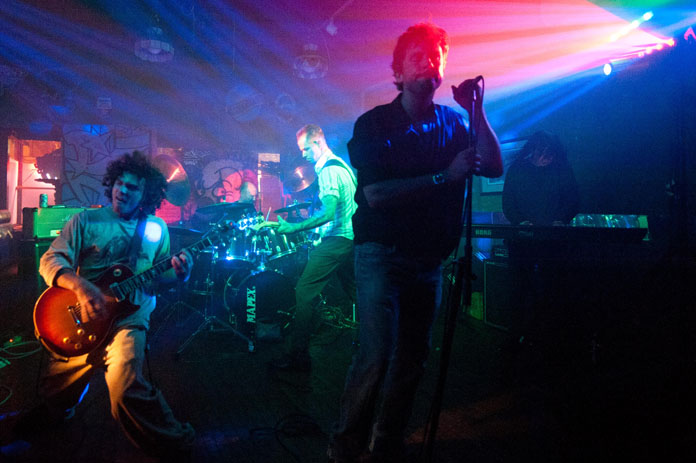
For those of you still suckling at the tit of unabashed rebellion, I say get while the gettin’s good. For the rest of us who have since crossed over into the unavoidable dilemma that is adulthood, only to find that the world isn’t going to end in spectacular Mad Max fashion quite as soon as we had originally planned, there are occasional moments of reflection when we ask ourselves whether or not it’s possible to recapture those sensations that defined our youth.
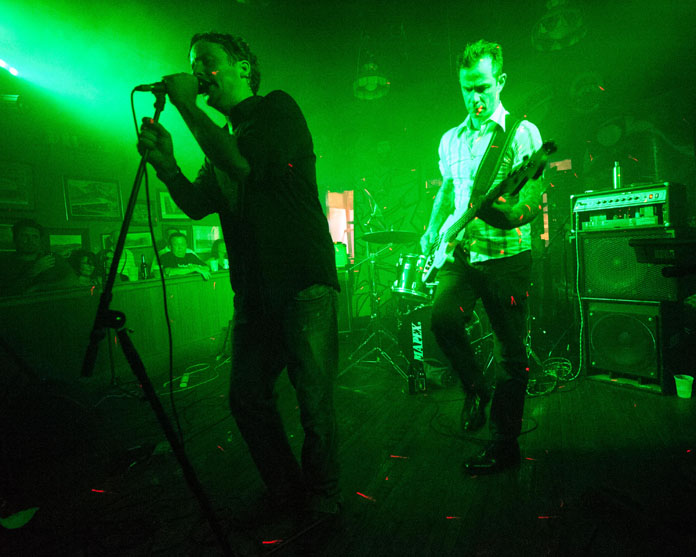
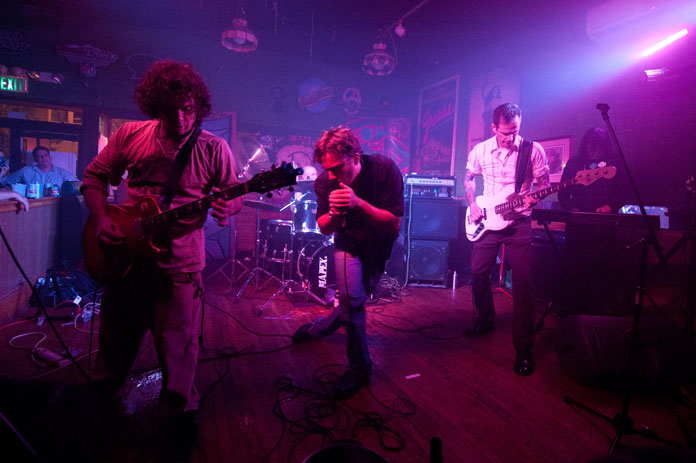
On Saturday August 20th, after 25 years apart, Baltimore punk legends Grey March, along with several hundred others, put that question to the test and found overwhelming success.


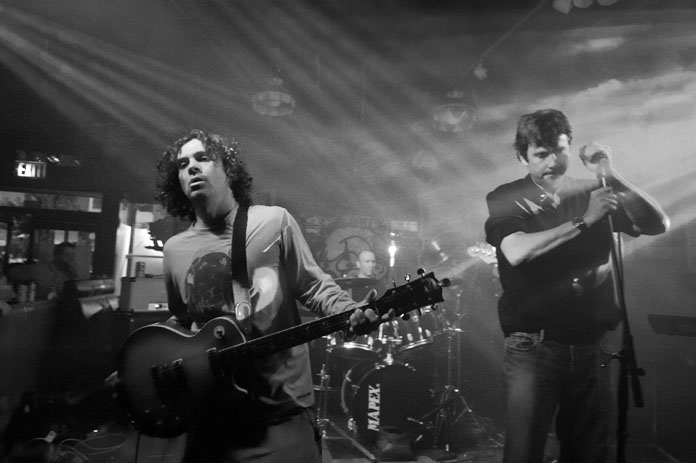


The day before their jam packed reunion show at Frazier’s, I met with drummer Eric Wiegmann and the rest of Grey March at the Hour Haus on North Avenue where they were rehearsing for a private show later that night. I’d done my research, prepared my questions and was ready to get the story, but shortly after our interview began I quickly realized that my line of questioning would no longer serve its purpose because this story was less about a band and more about a period in history that had a lasting impact on the Baltimore Music Scene and beyond.
It was 1982, Reagan was president and Baltimore was (you guessed it) a run down port city with no shortage of jaded youth. But, for those lucky enough to find it, there was a guy named Jules who lived on Eutaw Street and had a loft.
“If you don’t know about Jules’ Loft, learning about it will better help you understand the landscape for the music of that time. Jules was the most important sponsor of the Baltimore punk scene for all of the 80’s and maybe even into the 90’s. He was older. No one could understand why he was sponsoring all these shows, but this band [Grey March] wouldn’t have done anything without Jules,” Eric explained. “The same can be said for all the other local bands at the time. At The Loft, we opened for the Misfits, Agent Orange, Suicidal Tendencies, Circle Jerks, Bad Brains and Corrosion Conformity, just to name a few. It was a place for us to get out and play shows with other Baltimore local bands. Often times you would be asked for five dollars to get into these shows but most of the kids could get in for fee.”


Typically, the only prerequisite for joining a punk band was to own some kind of instrument and to be able to make it to practice. According to Bassist Stuart Berlinicke, he met Ron “back in the skateboarding days” and they began playing music together. Ron Weldon then brought in 14 year old Eric who played drums. Vocalist Trip Burch was recruited while working at a record store in the mall and he, in turn, connected the rest of the band with guitarist Mikey Dub who originally didn’t even want to be in a punk rock band.
When Grey March wasn’t playing at The Loft, they could be found touring up and down the east coast, getting gigs in towns like Asheville, North Carolina, venues like CBGB’s and becoming a regular act in the DC scene. Back then the flavor of the day was thrash but Grey March’s sound was more comparable to older bands like Joy Division and later developed into a type of psychedelia almost a decade before the genre became widely embraced by music listeners.
By 1986, the band had gotten older and the scene they belonged to started to change. Thrash gave way to Metal, and Skinheads were starting to become the dominant presence in the underground scene. The landscape shifted from drunk and punk to violent and drug addicted. “What I found about skinheads was each individual had their own reason for becoming a skinhead. I knew them personally and each one was in it for their own idea. It took over the scene for a period of time. There was some mega violence. People got stabbed, people got shot, stuff like that,” Eric recounted. The band had been playing for four years and after the change in the scene, a restructuring of the line up and Eric’s plans for college, the band decided to call it quits.
The following decades for the members were spent pursuing various careers and life experiences. Stuart worked for CSX as a train conductor; Eric moved to Japan where he is still working as a musician; Mikey toured with the Grateful Dead for seven years and now snowboards for a living. Then one day, not too long ago, Ron Weldon, the bands Keyboard player, decided to do an online search for Grey March and much to his surprise he found an old album they had released on vinyl converted to digital and posted on an online music website. After contacting the person who posted the songs, he came to find that after all of these years people hadn’t forgotten about Grey March and the group had even come to gain some recognition in Europe. Shortly thereafter Ron set up a Myspace page as an additional place to house the recordings that Mikey later discovered by chance, thus starting the dialogue and laying the groundwork for where we find ourselves today.

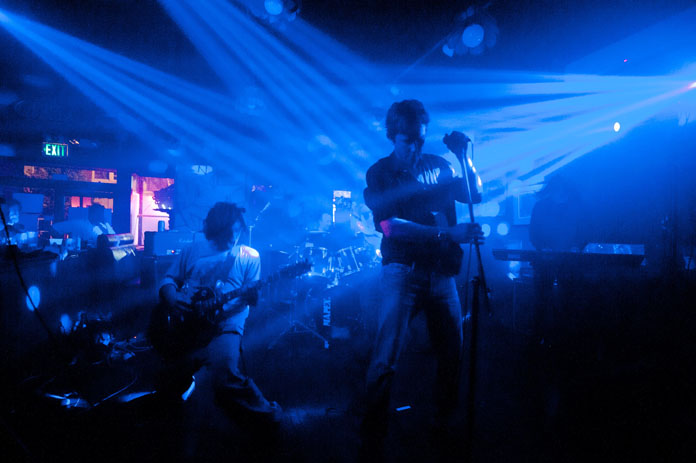
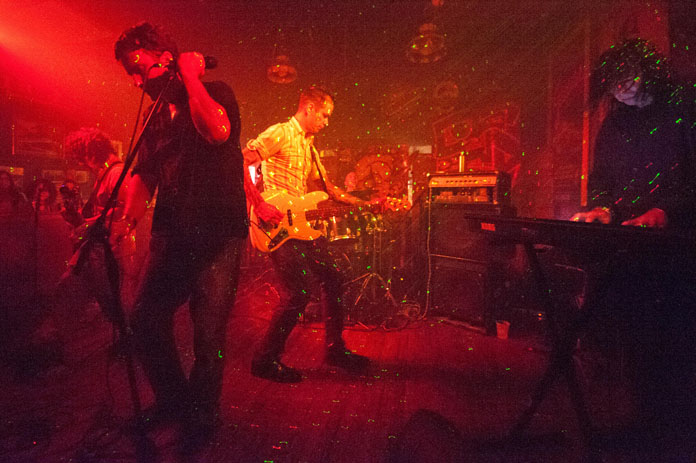
History has shown that some of the most influential music movements burn out faster than anyone would like. Often times, it’s a result of drugs, violence or unavoidable act of growing up. The rebellious youths that used to scream “Live Fast and Die Young” have since fulfilled their prophecies. Others refuse to accept the loss and spend their whole lives futilely trying to conjure a period in time that can’t be recreated. But some, be it through intervention or chance, manage to realize that tomorrow is going to come whether we like it or not and although the times had were great, no scene lasts forever.
They can however re-emerge for a night on the Avenue in Hampden every once in a while and remind those lucky enough to be in attendance that punk is not dead, getting almost trampled in a mosh pit is still fun, and the music that served as the salvation for your chaotic youth still has the same power it possessed the first time you heard it.