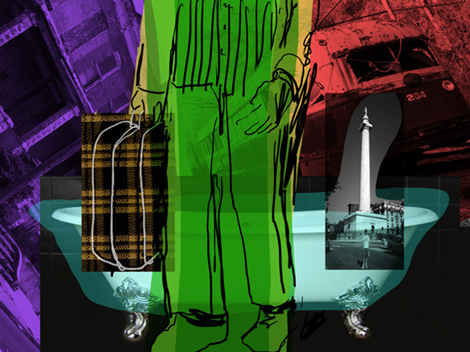
It was a long trip from cultural ground zero in Schenectady, but ultimately, I settled in Baltimore. Despite years spent in New England, London and New York, the seamy-sweet tang of Baltimore’s culture sucked me right in. It felt palpable and compelling. In decline since before the riots and abandonment of the sixties, Baltimore careened like its old streetcars around the curves the late twentieth century threw at it. Successful in the past, it was now a drunken uncle rebelling his way toward retirement. Though the city had a great way of not giving a fuck, its “cultural community” remained iconoclastic and quirky as hell. Young artists could live cheaply, and easily find the industrial supplies they needed for their work. A couple of hundred bucks a month got me an apartment with fourteen-foot ceilings and a bathtub as big as a swimming pool. Vacant warehouses meant studios were easy to come-by. I wanted for nothing.
For money, I did construction work and took jobs handling art. During one long stay in New York, I worked at the legendary Leo Castelli Gallery, installing the life’s work of an artist I greatly admired. For the first time, I experienced the art industry close up, but it was the one you don’t see from art school—and this one seemed to be a lot less about truth and beauty than I’d hoped. I’d had no idea. Disillusioned about pursuing a professional art career, I returned to Baltimore and took a job as a schoolteacher, needing to do something with tangible meaning. To serve my habit, I spent nights and weekends making video art to put on free cable access channels—avoiding traditional art venues.
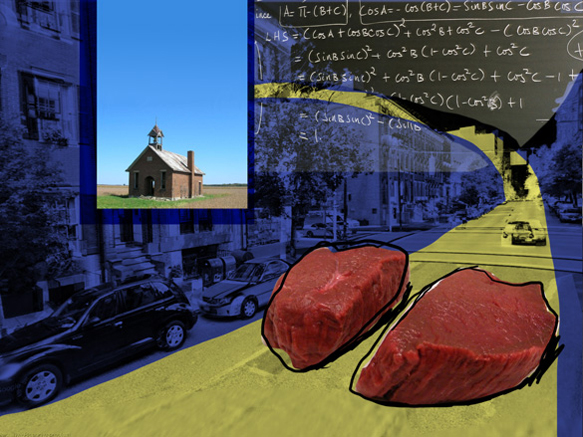
My apartment, at the edge of Mt. Vernon, was on a corner affectionately called “the meat rack” in reference to the business that went on there each night. I landed a job teaching at a prestigious prep school outside of town. I was poor, but my socio-economic status was high; I wore a tie and taught the children of the wealthy. But hanging out downtown, I saw that most of my neighbors seemed just poor—regardless of their income. As I slowly became more aware, I even saw this disparity express itself within the walls of my otherwise elite classroom. Like any new teacher, I constantly asked, why do some students succeed while others fail? My questioning intensified when I moved to public school years later where the range of achievement was wider. Certainly, some kinds of thinkers excel in school more than others, but grades were more about getting the work done, and some kids didn’t. They just couldn’t labor at schoolwork on their own behalf. There were a lot of reasons for this failure, including depression, abuse and trauma, attention deficits, dyslexia, health, a family’s financial security—the list was long. But there were other patterns of achievement that reflected broader socio-economic, national, ethnic and religious backgrounds of students. It seemed that the cultural pressures placed on some children to succeed were different than those placed on others, and that by and large, children performed accordingly. (Enter, the “Tiger Mom.” Yikes.) Working as hard as I could, I might narrow the gap, but not close it. The professional ethos of educators is to proceed as if children of all family, neighborhood, national, ethnic and religious cultures are equally likely to succeed in school. It seemed a wise perspective for schools and teachers and a perfectly logical thought in a culture that denies that culture matters. Questioning it, though, was near heresy.

It wasn’t until much later, after I’d left teaching to become a filmmaker, that I came in contact with social science literature that confirmed what I believed I’d experienced. Social psychologists know that a huge factor in what people do is the beliefs and attitudes they get from their environment (other people, mostly). Those who have succeeded in turning schools around know that building the culture of the school is everything. James P. Comer of Yale’s School Development Program writes eloquently about his own experiences, which led to his understanding that the culture outside school is a powerful factor in the success or failure of a child in school. That culture, begins with family, extends to community, and through media, to our society as a whole. In other words, a little help from the neighborhood would be nice. Schools that have succeeded in bending the curve and successfully helped students from historically lower-achieving backgrounds provide models that can transcend culture. The problem is, they require disproportionate resources in terms of teacher excellence and other things. In short, their effort is possible but unsustainable. In the end, culture is going to matter—a lot.
-Lee Boot