My goal with the leadership column is to create a bridge between the up and coming cultural creatives and entrepreneurs driving the Baltimore Renaissance and established leaders who have made an impact in the world. We have much to learn from each other.
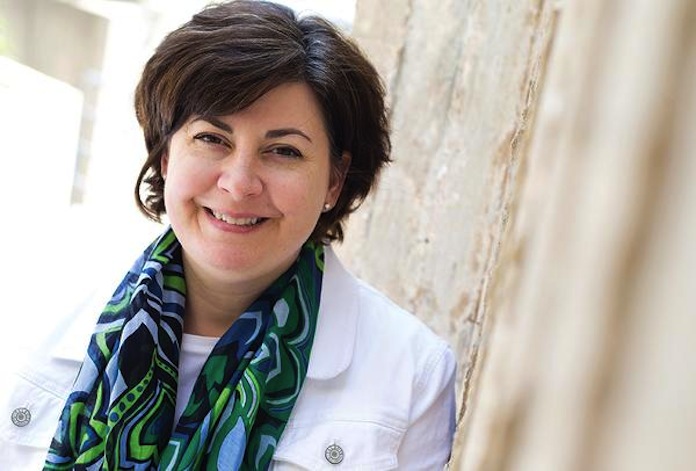
A year ago, Ms. Amato, President of The Association of Baltimore Area Grantmakers, joined the philanthropic community after 18 years invested in public service and issues including housing, economic development, public works and environmental initiatives.
Photo by Jaclyn Borowski
Peter
Did you apply for the job or were you recruited?
Celeste
I applied. I worked for the City of Baltimore for 18 years. I loved city government. I like the effect we can have because it’s so right there and connected to residents. And I live here so it meant a lot to me. I never thought I’d work there for so long. I just decided it was time to go and wasn’t sure what I would do. Then this job popped up. I thought they’d choose someone with a background in philanthropy. Most of our members fund locally. So, they wanted someone with a city centric background. They were also interested in the connectivity between this organization and the City of Baltimore. Were they really influencing good governance of the city?
Peter
How or when did you know you wanted the job and were right for the responsibility?
Celeste
When I finished the cover letter.
Peter
What are the skills and personal characteristics that make you an effective leader?
Celeste
Being a practical optimist, everything’s impossible until it isn’t. I have played a few roles where it was really critical to believe things can change and to convince those around you that the effort will be worth it. It seems that sometimes half the battle is just the believing. Adapting to what is and being able to find the way to, through and/or around obstacles. Necessary for any job but essential for roles focused on bureaucratic or social change. Sometimes crazy, persuasive persistence finally enables you to break through the obstacle. Listening. Good ideas and solutions can come from anyone, anywhere, at any time. It’s identifying the right people to help you get traction. Letting go of places where there is no opportunity for traction. Focusing on where you can get it. I do think things can change. I know that government can change and that lots of negative conditions can be changed in our city. It’s only eighty square miles.
Peter
How has Baltimore changed in five years if the association fulfills its mission?
Celeste
I would say we’ve been fulfilling our mission for thirty years. Our mission is really focused on our membership. It’s our membership that changes the city through their work. What we do for our members – other than sharing good grant making practices– brings members together around issues that enable them to coordinate or align their funding for greater impact. Which makes the city a better place. That is part of our
mission.
Peter
Are leadership and storytelling connected?
Celeste
It’s probably how I got my job. I had a story that was different from anybody else’s. That illustrated exactly what we say we want to do here. Align grant making and our issue areas in a way that influences changing a much larger system that influences a lot more people. The appeal of my role at ABAG is working with a network of people who all fundamentally believe that change is possible and they dedicate their time, talent and resources to finding and funding innovative ideas — or to sustaining and expanding proven approaches. It’s a chance to work with like-minded people and help them find the way through and around obstacles. The right story, the right staff people, and the right voices are loud enough….you can make things change.
* * *