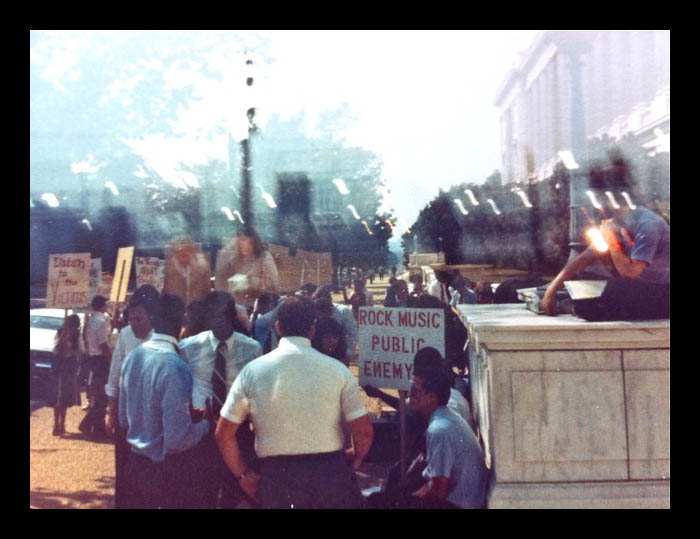
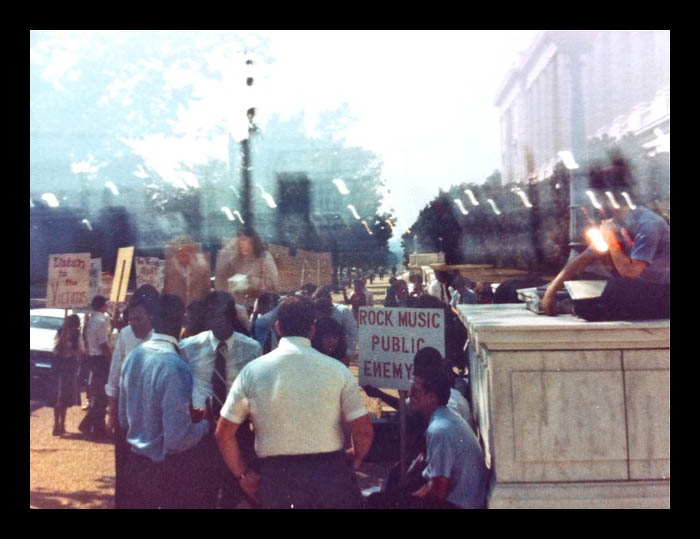
Photo by Michael Crabb- PMRC hearings, 1985.
Frank Zappa Day
The main drawback to being a visionary is that revolutionary thinking tends to make people nervous. We often have so much invested in our own particular worldview that we can be hesitant to gamble our perspective on a chance for a little enlightenment. It takes true inspiration to understand that there are an infinite number of possibilities and be comfortable with that. And it’s the visionaries who are either curious or frankly obsessive enough to explore that sentiment.
Contrary to popular belief, the world isn’t lacking intelligent people. What it lacks is more people who are willing to stand out. We often view assimilation as a symptom of gross complacency in our culture and overlook the fact that it’s natural to want to blend in. But while assimilation is necessary for survival in the wild, it can be the downfall of domesticated animals who willingly let themselves be rounded up for slaughter. In this last example, dissent is the only reasonable choice. Either break from the herd or wind up someone’s dinner. It’s that simple.
In our society, the degree to which we assimilate is a direct measure of how much we let others influence our decisions. This could be as painless as having celebrities hold sway over the way we dress or where we shop to allowing politicians to dictate when and where violence is sanctionable. The line between reasonable conformity and willful ignorance isn’t always as clear as we’d like to believe. This is why radical thinking is essential. Though the masses tend to ignore the cries of those shouting criticism from well outside the norm, some take heed and a few will even act on it.
It would be overly idealistic to believe that a society built on the idea of fierce individualism could exist for any length of time. To a certain extent, all societies need followers and leaders but that’s not the issue. What we’re talking about are individuals that refuse to be categorized so easily. They pose a problem for a polite society that’s built on clear definitions. So then the question is, why can’t we forge a culture that embraces its idiosyncrasies instead of fearing them? Wouldn’t it be interesting if we learned to appreciate the great thinkers who are well ahead of their time before they come to the end of theirs?
The Big Photo
Twenty-five years ago a group of protesters gathered outside the PMRC hearings with the misguided notion that somehow their own personal morality held sway over the United States Constitution. I blame the school system for not instilling a strong sense of American values like freedom of speech and religion at an early age. While many people gained notoriety from the hearings, one man in particular emerged as a hero and it wasn’t Al Gore.
Zappa Day
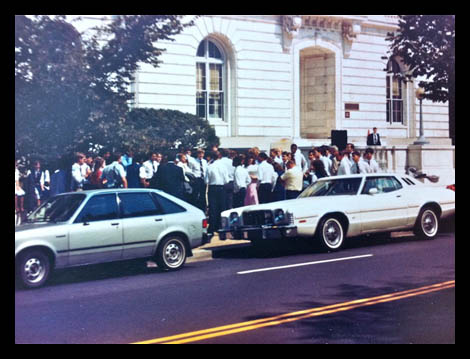
Photo by Michael Crabb
The PMRC in a nutshell: In 1985 a confused group of wives of powerful politicians staged hearings in order to force record companies to label content they deemed inappropriate for children thus lightening the burden of child rearing for many parents. We all know how distracting it can be to actually have to pay attention to your kids or take an interest in what interests them. This is what I believe the hearings were about.
Photo by Michael Crabb.
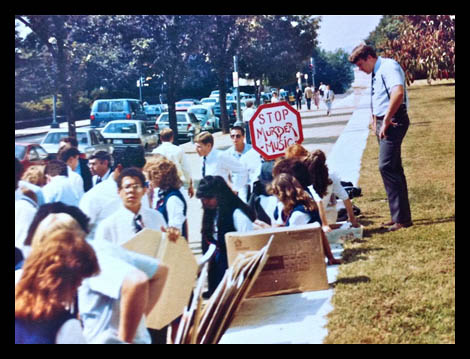
Photo by Michael Crabb
While John Denver was by far the most menacing of those who testified in favor of freedom from censorship, the most eloquent had to be Frank Zappa who stated that “the PMRC proposal is an ill-conceived piece of nonsense which fails to deliver any real benefits to children, infringes the civil liberties of people who are not children, and promises to keep the courts busy for years dealing with the interpretation and enforcement problems inherent in the proposal’s design.”
Though Zappa proved to be particularly adept at making bureaucrats appear foolish on their own turf, it wasn’t his public speaking for which he’s most remembered. It’s his place as one of the most prolific song writers and composers of the twentieth century and his genius that will always be remembered.
Photo by Michael Crabb.
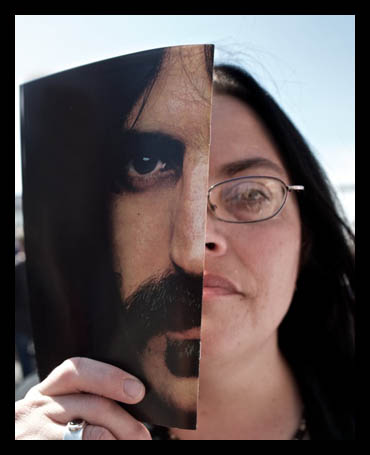
Photo by Theresa Keil
On December 21 1940, Frank Vincent Zappa was born right here in Baltimore, Maryland. Over the next fifty two years he would establish himself as one of the greatest musicians of the twentieth century but, like so many other great thinkers ahead of their time, many accolades didn’t come until after he was gone. Stephanie Rawlings Blake, the mayor of Baltimore declared September 19, 2010 Frank Zappa Day on what was the 25th anniversary of his historic testimony at the PMRC hearings.
Photo by Theresa Keil.
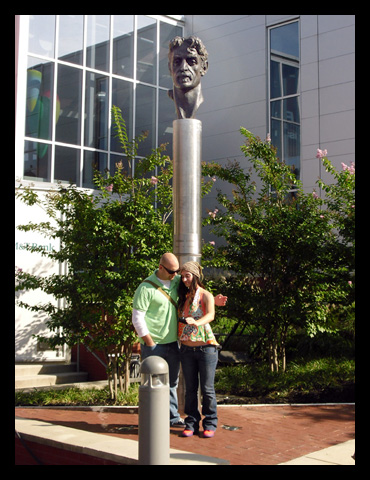
Photo by Frederick Reinholdt
Frank Zappa’s children Ahmet and Diva Zappa capturing the moment.
Photo by Frederick Reinholdt.
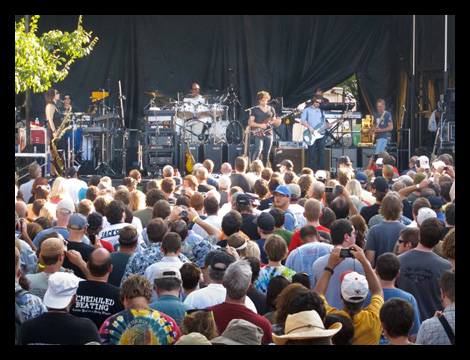
Photo by Michael Crabb
Thousands of loyal fans gathered around Dweezil Zappa who carries on his father’s music with Zappa Plays Zappa.
Photo by Michael Crabb.
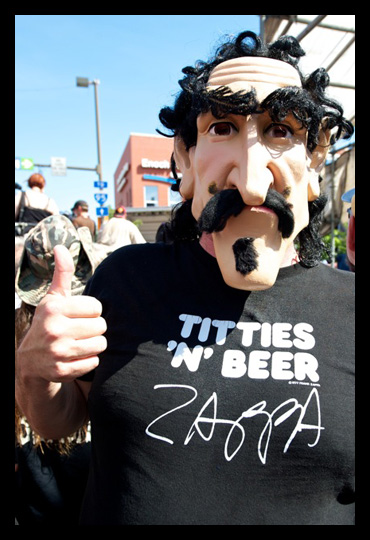
Photo by Theresa Keil
Not Frank Zappa.
Photo by Theresa Keil.
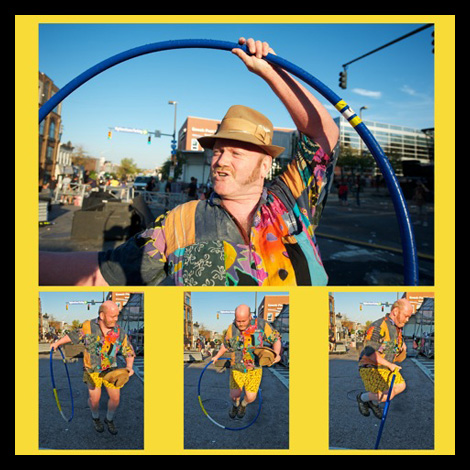
Photo by Theresa Keil
Contrary to popular belief, entertainers don’t always require any particular skill.
Photo by Theresa Keil.
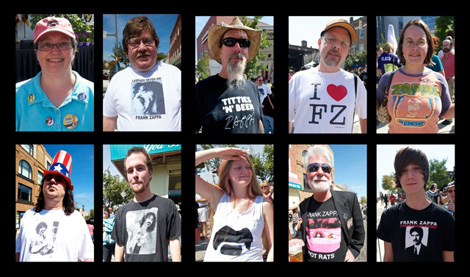
Photo by Theresa Keil
At one point one of speakers asked the crowd how many people traveled to Baltimore to pay tribute to Zappa and hundreds of people raised their hands. Whether or not these people are actually from out of town isn’t important. What is important is that the kid on the bottom right looks a lot like Justin Bieber.
Photo by Theresa Keil.
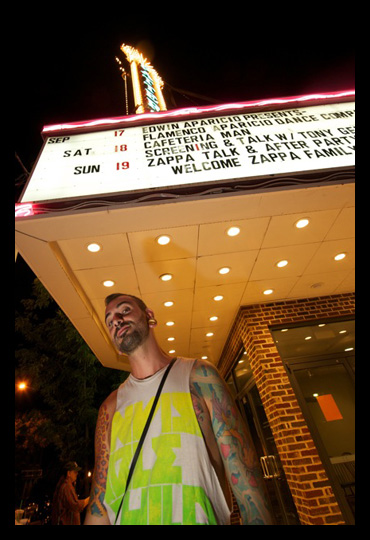
Photo by Theresa Keil
And just when you thought that there was no more fun to be had, the good folks at the Creative Alliance opened the doors and extended the awesomeness into the evening. On the bill for the after party was Telesma, Leyla Fahada, Big In Japan and DJ El Suprimo. Under the bill… Johnny Thorne.
Photo by Theresa Keil.
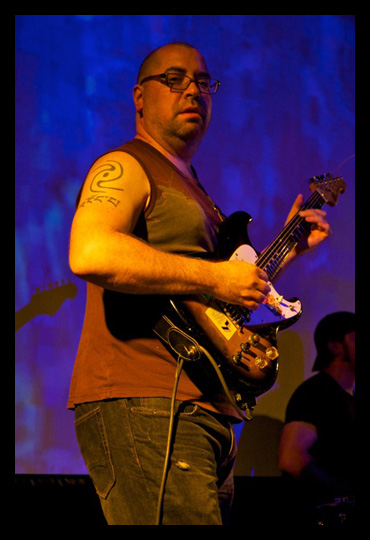
Photo by Theresa Keil
Chris Mandra a.k.a. Katastatic a.k.a. Senior Sexy Pants of Telesma.
Photo by Theresa Keil.
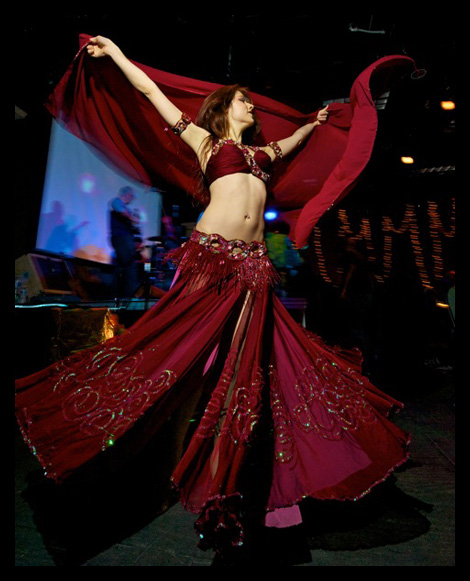
Photo by Theresa Keil
The gracious Leyla Fahada.
Photo by Theresa Keil.
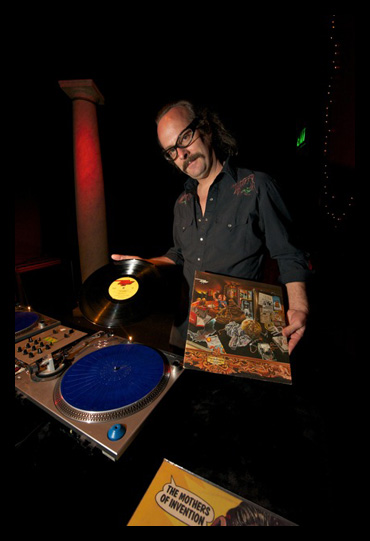
Photo by Theresa Keil
Photo by Theresa Keil.