Photo by Philip Laubner
Story and photos by Philip Laubner
The Jones Falls river runs hidden beneath the highway like Baltimore’s forgotten circulatory system. It was first covered by the Fallsway in 1911 and then again by the JFX in 1962. Some would say that this veil was a kind of public relations effort to hide its pollution and man-made blight during a time when notions of conservation and urban renewal were unheard of. The River had previously offered us the beauty of its banks. Its power built our industry then we shamefully polluted it and covered it up. Fortunately, exhibitions like Same River Twice, a multimedia show curated by Teddy Johnson, Heather Rounds and Joseph Young, throw a spotlight on this amazing yet mostly hidden channel in our city.

Photo by Philip Laubner
Teddy and Heather conceived the show as part of their Rotating History Project. “Same River Twice” is the second installation in the project. The first was “The Child Ballads Show,” which featured English and Scottish ballads compiled by the American musicologist Francis James Child.
The ballads were paired with painted interpretations and literal readings by local musicians. The historic significance for Baltimore in the ballads was their connection to the Falls Road Mill workers of the 19th century, men and women mostly from Virginia and Appalachia who accepted them as their own popular music.

Photo by Philip Laubner
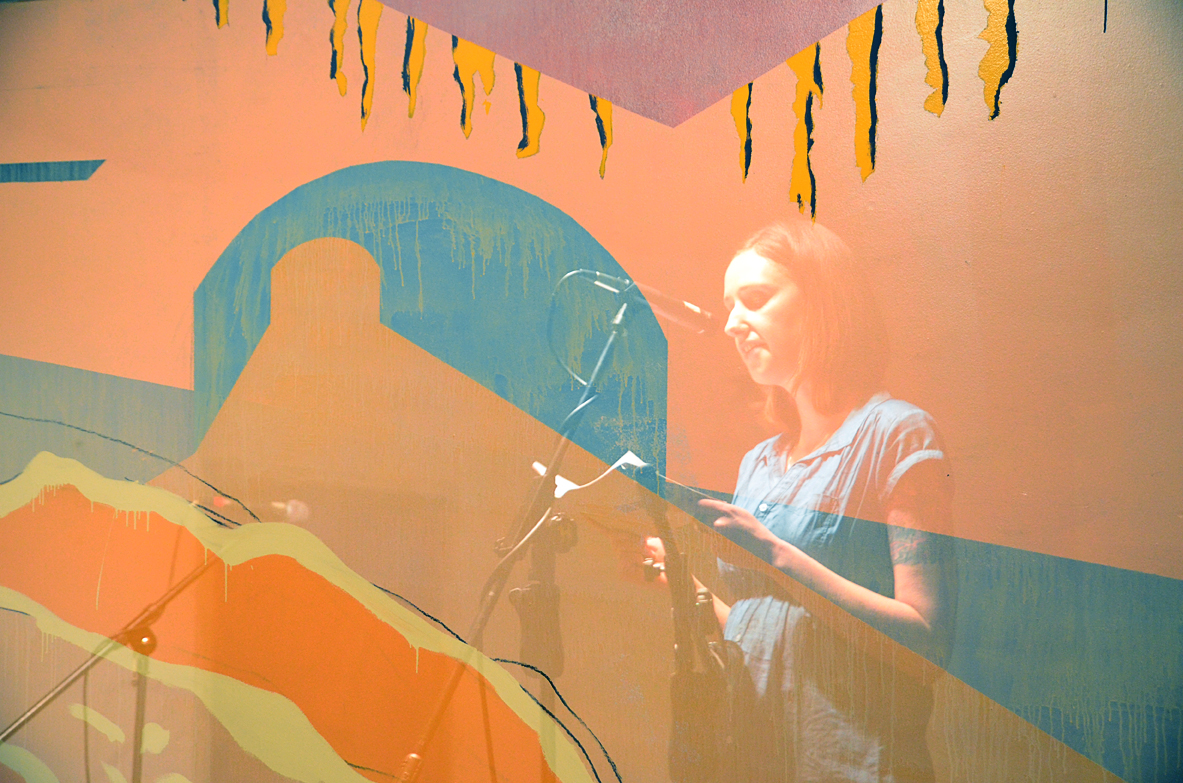
The Same River Twice opening show on April 23rd, once again honored the music of the mill workers with acts like The Shape Note Sisters, whose name comes from a traditional American style of singing, and whose dark but beautiful harmonies painted an aural picture that complemented the tumultuous, often dark, history of the Jones Fall River.

Photo by Philip Laubner
Singers Anna Roberts-Gevalt and Elizabeth LaPrelle of Virginia joined the Shape Note Sisters at the end of their set for a couple of songs before starting their own set of traditional music.
Their songs were often paired with meticulously painted, hand-cranked story scrolls. The scrolls were lit from behind with a candle, and the action that unfurled was timed to match the lyric. The cranking of the scrolls conjured the labor of the mill workers in a time before automation. The scenes were bucolic and often humorous; the camp feel made the dark moments even scarier.
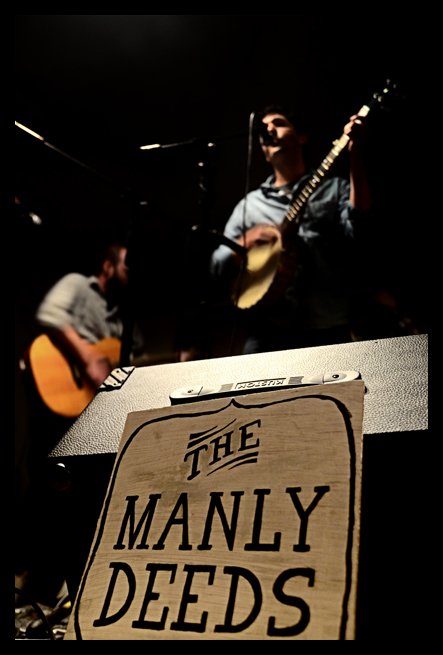
Photo by Philip Laubner
The night ended musically with the bawdy Manly Deeds. Like their name implies, the old timey songs and energy of the group was as muscular and raucous as a 19th century steam engine at full bore.
The Child Ballads show featured paintings hung in the anterior, or gallery section, of the G Spot, with music during the opening in the back hall. In contrast, The Same River Twice show features paintings, films, sculptures and found art from the river itself and the work is dispersed throughout the building. For me, the complete visual offering feels more like a contemporary art installation than a traditional gallery show.
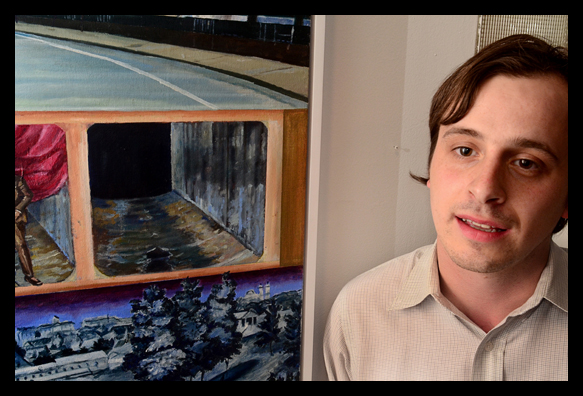
Photo by Philip Laubner
The topic of the river and its history is varied and complex, Curator Teddy Johnson embraced this idea with his layer-cake style painting: “Bury This River,” which has three eras of the river’s history stacked on top of each other. The top layer is the modern highway and the lower layers descend through time. The form also reinforces the idea of the river being covered and concealed.
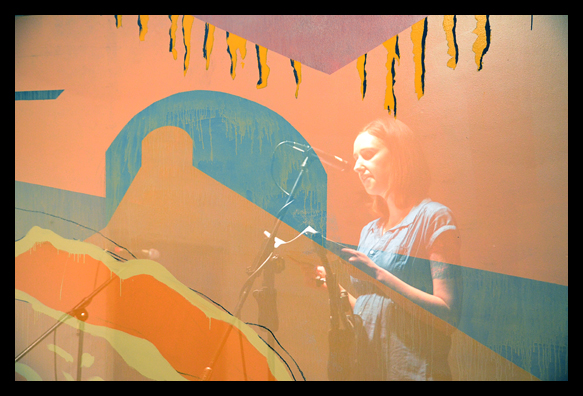
Photo by Philip Laubner
Teddy and Heather found the river fascinating and then asked local artists to see what they could find in it. For many of them the task became a literal collection and then interpretation of found artifacts; one part art and one part anthropology.
Painter Lauren Boilini’s “In The Cut” is an eight foot by forty eight foot house paint and charcoal piece that was created on the walls and the floors of the building. Its minimal depictions of the river, its form and that fact that I could literally walk on top of it, reminded me of the submerged yet permanent presence of the river.
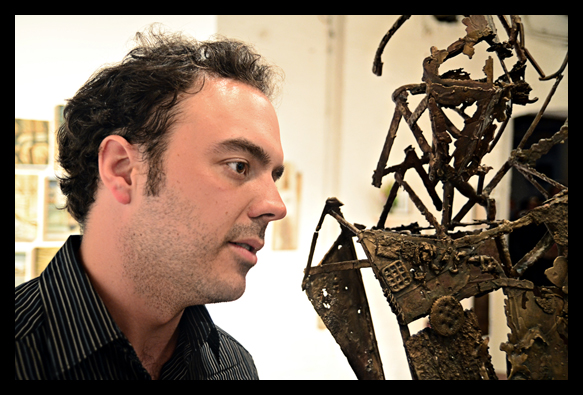
Photo by Philip Laubner
Dominic Terlizzi’s sculpture “Bank Line Greeting Man,” is a collection of bronzed artifacts from the rivers edge that stands at the center of the gallery like an anthropomorphic witness to the history and detritus of the water shed.
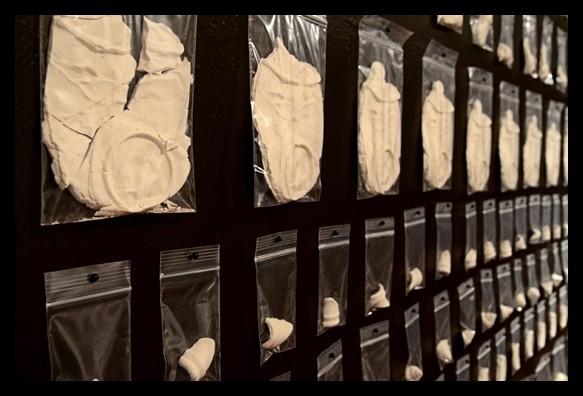
Cheyenne Lee Seeley and Adam Void’s “I found these when I was with you, Even When You Weren’t There.” is an eerie collection of found and adjusted objects, and – with their inclusion of polaroids – brings the installation into the current era.
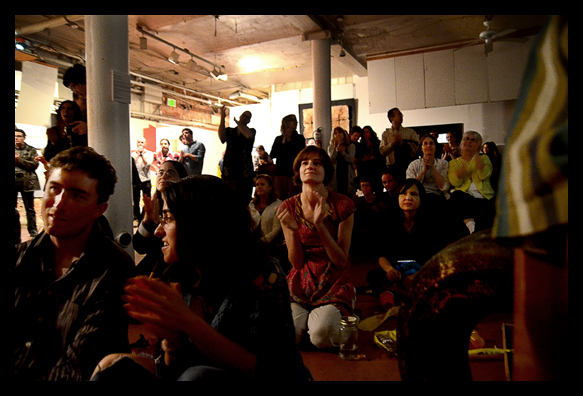
Photo by Philip Laubner
Once again the idea of industriousness of the river and it’s people is conjured by Laura Shults Stella and Any Stella’s interactive “…that once was a clear stream.” Here the gallery goer can ride a bicycle surrounded by found objects, the cycle in turn, powers projected antiquarian images of the industry and people on the river.
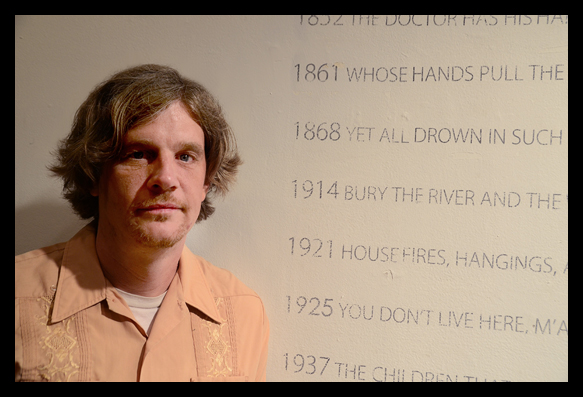
Photo by Philip Laubner
The Same River Twice multimedia show, unlike The Child Ballad Show, featured spoken word pieces, and word installations. Writer Joseph Young‘s “A History of Falling” is a timeline of the river printed on the wall. The words on the wall are strident, it’s not a painting, but the activity in the words is unmistakably visual and it paints a history of Baltimore that is unforgiving, violent and dramatic.
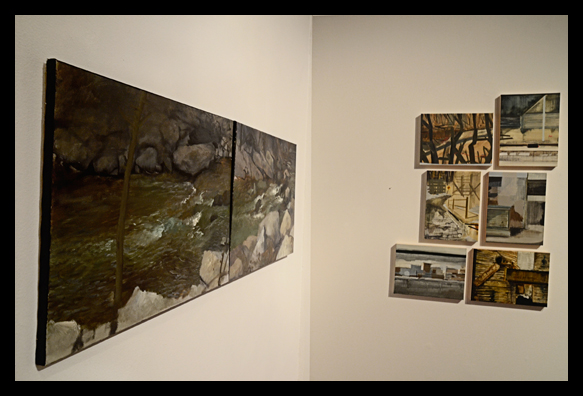
Photo by Philip Laubner
“Earth cracked in strange shapes that summer, the waterbed, a bowl of frogs and crooked as a bullhorn,” is the opening line of show curator’s Heather Rounds spoken word piece “Grave Goods.” The piece is sensual, open ended and as dark as a Falls Road culvert. The images ricochet back and forth through time periods and the effect was like thumbing through a photo book of the different periods of a troubled river.
For a complete listing of the night’s artists go to the Same River Twice event page.
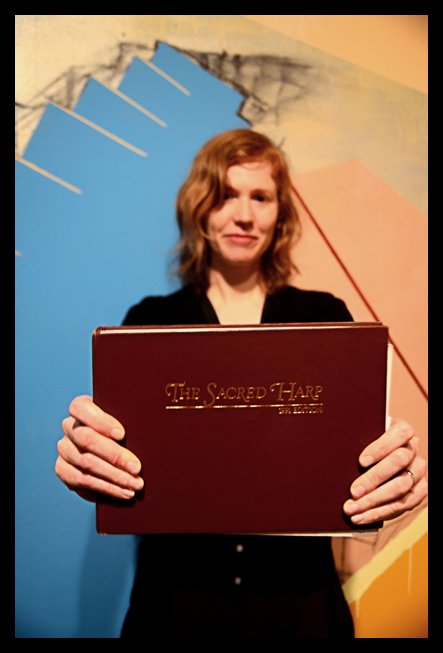
Photo by Philip Laubner
Both Teddy and Heather hope that the show will raise awareness of the river and its conservation, although neither of them claim to be either conservationists or historians.
Heather explains, “We understand the importance of [conservation] and hope in some way our show helps to promote it—and to have done so in a way that entertains and inspires.”
“That’s generally our mission as the Rotating History Project: To promote ideas and instill awareness of our subject matter through the arts. It’s also an objective for us to reach a diverse crowd and not just “preach to the masses” as so often can happen. Baltimore Green Works helped us achieve this and brought in a large range of folks that don’t necessarily attend arts events or, at least, see how there can be parallels between the arts and environmental action. Christine Nutilla at Baltimore Green Works was the woman who helped us pull it off and we are grateful for all her support.”
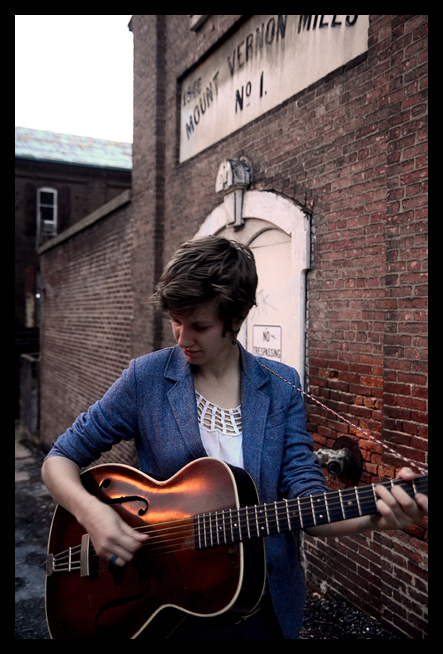
Photo by Philip Laubner
They say that you can’t go into the same river twice because the river always flows and changes. Hopefully for the Jones Falls River, with awareness, this change can be for the better. If you’d like to see The Same River Twice installation, it will be on display at the G Spot Gallery on Falls Road through June. Viewings are by appointment only, contact Heather Rounds for details: heatherrounds@gmail.com.
Story and photos by Philip Laubner