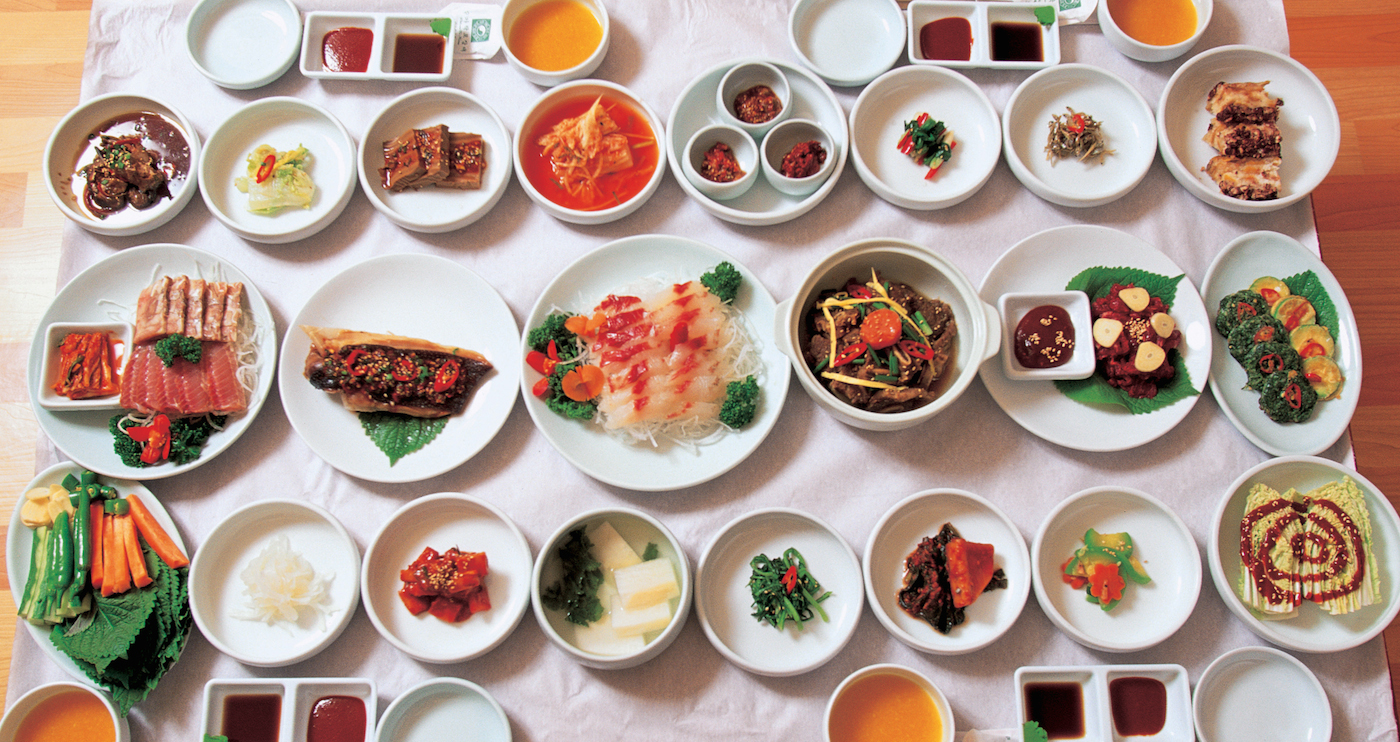
The day I arrived in Korea I went out to a late dinner with a couple of my coworkers. Once I learned that two of them had been here for more than a year, I thought, great, they’ll be able to order our meal with practiced ease. Instead, I watched as they relied on a pointing method with a sprinkling of sounded-out Korean words.
I was so surprised: how could they have lived here for so long and still know so little Korean? Yet, at the same time, I tried to reserve judgment. I knew there were probably reasons. After 3+ weeks in the country, I now feel like I know some of those reasons.
Here’s the thing about learning Korean as an expat: unless you’re here specifically to study Korean, it’s actually really difficult to learn beyond a few key phrases. Korean is not a language that’s easy to pick up. It’s not similar to English or languages like Spanish and French that we’ve likely studied and, as with many places with a substantial foreign population, it’s pretty easy to get by in Korea with key phrases and indicative body language.

A traditional South Korean market.
As teachers we have the additional challenge of being in our own little bubbles. While it’s not impossible to make Korean friends, the people we first meet and hang out with are our coworkers, and the people we meet after that tend to be friends of friends — other expats.
But I think there’s another reason that’s important to note, and it’s one of mindset. Korea is arguably the best country for teaching abroad as far as benefits are concerned. The demand for English teachers is high and as a result employers reimburse our flights and set us up with apartments for which we only have to pay utilities. With a salary of about $2,000 USD a month, none of us are making bank, but if we watch our purchases and don’t do anything too extravagant, it’s easy to save money, and a lot of people use teaching in Korea partly as a way of paying off student loans. While I’m sure people are interested in the culture and the country, the drive for linguistic immersion really isn’t there for most people I’ve encountered.
As a former anthropology major and generally idealistic person, I have a drive for deep understanding, part of which involves trying to learn the language of a place, and sometimes I forget that not everyone feels the same way. And it’s okay not to feel that way and to not to want that to the same degree.
When I was taking my intensive month of French, which involved an hour-long grammar lesson, an hour-long conversation practice with a native speaker, and hours of homework, and for which everything was one-on-one, there were so many days when I was really frustrated and pretty depressed. Learning languages involves failing, failing, and failing some more, and that’s a difficult emotional burden when one comes from a culture that largely doesn’t see failure as a positive and instead is almost culturally allergic to it. But, man, the moment I got into the car with my HelpX host dad, understood just about everything he was saying, was able to express myself, and heard him exclaim: “C’est incroyable!” when I told him I had only been studying French for a couple of months… it felt, well… incroyable.
The more I learn about Korean culture, the more I’m fascinated by it and the more I want to experience it as much as possible, and I feel like a key part of that is going to be learning more of the language. So I’m (at least at this point) still determined to do it. Stay tuned.
Read more What Weekly travel stories from around the globe here.