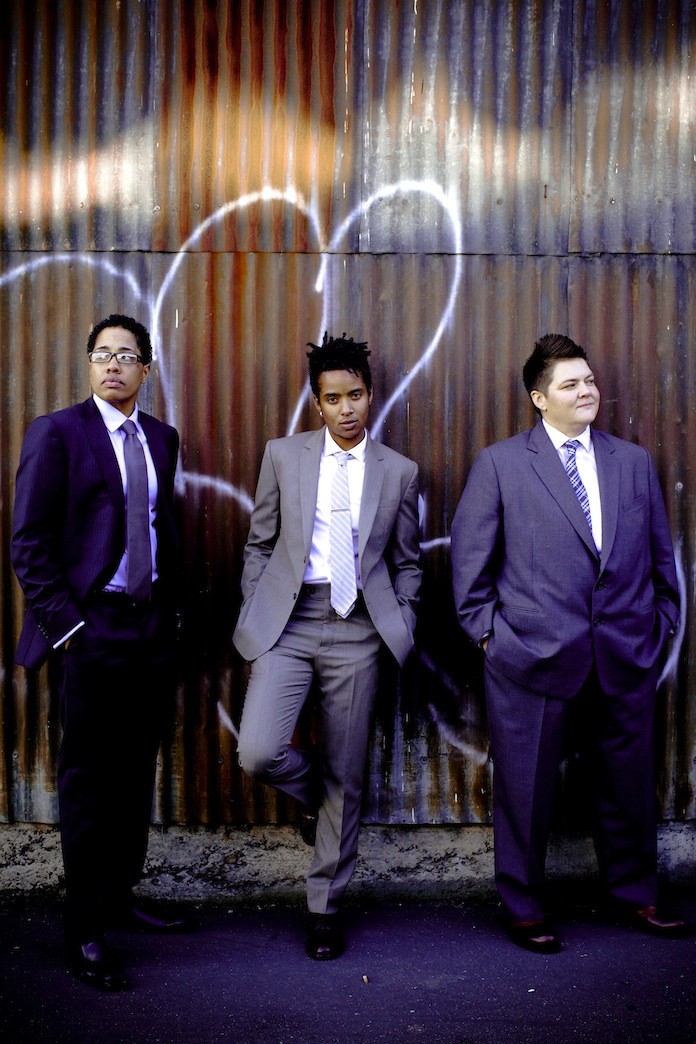
Last month, clothing company Saint Harridan arrived at the Embassy Suites in the Inner Harbor on the Baltimore leg of its nationwide pop-up tour, bringing with them several racks of pre-made suits, a massive box of fabric samples, and a sign-up sheet for custom fittings on Saturday and Sunday. Similar to other clothing startups like Frank and Oak and Jack Threads, Saint Harridan offers its customers the kind of customization and personalized touch they can’t find in many traditional clothing stores. Like those startups, Saint Harridan offers decently priced menswear in a wide range of styles, colors, and patterns. Unlike those menswear startups, however, Saint Harridan’s suits are specifically designed for female and trans-male bodies.
Founder Mary Going conceived the idea for Saint Harridan when confronted with the ultimate fashion need: her own wedding. “In [my whole life], the way I had gotten around it was to kind of underdress, but not for our wedding.” Going’s wife insisted that for their wedding she look sharp. “For the years before, when we had dress-up situations, I would just give in and wear a dress. And I had gotten to this point in my life when I was just like hell no, I’m never doing that again. And I wasn’t going to compromise, especially not for my wedding.” Going ended up having a suit custom-made, and decided it was the kind of experience that she wanted to enable other masculine-identified women, or people whose bodies did not fit the traditional male suiting model, to have every day.
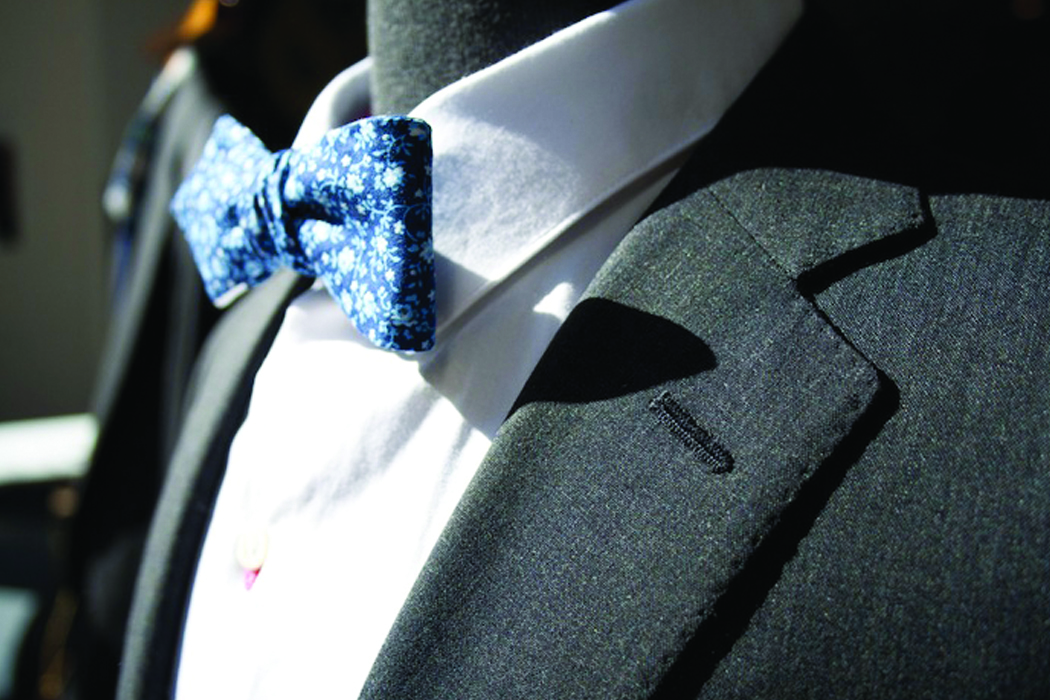
It’s important to make note of some specifics: Saint Harridan’s suits are not women’s suits in the traditional sense of the word. The company’s suits strive to accommodate the shapes of female-typed bodies while still maintaining a masculine line. “We’ve really redesigned, reconstructed, reengineered the whole thing, so unless someone really wants the curvy look, it actually works out pretty well,” Going explained. Elements like narrowed arms, double vents, and jetted pockets contribute to the maintenance of a masculine line while creating allowances for body types that don’t typically hold to that line.
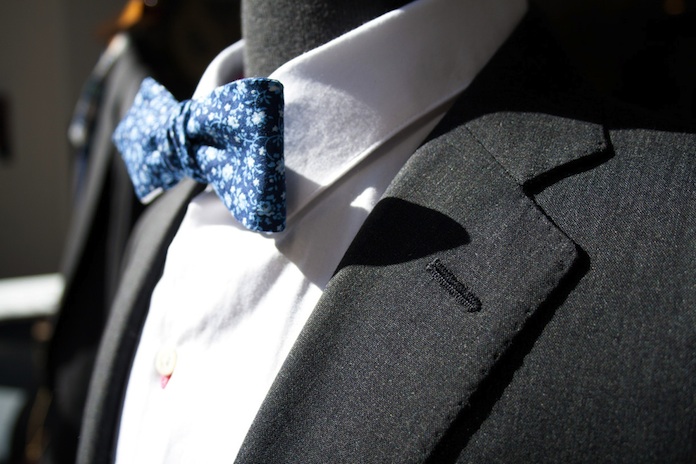
But before Going could redesign the men’s suit for her imagined clientele, she had a lot to learn about suits, and fashion in general. With a background in business, not fashion, Going turned to Sheree L. Ross, founder of fashion blog Preppy Baba, to educate her. “She spent about six months with me sending me on various assignments where I had to learn about fashion designers, garment constructions, buttons, collars spread, lapels. I learned an incredible amount. She lovingly put together a pretty intense tutorial for me,” Going said.
That education culminated in a Kickstarter campaign that successfully launched the company’s suiting line (Full disclosure: the author was a Kickstarter backer). “Kickstarter’s a fantastic way to ask the question, ‘Is this a market opportunity?’” Going said. Making men’s suits for masculine-identified women and trans men is definitely a niche market, as many have pointed out before. Saint Harridan found an overwhelming expression of interest from that niche market, accumulating 4000 Facebook followers and 2400 people on their regular email list. But could that interest be turned into financial support? With 150 shirts, 900 t-shirts, 120 full suits, and a multitude of various other perks purchased on the Kickstarter page, Going exclaims, “Kickstarter said yes!”
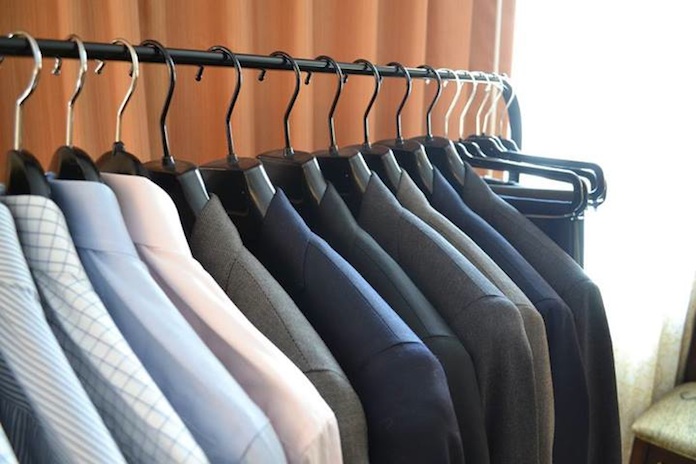
So with an effusion of interest and the dollar support to match it, Saint Harridan launched in 2012, offering suits with high-quality Italian-made materials constructed entirely in the United States. The company is currently on a pop-up tour of the United States, stopping in cities that offered the most interest during its Facebook modeling contest. At the Embassy Suites, visitors were greeted warmly by Going and Dom Brassey, who chatted with customers, introduced them to Saint Harridan’s off-the-rack offerings, and got people signed up for custom fittings.
One of the most important aspects of the atmosphere Going was attempting to create, was a place where masculine-identified queers with female-typed bodies are the expected customers. There is a queer fashion experience when one is untraditionally masculine or untraditionally feminine when shopping in an other-gendered clothes section. That experience includes getting looks and getting ignored by salespeople, or there might be some muted hostility or perhaps just confusion. Going described times when the sensation of being the expected customer, not the strange or difficult one, as emotionally moving to her and others: “Some people actually cried, not just to see themselves in the suit, but to see themselves in a shop where they’re respected, taken care of, taken seriously.”
Dom Brassey said that one of the best parts of the job for her was, “watching people realize that their self-image is not erroneous. It’s validating to see people who are deeply masculine and always have been, be able to express that through fashion.” Brassey, self-described as “rebelliously unfashionable,” also mentioned that one of the brand’s taglines was “We make the suits you’ve been waiting for.” This was true in her case: “It has always pissed me off that I can’t find the clothes that I want. It’s always pissed me off to look wrong, you know, to have the wrong armhole size, and the wrong length, and grandpa’s BO or whatever. It hadn’t ever really occurred to me that being excluded from the kind of fashion that I liked was excluding me from a way of participating in the world.” Saint Harridan brought that fact into focus by providing a way that shopping for the fashion one desires, as opposed to the way it usually is: an experience where one is the expected, desired customer, as opposed to a stranger in a strange land.
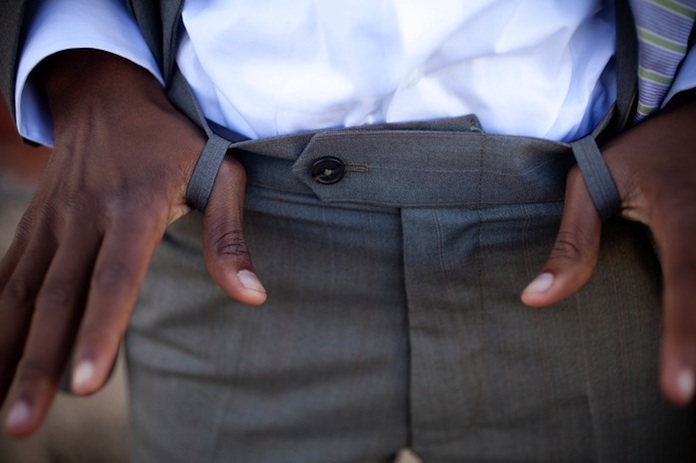
The fitting experience enables Saint Harridan to take its customers’ body types and feedback into account when creating and designing the Saint Harridan suit. “Every single customer that we interact with, every single person in our community, has a hand in the way these products are shaped,” Dom said. “If we get feedback that this hemline is too short, this fabric isn’t working, or this cut of the shoulder is off, that’s the feedback that we use to shape the entire product line. If it’s not working for six out of ten people,it’s not a good product.” Even customers who don’t wind up going through a formal fitting are often informed and informative about the fashion they’re looking for, and the Saint Harridan team takes their thoughts into account.
The experience was especially potent for Sam, who was shopping for a suit that would give her a professional look while still maintaining the masculine lines she prefers. “I was just happy to come into a place where they’re like, ‘Oh you’re a woman looking for a suit, okay!’ It’s expected. Obviously that’s what they do, but it was just weird for me, to come here you just feel completely comfortable, and you don’t feel like you’re doing something wrong or weird.” She described herself as a kid in a candy store, eager to try absolutely everything on.
Her friend and fellow queer fashion aficionado Gwen is looking to go into law, and felt a professional need for a masculine suit that was cut to fit a body like hers. “A lot of times men’s clothing is too large for me, or too long, or too bulky, and when I go out, or go to work, I want to have a fitted suit or a tailored look, and it’s kind of hard to accomplish that off the rack.”
Jennifer, another shopper with professional needs and an interest in menswear, explained her desire for suits like Saint Harridan’s: “The way that women’s suits fit, it accentuates parts of my body that don’t need to be accentuated when I’m in a meeting. It makes me realize how women’s suits are constructed to take attention away from the face and [direct it] towards the chest and hips… It’s just this crazy way to think about how even in the most non-sexualized women’s suit, it’s still drawing attention to curves. [Saint Harridan’s] suits are about you, not your body.” The suits, for Jennifer, created a sense of comfort but also attitude: “When I walked in and I saw Dom and Mary just looking sharp, you can tell that these suits were built for them. It’s the way that cisgendered men walk around: those suits are built for them. These suits are built for me. You can feel like James Bond!”
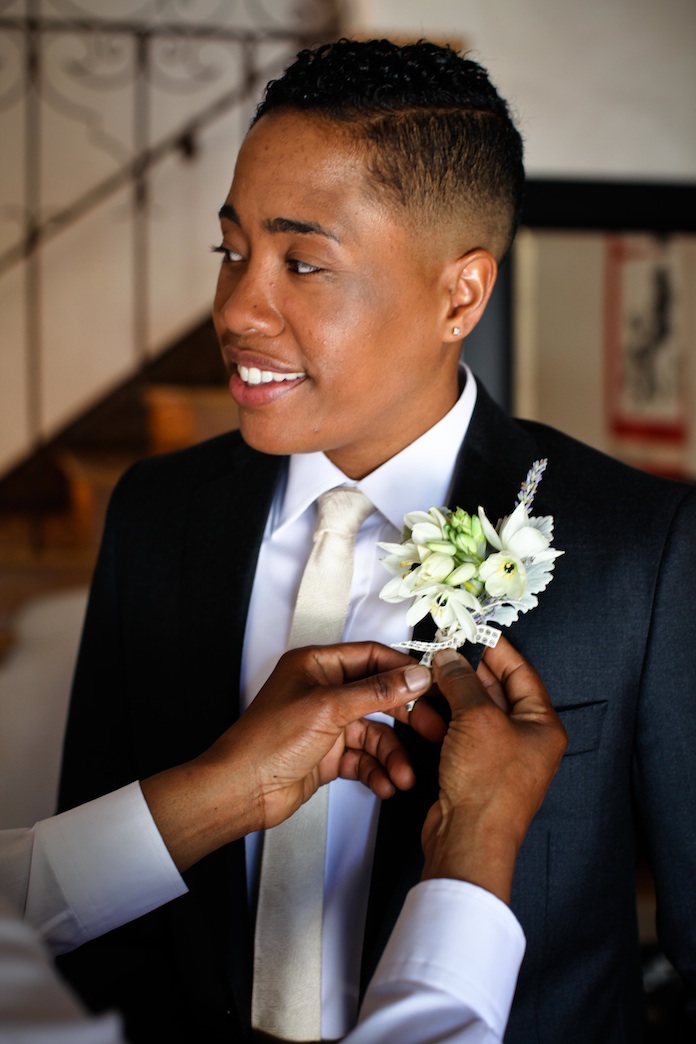
For many masculine-identified queer people who don’t fit the gender binary, shopping for formal fashion is an exercise in half measures: pants from one store fit decently, while shirts from another are okay, and socks, shoes, ties, and accessories can be found to match. Saint Harridan delivers not half measures but the whole package: a well-made suit that deemphasizes but still allows for feminine features, a competitive price point that matches menswear of similar quality, and a shopping experience with a specific gender non-conforming customer in mind. For those whose bodies do not, perhaps, match the fit of the clothes they crave, donning a Saint Harridan suit can be a transformative experience: a chance to look in the mirror, and see the person you’ve always wanted to see looking back.