Photos courtesy of the Baltimore Algebra Project
Ralikh Hayes was not particularly interested in math when he got involved with the Baltimore Algebra Project. Then a high school student, he heard the organization was offering math tutoring jobs that paid ten dollars an hour. Way above minimum wage – $5.15 at the time – the decision was a no-brainer: he decided to get involved. Seven years later, Ralikh is still with the organization, currently serving as its treasurer.
“Everyone was always welcoming and we are really a family,” Ralikh says of the Baltimore Algebra Project. “I can depend on them.” He’s not the only one who feels that way. Ralikh says that students like him readily fall in love with the group – some students keep coming back, even after their math scores have stabilized, just for the environment.
Ralikh and his colleagues stay involved because beyond tutoring math – as the name implies – the goal of the Baltimore Algebra Project is empowering city students who may not have otherwise been given a chance. The organization has a dual focus: increasing math literacy and advocating for student rights in the city of Baltimore. Wrapped up in a peer-to-peer tutoring program is an organization fighting daily to raise the socioeconomic status of youth in Baltimore.
Doing so starts by practicing what they preach. First, the Baltimore Algebra Project is youth-run. One hundred percent of its leadership are young people; the oldest, like Ralikh, are in college. While the non-profit has a Board of Directors with adults, the Baltimore Algebra Project – indeed, the national Algebra Project model, founded in the 1980s by civil rights activist and math educator Robert Moses – has functioned with adults working in an advisory capacity.
As the old piece of economic wisdom goes, there’s no better social program for the jobless than simply having a job. This logic applies to young people in Baltimore just as much, if not more, to any other distinct demographic group – according to the Urban Alliance, only 24 percent of youth maintain employment in Baltimore City and most of their jobs are in food service, retail, and administrative fields. Ninety percent of the Baltimore Algebra Project budget goes to paying young people to teach other young people critical math skills.
The Baltimore Algebra Project believes that students learn better through peer-to-peer tutoring rather than from teachers. At tutoring sites at several city schools, including Baltimore Polytechnic Institute and Heritage High School, student tutors work with lower scoring math students. As lower-scoring students improve their performance, they become tutors.
But in so many ways, Baltimore Algebra Project students become much more than tutors. They become powerful self-advocates – and advocates for a better socioeconomic reality for Baltimore’s young people.

If you watch the news in Baltimore, you may remember this small fiasco. As members of the Stop Baltimore Youth Jail coalition, the Baltimore Algebra Project’s arguably most powerful advocacy effort was their work to stop a new juvenile jail facility from being built right in the heart of Baltimore.
A proposed 230-bed, $100-million dollar detention facility for youth charged as adults, it hit close to home for many Baltimore Algebra Project students: Kids do not belong in prison. Jail does not change youth behavior. Why not use the money for the prevention of youth crime?
Baltimore Algebra Project students have a firm belief that education prevents crime, and so the facility’s very existence was offensive to so many of the organization’s students. So offensive that they marched on City Hall. And Annapolis. And won.


The advocacy against the youth jail reminds us that the national Algebra Project is, above all else, a civil rights organization. Math education is a means rather than an end – an organizing tool for youth leaders. Baltimore Algebra Project’s advocacy efforts started with a short presentation to City Hall, in 2003, on the impact of budget cuts on education. Since then, students have participated in mass walkouts during teacher layoffs, organized sit-ins for increased education funding in Annapolis, and held a hunger strike to demand city funding for youth jobs.
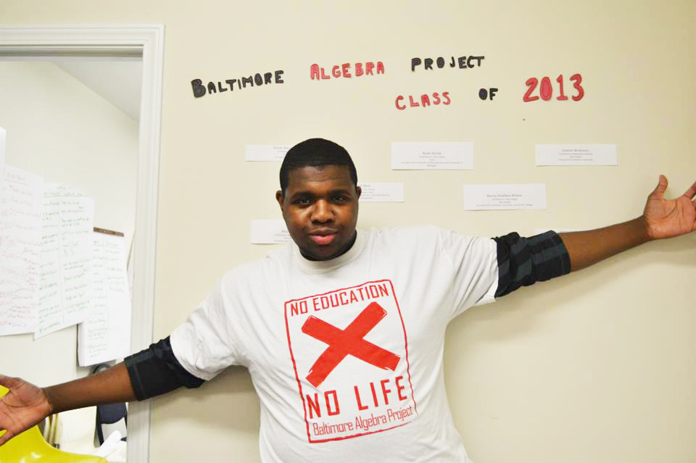
These advocacy efforts teach students early on that with knowledge, comes power and leadership. In 2008, then-Baltimore City Mayor Sheila Dixon ordered the police to disband Baltimore Algebra Project students camping out in front of city hall in protest of education cuts. The shirts the students wore reminded us that in Baltimore, like most other urban centers, education is a civil rights issue. With a big red “X” across each student’s chest, the shirts read: No Education, No Life.

Photos courtesy of the Baltimore Algebra Project