Of all the words one could use to describe Kimberley Lynne—novelist, playwright, teacher, organizer, feminist, actor, director, producer—the, one that feels the most complete is storyteller.
“The core of a culture is its stories,” Kimberley told me over lunch at The Dizz. “There’s a reason why we remember the stories we remember. They help us process reality.”
The idea of story-as-cultural-self-definition is at the heart of Kimberley’s creative work. She has written a novel (Dredging The Choptank), a collection of short stories (Something With A Crust), and dozens of plays, one of which, (The Benefactor), was recently produced by Stillpointe Theatre Initiative.
Stories dictate the bulk of her professional life as well. Kimberley runs Spotlight UB, the University of Baltimore’s performing arts office, where she produces plays, staged readings, musical performances, and the Emerging Voices Project, which highlights the creative work of UB students and faculty. Kimberley also has an MFA in Creative Writing and Publishing Arts from UB, and is a faculty member there in addition to her other responsibilities.
This article is turning into her CV, but Kimberley’s considerable achievements are valuable context for what I think is the most important juncture of her creative and professional ambitions: The Armagh Project.
A partnership between iEi Media, the University of Jamestown, and the University of Baltimore, the Armagh Project is a month-long creative writing program that sends American college students to Armagh, a town in Northern Ireland that is also the site of the John Hewitt Festival, a series of creative writing workshops and panels that touch on social and civil issues relating to The Troubles and their fallout. Originally intended for journalism students, the Project’s organizers asked Kimberley to get creative writing students from UB involved, and true to form, she jumped in with both feet, recruiting both students and potential sponsors/scholarship opportunities (both within and beyond the University of Baltimore) with equal enthusiasm.
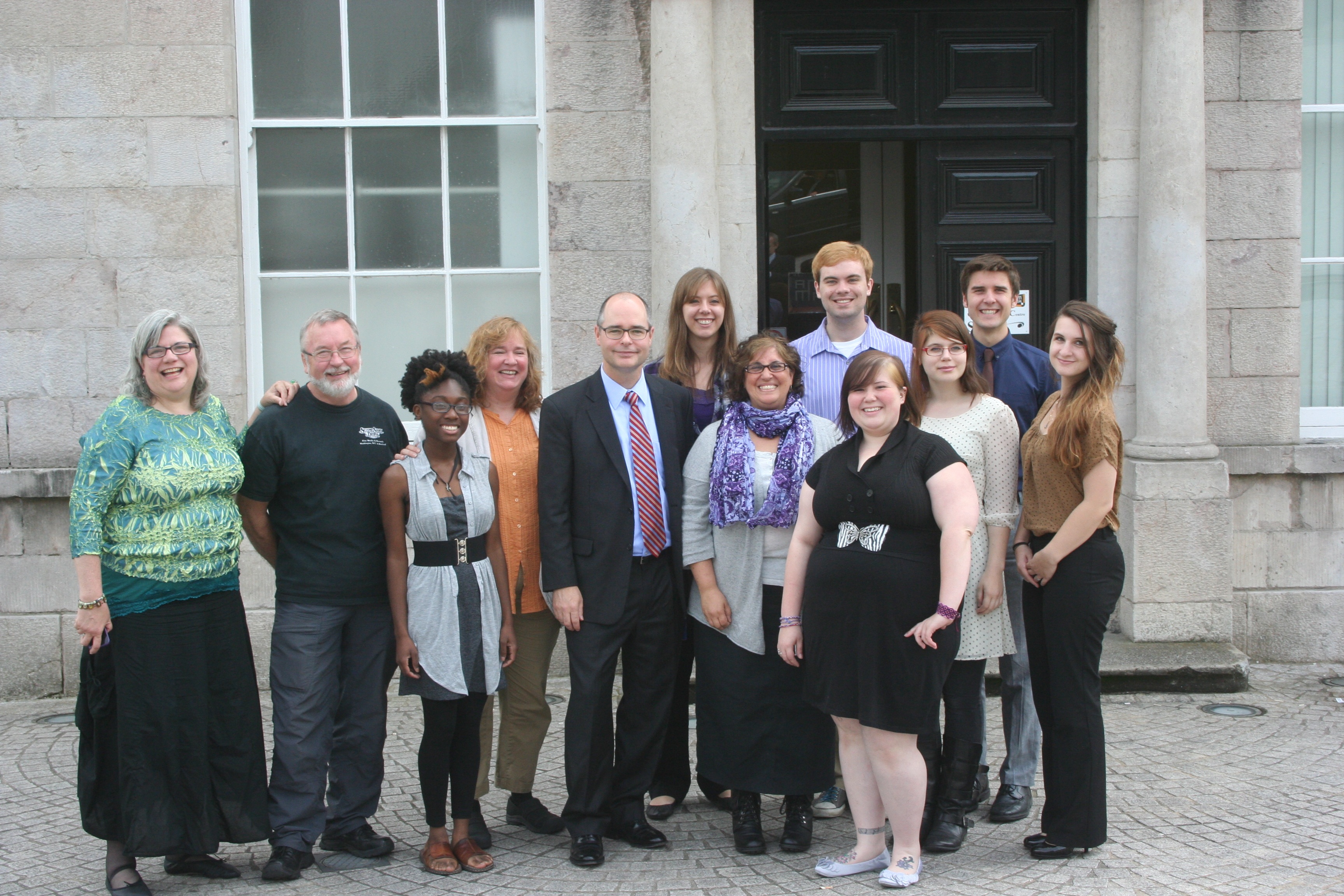
When students arrive in Armagh, their first week is spent adjusting to Irish culture, which is challenging for some. Stereotypes exist on both sides of the pond; Kimberley told me that Armagh’s concept of America lies somewhere between “The Simpsons, The Wire, and The Fresh Prince of Bel-Air.” Similarly, American students who’ve internalized our own characterization of the Irish as tragic and/or violent alcoholics will discover the width and depth of Irish education, and their appreciation for folklore and myth.
Kimberley made sure to note that Baltimore students have a leg up on other students during this process, since their city’s gritty reputation precedes it almost as much as Northern Ireland’s does. Also, the surrounding area “looks like Monkton,” which can’t hurt either.
With their preconceived notions hopefully altered, students get right to work in their chosen writing track (Reporting/Multi-Media, Creative Writing, or Playwriting), attending classes and immersing themselves in Irish culture through travel, special projects, and guest speakers. “Everyone writes like mad dogs while we’re there,” Kimberley told me. “After that first week, we’re all glowing.”
They also blog about their experiences abroad as a regular exercise; here’s last year’s Armagh Project website as an example of that.
Kimberley teaches playwriting, and her instruction focuses on developing character and plot arcs through brainstorming, improvisation, and exploring the local appreciation of surrealism. That third item is particularly important to Kimberley’s coursework. She has observed that the Irish readily accept “the thinness of the veil” between reality and what lies beyond, which she sees as a boon to overall creativity.
Her students read and critique each others’ work, a common enough aspect of writing workshops, but Kimberley also has them perform it, both in Ireland and upon their return to the states, where their plays are produced as staged readings for both Spotlight UB and the Maryland Irish Festival (in exchange for scholarship money through the Maryland Irish Charities).
Sidenote: I performed in one of the Irish Festival Readings and had a blast, and now I can go to my grave telling people that, yes, I have played the Cow Palace.
So who are these students, anyway? When asked about student demographics, Kimberley’s response was “they’re all over the map.” The program originally targeted college sophomores and juniors or graduate students in their twenties, but that age spread is widening.
In fact, program participants are getting more diverse across the board, and Kimberley mentioned that many of them wouldn’t be able to travel easily without programs like The Armagh Project. For more than a few students, Armagh marks their first time traveling outside the United States.
Regardless of their external circumstances, Kimberley told me with no shortage of delight that the program changes everyone involved for the better. The disconnect of being in another country forces students to reflect and think differently, and they are given some unsupervised time to explore the area around Armagh. Being treated like an adult with a proper sense of agency over one’s own affairs, for the first time in some cases, is enough to bump up one’s maturation levels all on its own.
Through it all, Kimberley is acutely aware of the Armagh Project’s effect on her students’ individual stories—in which she is grateful to play a role—and her own story, too. Professionals who have done, seen, and achieved as much as her can too often settle into a routine and, feeling like they have nothing left to learn, stagnate. It’s a story as old as the hills, and one that Kimberley has seen more than once.
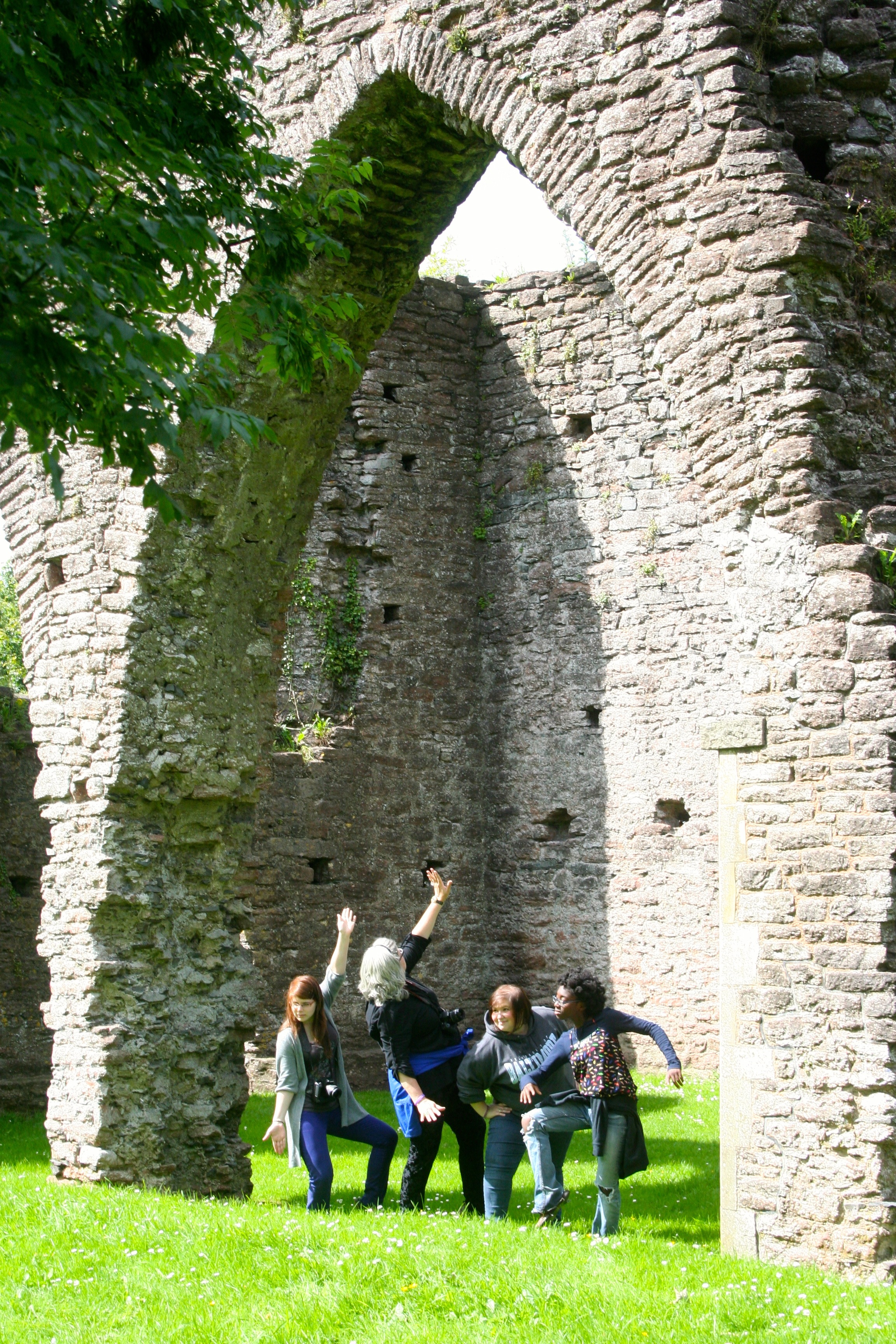
Patton Oswalt has a theory that the best, most productive artists stay engaged by surrounding themselves with people who are better than them, and whose work excites and challenges them. I don’t know if Kimberley has heard Oswalt’s theory or not, but she is a living testament to it either way. Whether it’s the Armagh Project, the UB community, or Baltimore’s performing arts scene, she creates opportunities to inspire herself, to never lose the curiosity that made her fall in love with stories in the first place.
Learn more about The Armagh Project.