Remember 2002? Tom Brady and the New England Patriots were the Cinderella team winning their first Super Bowl. Halle Berry became the first black woman ever to win the Oscar for Best Actress. And for a frightening two and a half hours, Dick Chenney served as Acting President while George W. Bush underwent a colonoscopy procedure.
2002 was also the year that director Richard Linklater began a 12-year odyssey known as, “Boyhood.”
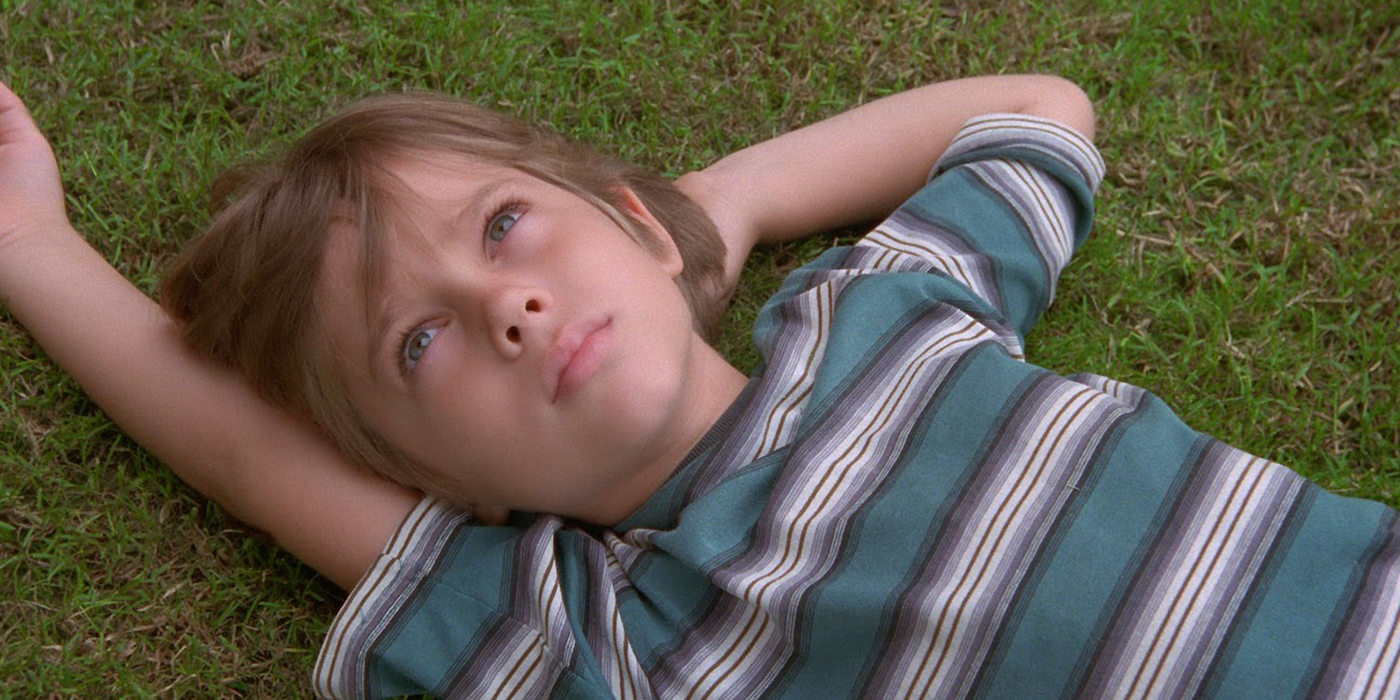
Linklater, best known for writing and directing “Dazed and Confused” and the “Before” trilogy, began production on “Boyhood” in the summer of 2002 with the goal of showing the growth of a young boy from 1st to 12th grade. Every year, a handful of scenes was shot with the same group of actors, headlined by unknown Ellar Coltrane.
Coltrane was hired to play the character of Mason Jr. when he was seven-years-old. Linklater was putting the entire film on the shoulders of this local Austin boy, initially signing him to a 7-year contract. What would have happened if Coltrane decided at the end of that first contract that he didn’t want to be an actor anymore? That like all kids growing up and most likely his own character in the film, the idea of what he wanted his life to be had changed?
Fortunately, for Linklater and for us, Coltrane stuck it out and returned every year with his co-stars Ethan Hawke and Patricia Arquette. Coltrane, speaking in an interview with The Sydney Morning Herald ahead of the film’s Australian premiere, said it was a reaffirming process.
“It’s kind of like staring into my own soul; simultaneously horrifically embarrassing and also kind of proof that I am real, or something,” said Coltrane. “That sounds funny, but it’s really valuable: a lot of people my age can feel artificial or inconsequential.”
“Boyhood” is a mix of intimate character study and massive scope that feature films haven’t really tackled before. Michael Apted’s “Up” series has done something similar, revisiting a group of children every 7-years to see where they are in their lives. That series is still ongoing, with the latest version, 56 Up released in the last couple of years. Steve James’, Hoop Dreams was also similarly ambitious in following two high school basketball players from Chicago. Both of those films, however, are documentaries.

Still of Andrew Brackfield in 56 Up (2012)
To date, there is no narrative feature that can truly compare to the decade long production of Boyhood. You hear behind-the-scene stories of how films like Avatar took many years to finally get made or financed all the time. The difference is that Avatar didn’t take 12-years to make. James Cameron had to wait some time for technology to reach the point he wanted it to, but the actual production only took a year or two.
It’s fitting, then, that Linklater should be the filmmaker to undertake such a risk. Ever since his first film, Slackers, Linklater has played with time – whether it be following a group of seniors on their last day of high school, or looking in on brief hourly segments of the history of a couple every nine years. It has been his desire to portray life and relationships as realistically as possible and that will continue with Boyhood.
Don’t think that he’s just been biding his time these last 12 years waiting for Boyhood to be ready. Since he began this experiment, he has directed nine films, including School of Rock, Bernie, and the last two segments of his Before trilogy, snagging a pair of Oscar nominations for their scripts.

Still of Patricia Arquette and Ellar Coltrane in Boyhood (2014) © 2014 – IFC Films
Boyhood finished its 12-year production last October. In an interview with Vulture, Linklater described the emotions of wrapping up his passion project: “I mean every shoot, even if it’s a three-day shoot, when you hear, ‘This is the martini’ – meaning it’s the last shot – it’s always kind of like, ‘Aww.’ But to hear that after this long a time… it was pretty intense, man.”
It was a quick turnaround for the film and its stars, as just three months after they wrapped the final scenes, Boyhood had its world premiere at the Sundance Film Festival. It took 4,207 days to get from shooting the first scene in Austin, Texas to premiering in Park City, Utah, but according to critics and fans, it was worth the wait. Boyhood has received near unanimous praise; it currently holds a 100% rating on Rotten Tomatoes and a 96 on Metacritic.
Think of all that has changed in these last 12 years. Tom Brady is a 3-time Super Bowl winner and considered one of the greatest quarterbacks of all-time. Halle Berry’s next big project is a TV mini-series, and Dick Chenney is remembered more for shooting his friend in the face than his brief stint as Acting President. Think about how much you have probably changed since 2002. Soon, you’ll get to see just how much one young man can change over that time span on the big screen in what promises to be one of the more unique cinema experiences of the year.
Boyhood will be released on July 11.
Check out more What Weekly film reviews here.