Deirdre Smith on Lisa Dillin’s Stopgap, at Gallery Four
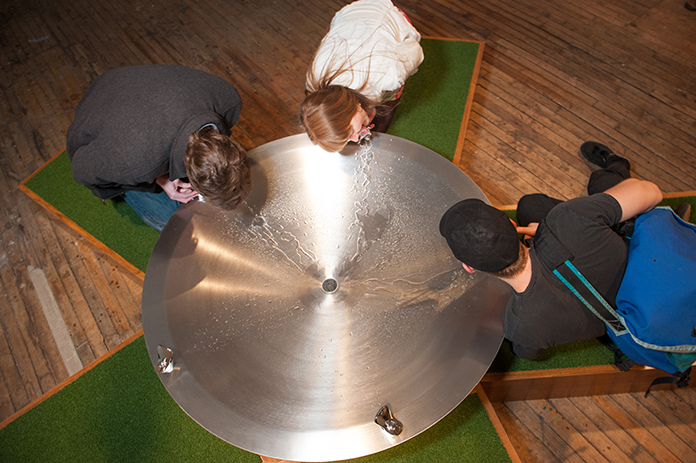
Lisa Dillin, Communal Drinking Source, all works 2013, Photograph by Theresa Keil
Visitors to the opening night of Lisa Dillin’s solo show, Stopgap found Gallery Four inhabited by a small band of performers wearing orange bikini tops and sarongs. While the group participated in the activities of an opening night, standing around chatting and sipping beers, they were also definitely on display – and not just because of their clothing.
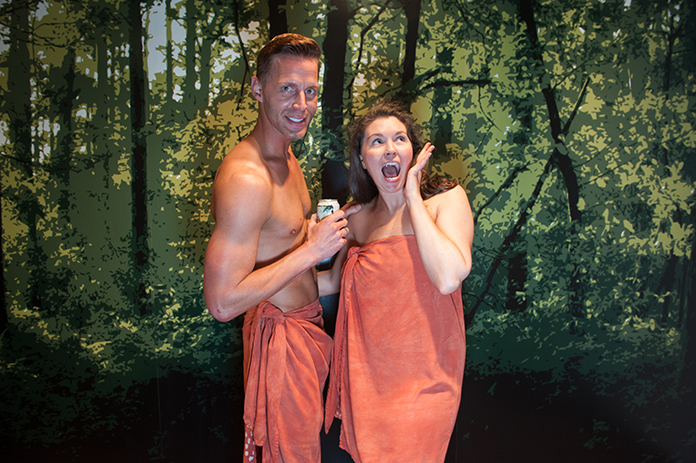
Primal Tan Performers, Photograph by Theresa Keil
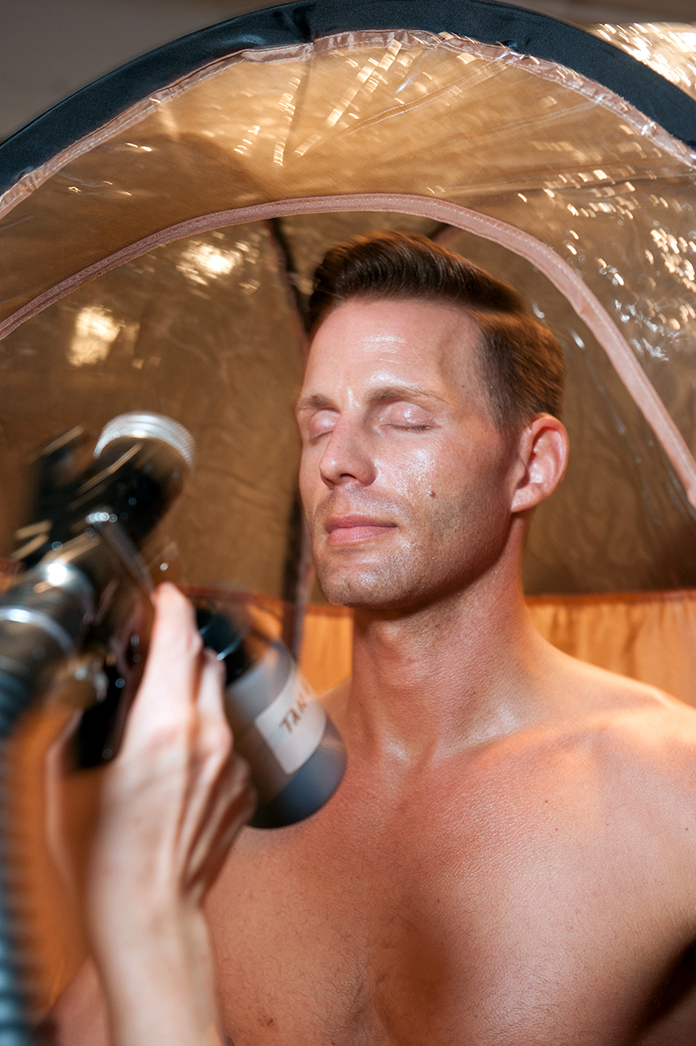
From time to time, someone would step inside a shiny, flesh-toned tent, where a heavily made-up woman in a khaki jump suit would hose them down with an oddly sweet-smelling mist of spray-tan chemicals. With a group of bemused spectators looking on, and the loud, whirring sound of the spray-tan machine pummeling the air, the woman delicately lifted and dropped the participants’ arms to evenly coat their bodies.
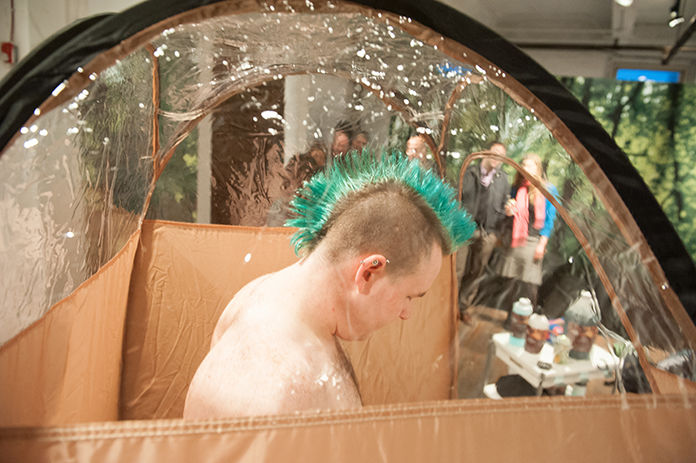
Primal Tan Performer, Photograph by Theresa Keil
At one point in the evening, members of the group approached a sculptural object titled Communal Drinking Source – a beautifully crafted stainless steel bowl with four mouthpieces. Reminiscent of the large, group sinks sometimes found in elementary school classrooms, the drinking basin is surrounded by five bench seats covered with squares of fake, plastic grass serving as cushions. Perched on these seats, the performers leaned in, turned the faucets on and drank from slow streams of water. Later, visitors more gingerly approached the work to take drinks, clearly surprised by affirmation that the faucets really did work.
This performance event, which Dillin titles Primal Tan, is just one of Stopgap‘s absurdist musings on contemporary, urban life where everyday access to natural resources is increasingly limited, tenuous, and often highly manipulated. For example, rather than risk being exposed to the damaging rays of the sun (or worse, appear pale in the wintertime), some people choose to regularly strip to their underwear and be hosed down with cold, chemical dyes to maintain the appearance of having spent time in the sun. The faux-tribal “primal” aspect of the performance speaks to the confused appropriations of urbanites who sport tattoos with ancient symbols they have no discernible ancestral relationship to, or who follow fads like the “paleo” diet (which recommends that people eat only foods that would have been available to hunter gatherers).
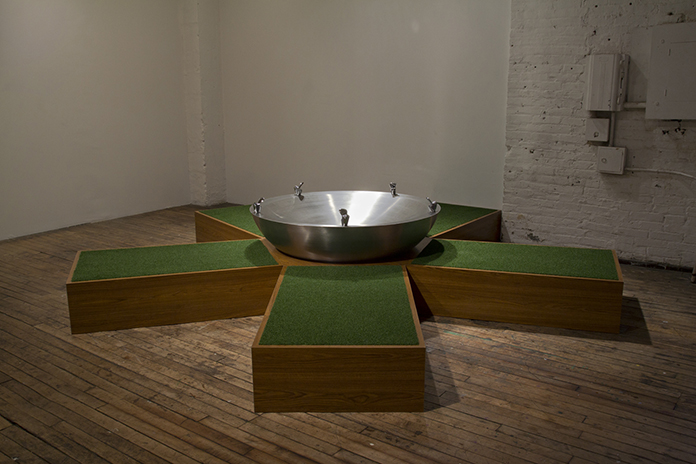
Dillin, Communal Drinking Source, Photograph by Dillin
By making a spectacle out of such activities, Dillin creates an atmosphere of light-hearted contemplation, which equally carries into the discrete sculptural objects in Stopgap. Take Communal Drinking Source as an example: though water covers the majority of the planet and is fundamental to all animal and plant life, it is brought into our homes, schools, and offices through a complicated system of pipes, and then packaged or funneled through metal faucets and mouthpieces before it can be imbibed by humans.
In their usual institutional settings, these water sources and pipes become the norm, but Dillin’s water fountain exists within a context of an art exhibition where everywhere she presents aspects of the fake built-environment in order to question them.
Across the room from Communal Drinking Source is a vinyl-inlay, Remnant, a smooth, tawny plane of tan-flecked vinyl tile, intercut with white, gray, brown, black, and blue sections that form the outlines of bones and other items, even creating illusionism through tonal variations in the tile. The tiles depict a cluster of animal bones, along with the detritus that might accompany such objects in the wild, on a cave floor. Or, perhaps this is a flattened natural history museum diorama of a pressed and hardened cave floor with flattened stones, twigs, and leaves. These vinyl tile sections are meticulously hand-cut with a scroll saw. As with much of Dillin’s work, her isolation of elements of mundane household and office design brings to light an aesthetic and formal depth that would likely not be appreciated in the material’s typical, banal settings.
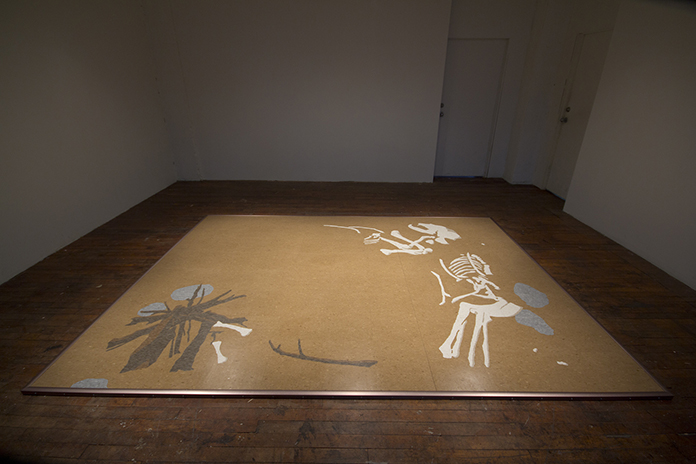
Dillin, Remnant, Photograph by Dillin
The human desire to depict natural worlds with images of landscapes, animals, and other people, is as old as the cave paintings at Lascaux.
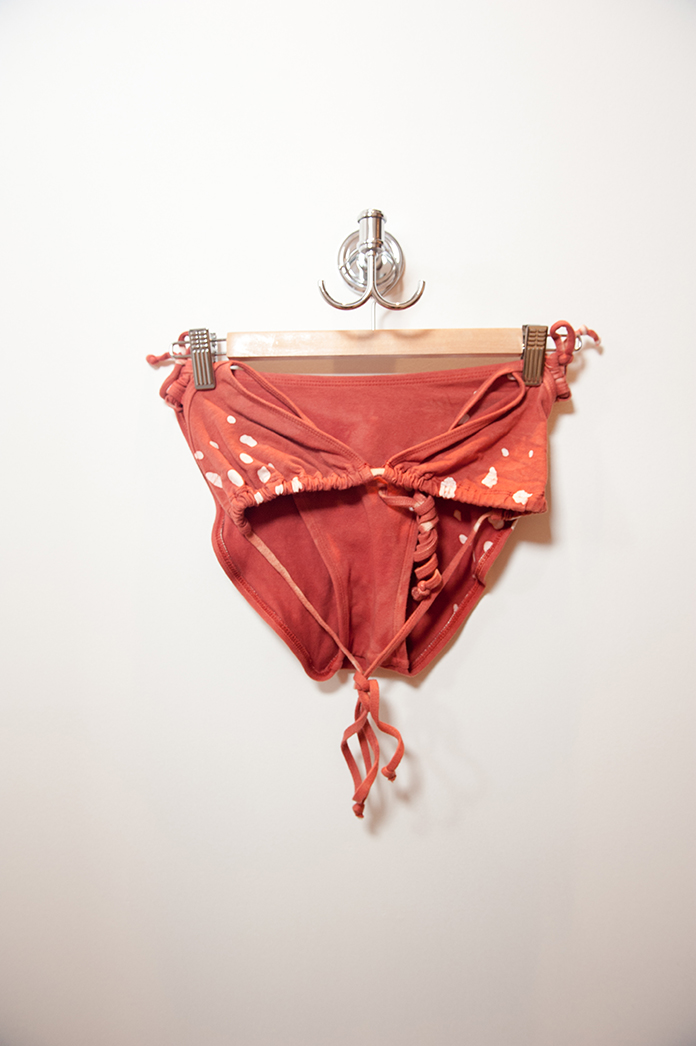
Photograph by Theresa Keil
In the contemporary period, where many artists have assimilated, rejected, and readopted the lessons of perspective, photography, and abstraction many times over – and where communication and imaging technologies change our relationship to reality on a daily basis, artists are well-positioned to contemplate and respond to these issues. Lisa Dillin’s work reflects back a relationship to the landscape that is already at a point of remove. She represents that which has already been represented, and mimics the already artificial.
Dillin does not elicit contemplations of the strangeness of spray tans by pointing viewers back to the “original” (in this case, the sun) or even by exposing the “fake” (showing viewers what is in the chemicals, how they are produced, etc). Instead, more humorously, she brings all the trappings of this social ritual directly into the gallery for our consideration and amusement.
Photograph by Theresa Keil
__________