
Two new exhibition openings last week occupy different layers on the Baltimore visual arts spectrum, and provide some interesting contrasts for viewers.
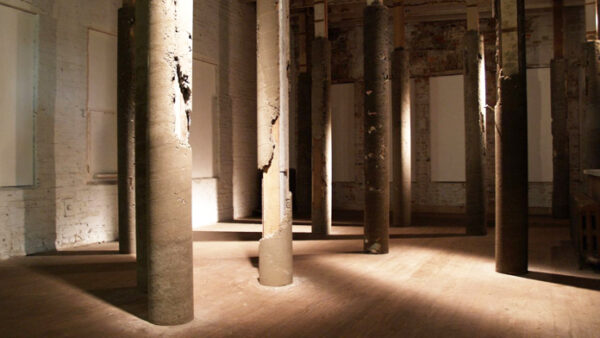
Concrete Poetry, which opened Friday at BrickHaus Art Space in Waverly, is a solo installation by Sean Lundgren, consisting of poured concrete forms integrated into the structure of the gallery space, a project that is simultaneously lofty in its aesthetic and grassroots in its presentation.
A continuum of earth tones results from the weathered surplus lumber and detritus encased in concrete resting heavily on a well-worn pine floor in BrickHaus’ high-ceilinged upstairs gallery at 2602 Greenmount Avenue.
Lundgren’s design sense and rapid installation of such a structurally massive set of forms (literally a ton of concrete) conjure up stark scenarios due to the visual composition and minimalist aesthetic as well as the implications of structural reinforcement, leaving the viewer to wonder what kind of weather event would require such specific seismic upgrades.
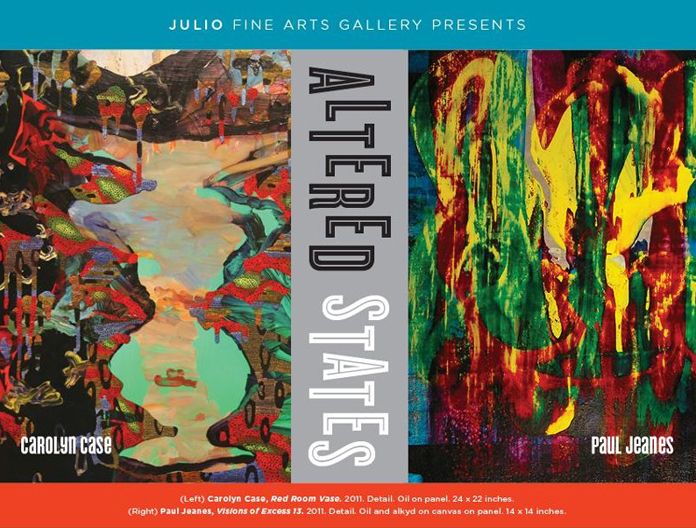
A different set of aesthetic considerations is revealed in Altered States, an exhibition of paintings by Carolyn Case and Paul Jeanes at Loyola University’s Julio Fine Arts Gallery.
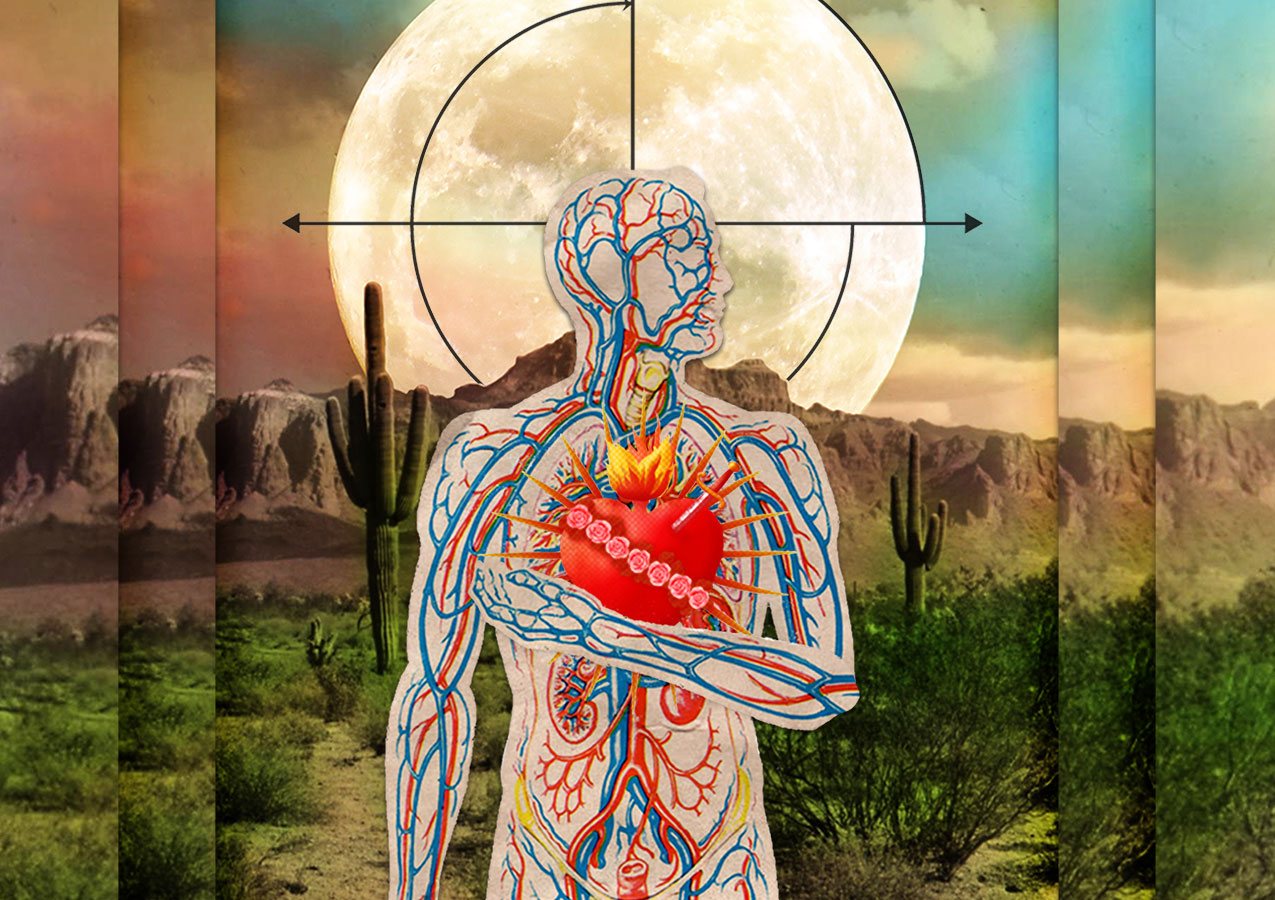
Colorful abstract paintings fill the gallery space, and the exhibition postcard features details of pieces by both artists that closely share a palette of saturated primary and secondary blasts of color in intricate and detailed compositions.
Case and Jeanes are colleagues who teach both at MICA and at Towson University, however the exhibition definitely does not come across as academic, although certainly refined.
A compendium of influences and processes makes each artist’s work distinctive, while their dynamic and organic forms seem intricately related.
Case’s works perhaps read a bit more like surrealist landscapes populated by biological oddities, and her variation of techniques provides a fascinating granular and layered archeological dig of painterly gestures. Her work reflects a variety of exotic influences, including “aspects of other-worldliness” and visions of “a lost paradise acquired by studying Andean weavings and Persian carpets.”
Zooming in through the same microscope, a viewer could envision finding elements of Jeanes’ works within those same worlds, enlarged details of viscera that might seem grisly if it weren’t for their kaleidoscopic range of colors. His paintings “depict a kind of turbulent, chromatic atmosphere where shifting fragments and gestures are at once illuminated and obscured.” His newest series, represented in the current exhibition, is based on images and memories from a recent drive across Iceland, and these haunting blue and white paintings conjure up a relentless procession of effervescent landscapes seen at various times of day and night through the eyes of the artist.
Lundgren’s concrete installation takes the viewer to a very different place of meditation and scrutiny in a forest of vertical forms, some of which reveal gashes, bubbles and embedded objects, others are smooth and flawless and lead the eye up to the ceiling to recognize their connection to the surrounding structure.
The absence of color in favor of a range of cement gray, natural beige and wood grain makes the space tranquil yet ominous, the clusters of columns seem to resemble figures in silent dialogue around a central clearing, and the anachronistic nature of tree-like figures made from concrete provokes the viewer’s curiosity and a philosophical study of the situation on display.

While viewers in the Altered States exhibition move freely and connect with various paintings around the room, Concrete Poetry is more conducive to a slow pace of pensive regard, so the two shows in tandem make for a very well-rounded and provocative viewing experience.
BrickHaus Art Space will host a Closing Reception for Concrete Poetry on February 16 from 7 to 10 pm, 2602 Greenmount Avenue, look for BrickHaus on Facebook.
Altered States runs through February 26, and Loyola’s Julio Gallery is open Monday through Friday from 11am to 5pm and Sunday from 1pm to 4pm; for directions and more information check out http://www.loyola.edu/gallery.