Stephanie Halley, Executive Director of the Woman’s Industrial Exchange, has taken on the task of refreshing an organization that was founded in 1880 to meet the needs of 2014. Last January, Halley and Faith Tennant, were hired by the Women’s Exchange to stabilize operations and figure out new strategies for engaging the Baltimore community.
While she served as the Vice President of Development at GoodWill in Washington D.C., Halley decided to start Grow, a consulting company that develops growth strategies for small businesses and non-profits. After bringing on subcontractors, her practice got bigger and today she still works for other organizations within her practice, as well as working as an Executive Coach and a full time mom.
“They brought me on to go out into our internal and external communities and ask: what do you think the impact we’re having is, and what should be it be?” Halley explains. “We started having those conversations with funders, with partners, with ourselves; and we came up with with something called a Theory of Change.”
This “Theory of Change,” is Halley’s map of what social impact the Exchange hopes to have, and what strategies they plan on using to achieve that impact. Program designer, strategist, fundraiser, and connector, Halley was originally on the Exchange’s board when she first came to Baltimore before joining the organization last January.
“I wanted to find something I connected to. I found the Exchange and fell in love with the story and the mission and what it’s meant through the years. There are these incredible bits and pieces that I still find,” she says. “The Exchange is ready to move into a new era.”
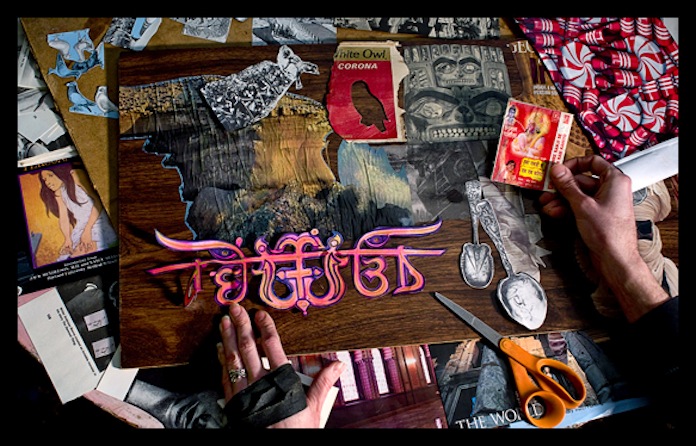
Keeping the Theory of Change in mind, last summer Halley embarked on a huge project to rebrand the Women’s Industrial Exchange as “The Exchange,” with the help of PNC sponsored MICA design fellows, who took the old messages and authenticity of the Exchange, and revamped those ideas for the 21st century. With a new brand identity and a cohesive platform to run with, Halley is in the midsts of creating an updated environment for the Exchange.

“We want to be supporting, developing, and helping women be of greater impact, which can look like a lot of different things,” Halley explains. “People can help me to be of greater impact. If I have the right support, if i have the right tools, if i have the right world around me, I can be of so much better use to myself, my family, my kids, my neighbors, and my community.”
For years, the Exchange has been modeled around their shop of cosigners, but the profits most are making through the store, isn’t providing the impact Halley wants.
“At the end of the day, we can make a greater impact for women if we can put more money in their pockets,” she says. “Years ago, when women were selling goods here, if they sold three quilts that would feed them and their families for a while. Now if you sell three quilts it doesn’t.”
Halley plans to provide as much knowledge for the Exchange community to help women on every level grow as women, business owners, and members of the community. The Exchange plans to take their organization beyond the store, and embark on immense community building, involving, business and financial literacy classes, as well as craft classes for cosigners to share with those who want to be a part of the Exchange community.
Using designs from the MICA students who rebranded the Exchange, the organization plans to build a mobile shop to bring the store to parts and people of Baltimore who never find themselves at 333 N. Charles Street.

Without a marketing team, and with limited staff and time, the Exchange wants to be smart and thoughtful about how they get the word out about the organization’s progress. As the Exchange grows and evolves, they are also putting together a marketing plan with the help of MICA professor Heather Bradbury and her masters students. With good thinking and good people and resources on board, the Exchange wants to plant themselves where people really are, and to answer the question, “How’s the Exchange?”
“We need to tell our story,” Halley emphasizes, knowing it’s what drew her in in the first place. “When someone walks in the door and we tell the history of the Exchange in 1880, and how we got to here, people love it. There’s a whole contingent of the community who remember coming here with their grandmother and their mom. They know the faces and the names of the women who used to waitress here. Everybody knows the exchange and loves it in a certain baltimore crowd. The younger generation don’t always know about the Exchange, but when they find it they love it. It’s fun, it’s kitschy, it’s Baltimore. It’s authentic.”

This week, Stephanie Halley will be speaking at Mind Your Business: Women on Top – A Smart Seminar for Women Entrepreneurs, hosted by PNC, The Women’s Exchange, & What Weekly. As a business owner and Woman on Top herself, Stephanie will unveil a real-life marketing case study about the Exchange with the help of MICA.