I grew up on apocalypses.
I did, and so did many of my fellows in pop culture (a term that is often applied liberally, and which I am taking to mean TV shows, books, and movies of a certain age). We grew up watching the way the world ends every year, and sometimes every week. I first got into the apocalypse biz watching Buffy the Vampire Slayer, one of the finest TV shows still in reruns. For Buffy and friends somebody was trying to set off the end of the world every week. After a certain point the franticness and dire import subsided, and the gang sighed and hit the books to figure out how each Tuesday’s end times could be averted. Of course, there was the actual apocalypse that occurred at the end of each season, the real big one, the oh shit guys I really don’t know how to stop this I’m gonna try but this really might be the end. Every time, of course, it wasn’t. There were seven seasons of Buffy, after all.
There was a megapost on tumblr the day after the world was supposed to end, December 21st, 2012. In it the Supernatural, Doctor Who, and Avengers fandoms all claimed victory for their heroes against the “Mayan” apocalypse, until finally Buffy fans shut them all up with a well-placed GIF. But it’s not just tumblr and the rabid fans of each of these nerdy fringe fandoms. Apocalypses have slowly been creeping their way into the mainstream until not just summer blockbusters but also artsy midwinter films are well saturated with them, and post-apocalyptic fiction crowds the shelves of not just the YA section but also jostles spines with “serious, adult” novels.
Take zombies, for instance. As a culture we are currently obsessed with zombies. You can say it’s just the next step in the progression from vampires that Twilight unfortunately spawned, but there’s a big difference: zombies aren’t hot. They’re not individuals, either, where one girl and one sexy, brooding vampire make eyes at each other for over a thousand pages. They don’t come in families, or packs like werewolves; they come in hordes. They can even take on insect-like characteristics, as the movie adaptation of World War Z suggests. They’re mostly mindless, animalistic, and they don’t move very fast, as per The Walking Dead. They can only be killed by shots to the head, and whenever they manage to kill one of us, they make more of them.
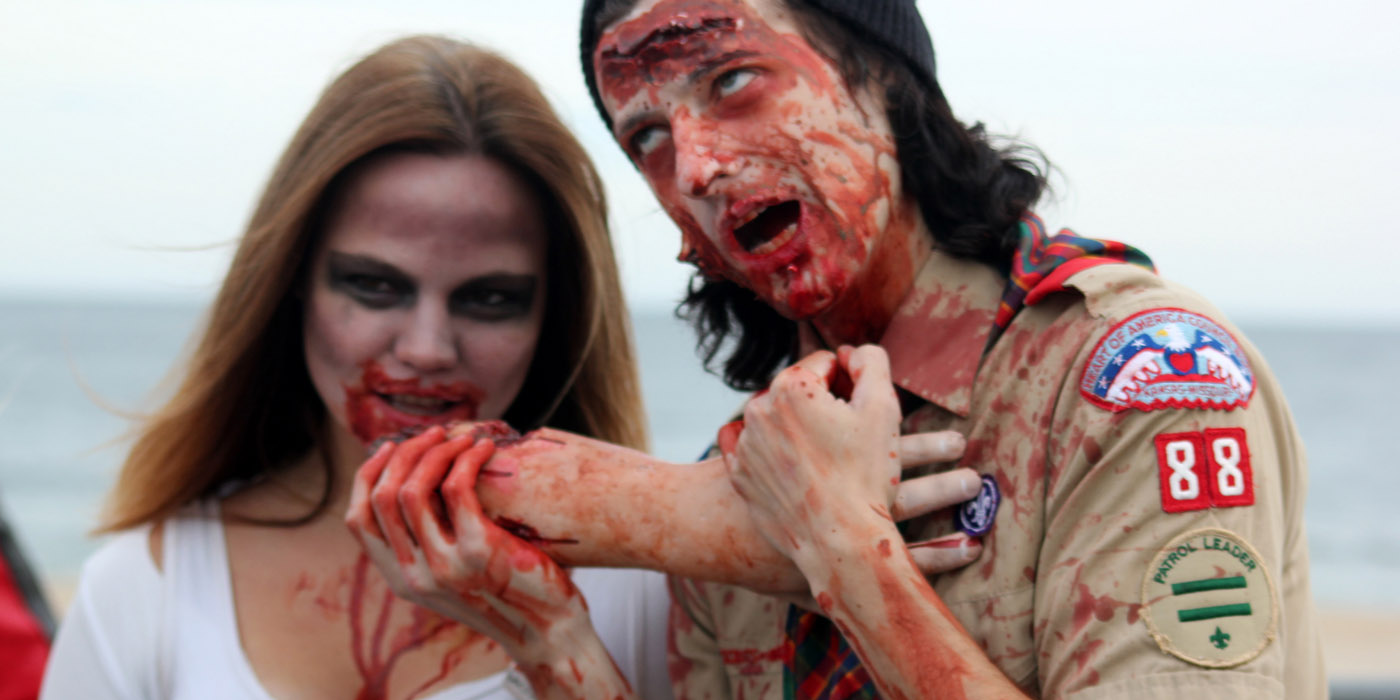
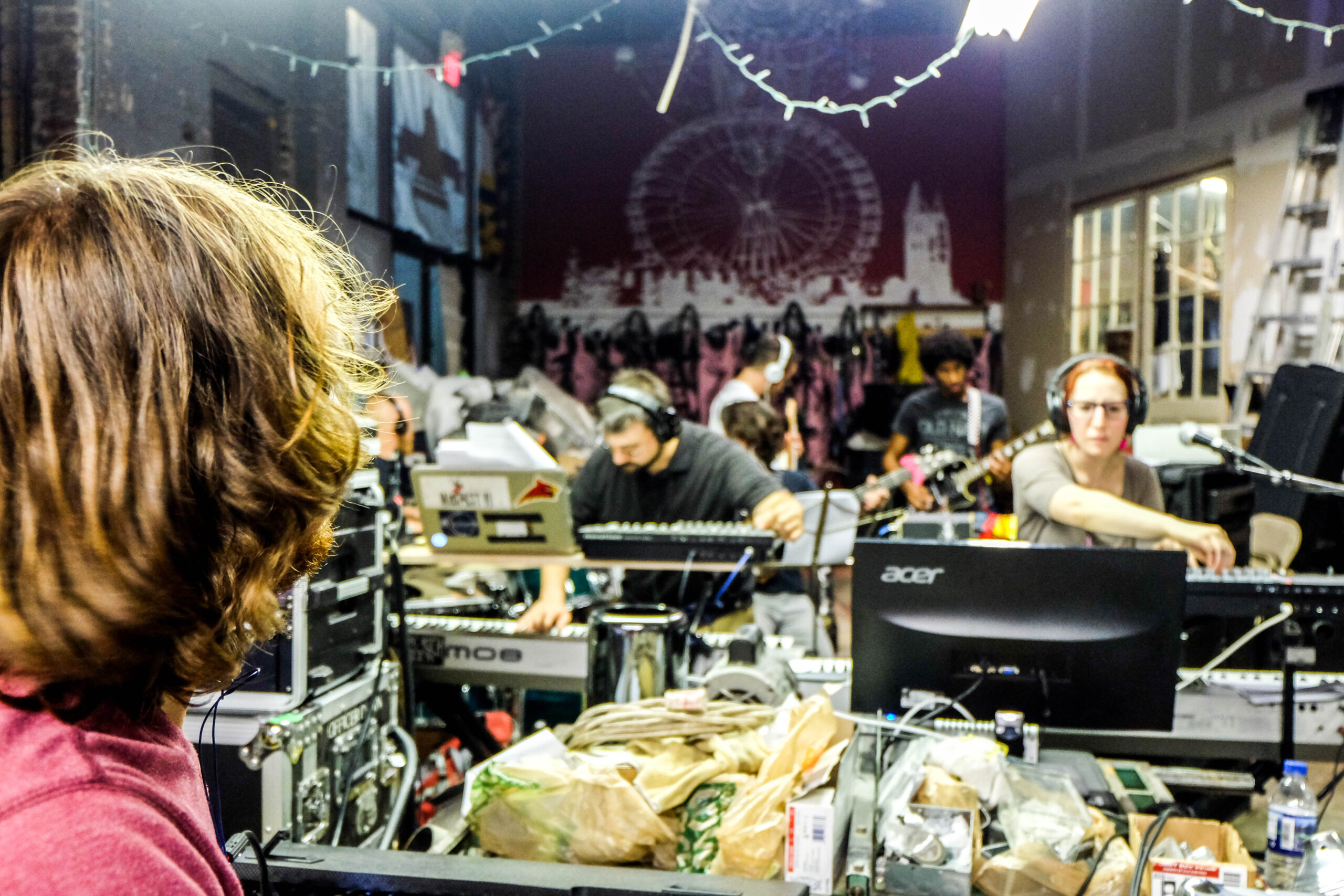
Photo Courtesy of Hypnotica Studios Infinite
It’s not just zombies, though. Take The Passage by Justin Cronin for instance (no seriously, do, it’s a totally awesome book): vampire apocalypse. Or Red Moon by Benjamin Percy: werewolf apocalypse. There’s probably a unicorn apocalypse out there somewhere. But what do all of these books have in common?
Apocalypses.
So what’s the deal? What’s our cultural obsession with apocalypses? I think it goes back to the epitaph on Buffy’s tomb after her heart-wrenching but ultimately temporary death in season five: “She saved the world a lot.” I grew up watching the world prepare to end, over and over, in the skies or under the earth of Sunnydale, California. I watched her save it from ending every time, even if she didn’t make it out herself. I still watch her save it, with a snappy quip or snarky retort, whenever I’m feeling bad about the world. It seems strange to want to watch the world end whenever I’m glum, but I do. Supernatural, Avengers, and Doctor Who fans know what I’m talking about – it’s comforting to know that when the forces of evil come calling, there’s the Winchester brothers or the Doctor or Iron Man and Captain America who’ll come riding to the rescue in the nick of time. But I think it’s about more than just that.
When the apocalypse comes, we have learned, the world doesn’t end. Unless you’re talking post-apocalypse, like The Walking Dead or The Hunger Games, when the world has already ended and we’re just learning to live with it, there’s always going to be another season, or a sequel, even if it looks like all is lost. If the sun blows up and takes the earth with it, and the last thing moviegoers see is a black screen, there’s no franchise opportunity, and everybody leaves with a bad taste in their mouths. In a cynical way, the world can’t end.
Apocalypse, in that sense, has a changed meaning. Apocalypses do happen all the time in pop culture now – we’re waiting for them, and we get disappointed when they don’t happen or they’re not as big as we expect – but they no longer mean the world ends. Instead, they mean the world changes. People decide to make changes in their lives, in the ways they interact with other people, the world, and themselves. People realize that they have worked to the point of near-death to save this world, and it would be a damn shame if, after all the rubble is cleared away, everything were to go back to being the same.
And that, I think, is the reason behind our current fascination with the end of the world: not because we want the world to end, but because we want the struggle, the connectivity that it brings in the feeling of everyone pushing to reach the same goal – the salvation of humanity – and we want that quiet moment, after the storm, when everyone puts down their guns or their swords or their scythes, wipes their foreheads, and looks around them, and realizes that they’re still standing, and so are (some of) the buildings. And yet the world, though saved, is also different. In the Bible, God got pissed and made a big flood and decided to take everything back to square one, leaving only Noah and his wife and kids and a bunch of animals still breathing. There’s this moment, standing atop Mount Ararat and watching the waters recede, when you can just feel it: the world taking a big breath and humming with anticipation. Everything’s waiting to see what it will be.
This is that moment, that Noah moment, which we keep coming back to in our cultural collective consciousness, like a wall we keep beating our heads against. I think it’s because we want to change, and we have a sense that without some great upheaval like a flood of water or zombies or vampires, we won’t get a chance to. Without the Daleks or the stone angels, everything will continue business as usual. Without them, there’s no need for a Doctor or the fellowship of his Companions.
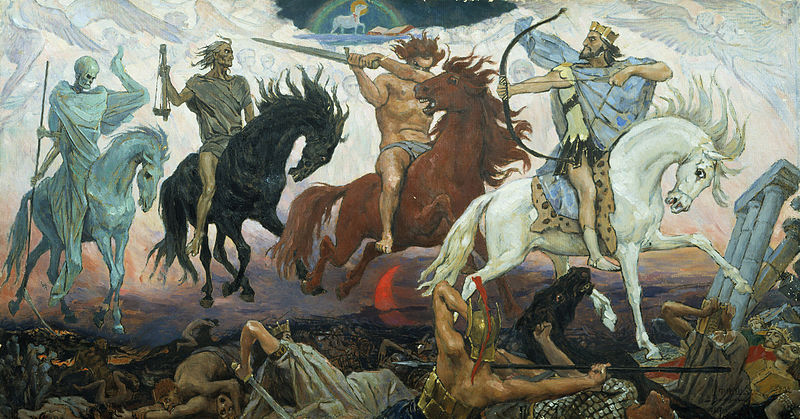
Four Horsemen of Apocalypse, by Viktor Vasnetsov. Painted in 1887.
Apocalypses are, in a way, like forest fires: about destruction but also about renewal. When forest fires sweep through the land they burn up a lot of dead brush and trees but also leave eminently fertile soil in the hopes of new growth. It begs the question: what makes us feel that the only way we can make change in this world is to burn it down, and then build it back up? Is it so broken? Is there no hope for it?
Maybe so. Maybe we’re impatient with the half measures and compromises that it takes to make change in our world today. We long for a new world, a fresh start without the entrenched corruption and bigotry that seem to rule so many minds and hearts right now. We long for that sense of being Noah, looking out over fresh green fields as the waters recede, dawn coming with a fresh start. We think, we know, that we could do it better if we could just start over.
But as anyone who’s ever had to deal with a flood in the basement knows, there’s a lot of debris to clean up afterwards. The old world isn’t gone, just shaken up a bit. However, as you’re wading through the muck and chucking ruined throw pillows and paper bags of junk in the trash, maybe you’ll take a long look around at stuff you haven’t looked at in years. That exercise equipment you used twice and then forgot about? Maybe you’ll be inspired to start something new. The lawn chairs your parents foisted on you when they moved to their new place? They’re not coming back for those, so they can go out to the curb. All of a sudden you’re making large, sweeping changes, and soon the basement is transformed into Globo Gym, or an underground gaming palace, or maybe just a space filled with nothing but possibility. All of a sudden a place that was emblematic of waste and decay is something new. Of course, you may never use the exercise machines you’ve poured sweat and oil into reconfiguring, or your significant other may take one look at your gaming pleasure palace and demand you dismantle it; but what if they don’t?
Your world will never be the same.