Sexual deviance, death, stupidity, mental illness, brutality, murder: don’t you love ‘em? I do, but not in the form of earnest drama. I like my perversion with a double shot of truth, and hold the sentimentality. When it’s real smart and real funny and really offends the faint of heart, what do you call it? Until now it hasn’t had a proper name. I call it Comedy Noir.
The term comes from the French, Comédie Noire, which can be attributed to playwrights and critics of the early twentieth century. But I’m talking about the form that is most relevant to contemporary cinema and screenwriting: American films (and their parent novels) from the mid-twentieth century to the present. The term “Black Comedy” gets confused with the even more vague “Dark Comedy,” and sometimes with stories by or about African Americans. And, because the Comedy Noir form is a vital force for good in a movie world dominated by a market-driven aversion to offending consumers (you’ll not see any product placement shots in a real comedy noir), it deserves and requires a distinctive, assertive title with literary cred.
Definition? Comedy Noir is a meta-genre with influence across story types that share a dark comedic, morbid, or satirical tone in dealing with taboo or other subject matter usually regarded as horrific, macabre, immoral, or revolting. The purest form of Comedy Noir can be detected by authorial intent: if it is to make the audience laugh at the abhorrent, it’s probably comedy noir. A subversive challenge to social mores, hypocrisy, social institutions, and belief systems is an important, if secondary, component of Comedy Noir. It presents a stylized vision of human nature, often preposterous and exaggerated beyond the “realism” of the drama. Comedy Noir shares DNA with Film Noir (I mean the pre-film-school-neo stuff) in that cynicism, human folly, sexual deviance, and moral ambiguity accompany both forms.
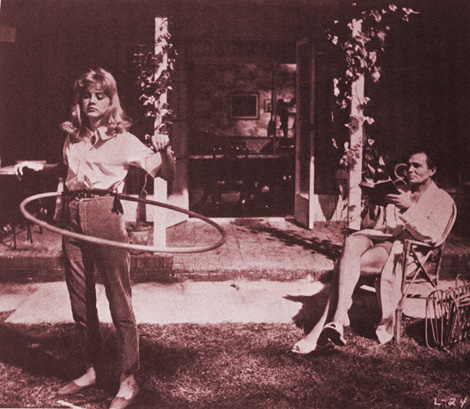
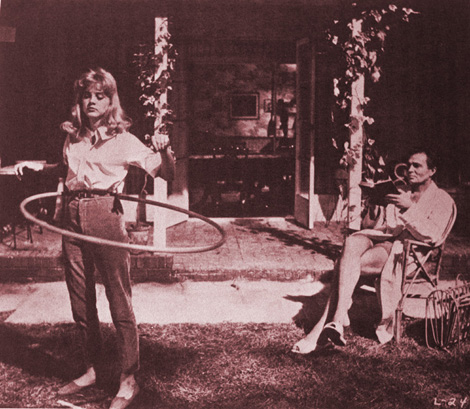
Comedy Noir is not merely a sub-genre of comedy. The sardonic and mordant heart of the form is expressed in stories too divergent to be contained within a single genre. Dr. Strangelove, Fargo, Starship Troopers, Catch 22, Lolita (1962 version only please!), The Loved One, They Live, and To Die For certainly cannot be adequately described as “comedies,” but they all represent Comedy Noir.
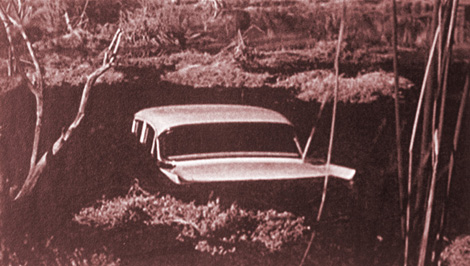
Many stories employ Comedy Noir as an ad-hoc technique within a given scene, while the over-all vision of the story is conventional. There are a number of Comedy Noir moments in Hitchcock’s Psycho (who doesn’t laugh nervously when Norman sees the car resume sinking?), but as a whole, it’s a horror film. One may count a handful of big laughs in Silence of the Lambs, but the film is a thriller rather than a Comedy Noir.
The horror/ slasher genres in general deal in a kind of fun-house gallows humor, but their intent is to arouse fear and anxiety, creating a sort of vicarious rite-of-passage for the (usually) youthful target audience. The threat in a horror film, comfortingly, is deviant: a monster, fiend, or a supernatural entity. The horror film thrill-ride tests the mettle of an individual hero who must overcome this threatening monster, but within a conventional point of view of social establishments. In the “pure” Comedy Noir, the social establishment is the threatening monster. We can’t be comforted by the probability that the deviant or monster will be arrested or killed, because the monster is us.
— David Warfield